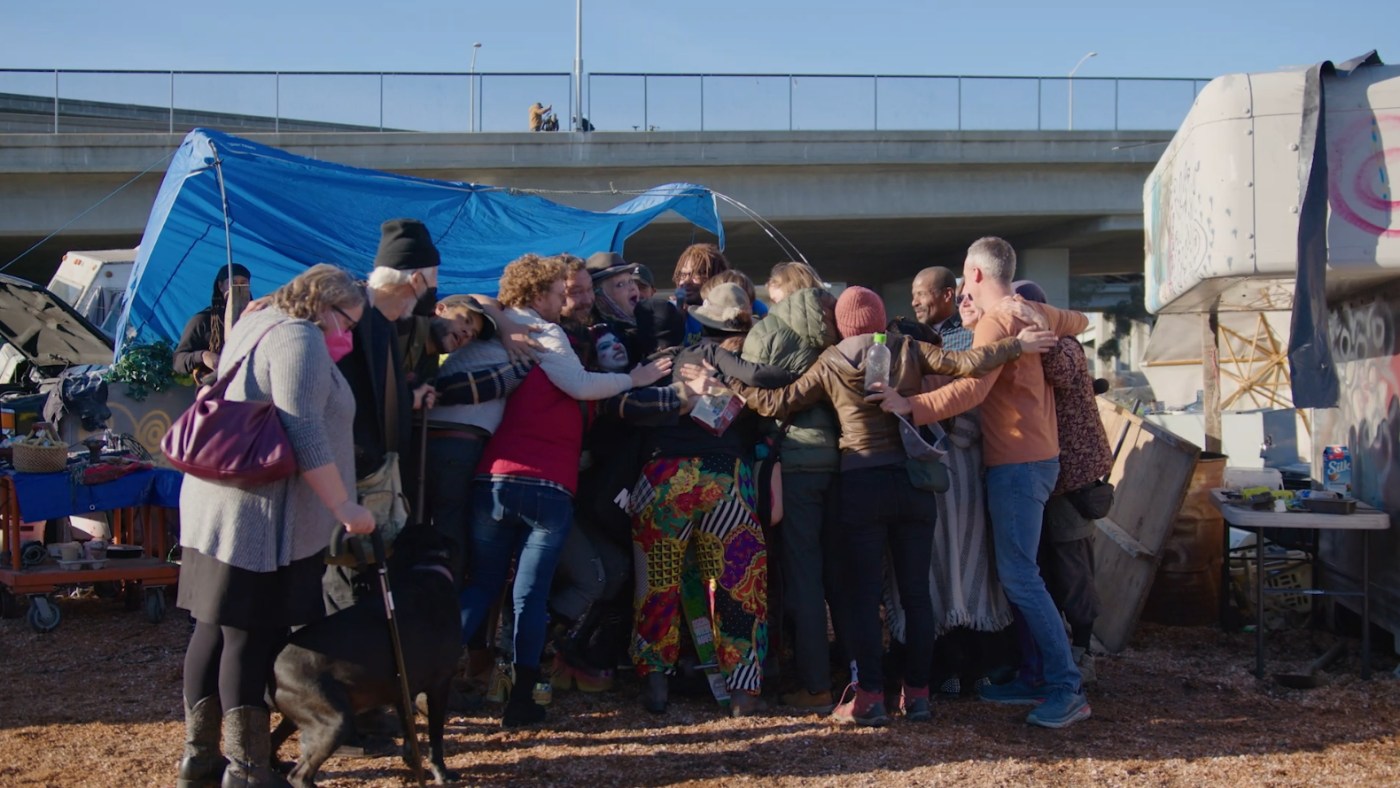
A recent gathering at a homeless camp on Wood Street in Oakland showcased the profound sense of community and love among residents. The camp, which housed around 300 people at its peak, has since been dismantled, but the memories of shared experiences linger. During a lively party, a group hug involving 15 to 20 individuals, including an injured woman and an elderly man, highlighted the camp’s unique spirit. Amid laughter and camaraderie, the gathering underscored the resilience and connection fostered in challenging circumstances.
Community Spirit Amid Adversity
The event featured performances by local artists, including Kev Choice, a Cultural Affairs Commissioner in Oakland, and the Flyaway aerial dance company. These performances brought together both housed and unhoused individuals, breaking down barriers that typically separate these groups. “One thing that’s apparent is the love that exists there,” said Monte, one of the camp’s leaders. This sentiment echoed throughout the night as attendees celebrated their unity.
Over the past few years, journalist Brian Barth has immersed himself in the Bay Area’s homeless communities, observing a distinctive bond among residents. He noted that, much like a family, camp residents share a commitment to support one another, regardless of personal differences. This sense of belonging is often rooted in their collective struggle for survival against not just societal challenges, but also governmental actions aimed at disbanding their communities.
The evictions of homeless camps have significant repercussions, often leading to the disbandment of these fragile communities. Barth pointed out that such actions destroy not only physical structures but also the emotional and social networks that residents have painstakingly built. “Sweeps don’t help us; they push us down,” one camp member stated, emphasizing the detrimental effects of these policies on their lives.
Challenging Preconceptions of Housing
While it is commonly assumed that all homeless individuals desire to transition indoors, many find solace in their current living situations. Dave, a resident of a camp located near Apple’s $5 billion campus in Silicon Valley, expressed a preference for the community life outside. He stated, “A lot of us want to be here. We love the compassion of it. We love the fact that we belong.” For him and others, the camp offers an environment where they can express emotions freely and find acceptance.
This alternative perspective challenges conventional views on homelessness and housing solutions. Barth argues that instead of demolishing these camps, policymakers could explore ways to enhance their positive attributes while providing adequate support. By acknowledging the informal structures that already exist within these communities, there is potential for more effective and humane approaches to homelessness.
The insights shared during this event reflect a broader narrative about the complexities of homelessness and community. The experiences of those living in camps like the one on Wood Street reveal that love and support can thrive even in the direst circumstances. As local governments and societies grapple with homelessness, these lessons from the ground can inform more compassionate and constructive policies.
Barth’s reflections from his reporting between 2021 and 2023 highlight the importance of understanding the human experience behind homelessness. The stories of resilience, connection, and love within these camps serve as powerful reminders of the strength found in community, even amid adversity.