The exhibition Passages, featuring the work of artist Hew Locke, is currently on display at the Yale Center for British Art in New Haven, Connecticut. This collection, which runs through January 11, 2024, offers a profound exploration of the remnants of colonialism and the complexities of identity shaped by history. Visitors are greeted by a striking installation of three suspended ships, each laden with symbolic cargo that reflects Locke’s personal and cultural narrative.
Art as a Reflection of History
Upon entering the gallery, viewers encounter “The Survivor” (2022), “The Relic” (2022), and “Desire” (2018). These works hang delicately from the ceiling, their bows pointing forward as if navigating through time. Each vessel is filled with various items, including jute sacks, potted plants, and fishing nets. The ships appear both fragile and resilient, embodying an ongoing struggle for survival amidst the legacies of colonialism.
Locke, who was born in Scotland to a family of Guyanese descent, draws on his experiences to portray the duality of movement and memory. The structures on the ships, particularly a two-room bungalow designed to float, symbolize the complexities of home and belonging. As noted in the exhibition brochure, this house is a replica of a British colonial plantation house, prompting questions about the artist’s ties to both his homeland and colonial history.
Throughout his work, Locke confronts the historical narratives tied to the British Empire. His art challenges viewers to consider the implications of these legacies, particularly in light of contemporary issues of identity and migration. The names of the ships suggest a desire for exploration while also alluding to the burdens carried forward from the past.
Confronting Colonial Wounds
The exhibition extends beyond the initial installation. In “Hinterland” (2013), a statue of Queen Victoria, once a symbol of imperial power in Georgetown, is depicted surrounded by skeletal figures playing instruments. This visual juxtaposition serves as a haunting reminder of the historical violence associated with colonial rule, while also presenting a space for both celebration and mourning.
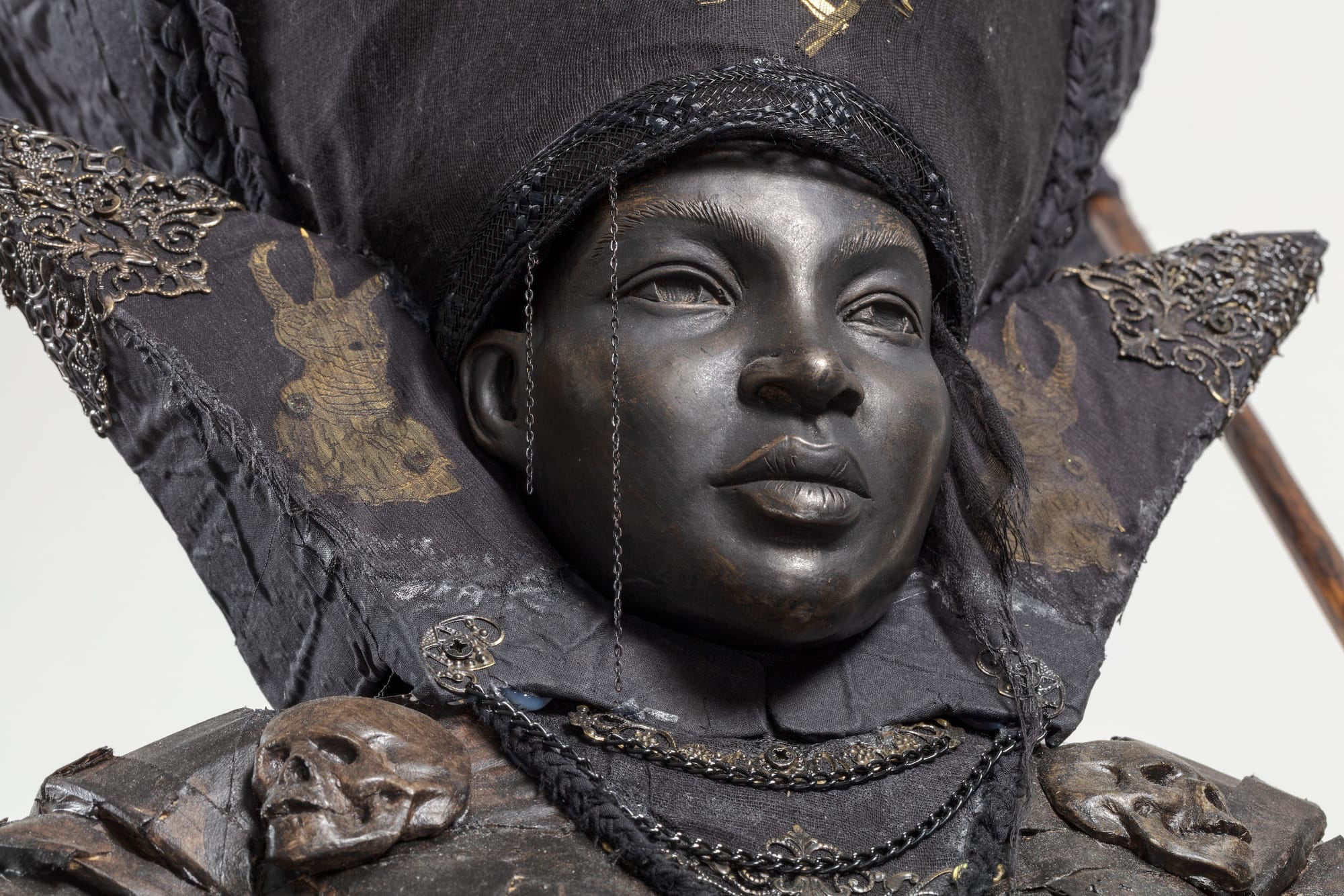
Locke’s artistic approach often manifests in mixed media, where he combines different materials to create layered meanings. His series, including “How Do You Want Me,” “Natives and Colonials,” and “Ambassadors,” highlight this complexity. The first series features striking chromogenic prints of the artist adorned in extravagant attire, challenging the notion of identity and authority.
In “Churchill” (2016), Locke transforms the iconic British Prime Minister into a figure cloaked in vivid colours, reflecting a reinterpretation of historical narratives. These works, alongside the more recent “Ambassador 4” (2022), showcase intricately decorated warrior figures that evoke both power and vulnerability. The use of found materials, such as currency and fabric, adds depth to the exploration of cultural heritage.
Locke’s exhibition invites critical reflection on the legacies of colonialism. Through his art, he reveals the hidden histories and emotional landscapes that shape contemporary identities. The experience of navigating these themes is both visually captivating and intellectually engaging, allowing visitors to grapple with the complexities of their own histories.
The Yale Center for British Art continues to present Hew Locke’s work as a crucial dialogue about the past and its influence on the present. “Passages” stands as a testament to the artist’s ability to weave personal narrative with broader historical contexts, ultimately encouraging viewers to reflect on their own journeys through the complexities of heritage and identity.