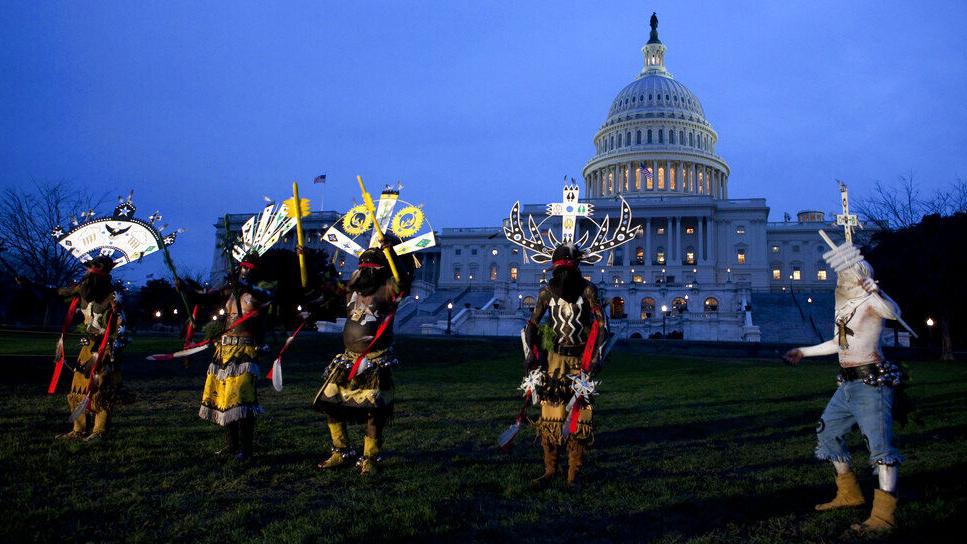
In December 1965, Mary Velasquez Riley represented the White Mountain Apaches in Washington, D.C., during the lighting of the national Christmas tree. This marked a historic moment as it was the first time a Native American tribe had donated a tree for the event. Riley’s dedication to her community had established the White Mountain Apaches as one of the most progressive tribes in the United States.
Born on December 24, 1908, at Fort Apache, Mary’s early life was shaped by the traditions of her Apache heritage and the hard work instilled in her by her family. Her mother was Apache, and her father, a Mexican rancher, provided produce to Fort Apache. Growing up, Mary was responsible for farm chores before and after school, and she left school early to care for family members during the 1918 influenza epidemic. Despite the challenges, she developed a strong interest in local and national issues, often sitting with her father as he read the newspaper.
Mary married Peter Kessay Riley on March 2, 1935. Together, they raised five children, balancing family responsibilities with work. When Peter served in the military, Mary supported her family by working as a housekeeper at the Fort Apache hospital while managing their farm.
Her political career began in 1958 when she was elected to the White Mountain Apache Tribal Council, the first woman to hold such a position. Mary served on various committees, focusing on health, education, and welfare, and frequently traveled to advocate for her community in Phoenix and Washington, D.C.
One of her significant contributions was the establishment of the Fort Apache Timber Company (FATCO) in 1962. Under her leadership, the company became a tribal enterprise, aimed at promoting economic development and providing job training for tribal members. FATCO continues to operate today, fulfilling its mission to utilize the tribe’s timber resources efficiently.
Mary was also pivotal in the creation of the Alchesay-Williams Creek National Fish Hatchery. This facility helped restore local fish populations, including brown and rainbow trout, which were once nearly extinct. The hatchery supports sustainable fishing practices across the reservation, enhancing both biodiversity and economic opportunities.
Recognizing the importance of tourism for economic growth, Mary championed projects to develop recreational facilities, including the Sunrise Park Resort, which offers winter skiing and summer activities such as hiking and fishing. These initiatives transformed the White Mountain Apache reservation into a sought-after destination for tourists.
Mary’s efforts extended to education as well, advocating for the construction of a high school on the reservation. She believed in empowering her community, stating in a
1977 interview, “We’re living in a different world now.”
After two decades of dedicated service on the Tribal Council, Mary retired in 1978. Her contributions did not go unrecognized; in 1984, she was honored by the state for her leadership and commitment to the White Mountain Apaches. Mary passed away on October 5, 1987, and is buried at Fort Apache alongside her husband. In 1988, she was inducted into the Arizona Women’s Hall of Fame, cementing her legacy as a trailblazer.
Reflecting on Mary’s impact, then Indian Commissioner Phileo Nash noted in 1965 that the White Mountain Apaches were “probably the most developed reservation in the country.” Her vision and entrepreneurial spirit helped establish the tribe as a formidable force in economic development.
Today, the Mary V. Riley Building on the reservation houses the tribal education department, a testament to her lifelong commitment to the education and empowerment of her people. Mary Velasquez Riley’s legacy continues to inspire future generations of the White Mountain Apache community.