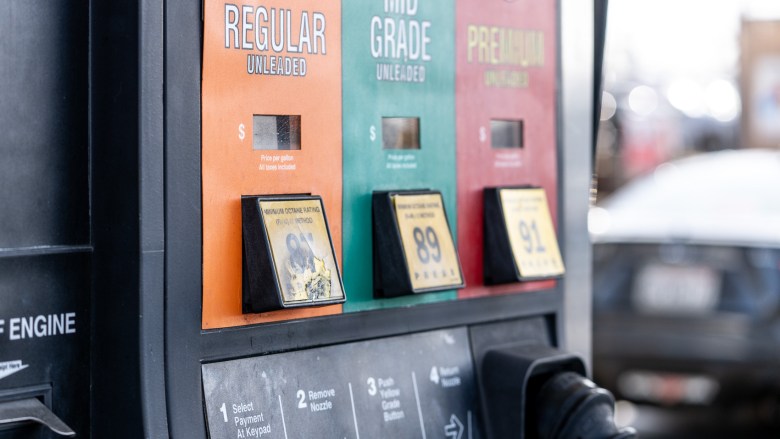
Gas prices in San Diego County have surged significantly, with the average cost of a gallon of self-serve regular gasoline rising by 10.4 cents to $4.998. This increase marks the highest price level since June 3, 2024 and is the 16th consecutive day of climbing prices, according to figures from the Automobile Club of Southern California and the Oil Price Information Service. Over the past week, prices have increased by 32 cents, while compared to last month, they are 47.1 cents higher and 25.8 cents more than a year ago.
The rise in gas prices comes despite a significant drop from the record high of $6.435 per gallon recorded on October 5, 2022. Kandace Redd, the Automobile Club’s senior public affairs specialist, indicated that the duration and extent of these price spikes remain uncertain, heavily dependent on the state of oil supply disruptions. “Oil prices have increased by about $10 a barrel since last weekend,” she added.
National and Global Price Impact
Across the United States, the average price for a gallon of regular gasoline has also seen an increase, rising 6.9 cents to $3.32, the highest since September 3, 2024. This national average has increased for six consecutive days, totaling 33.8 cents overall during this period. The escalation in prices is attributed to heightened global tensions following recent U.S. and Israeli military actions targeting Iran, which have disrupted oil shipments in the Persian Gulf.
In Europe, the situation is equally concerning, with diesel prices spiking by 27% since Friday, increasing by approximately 62 cents per gallon. Susan Bell, senior vice president of commodity markets at Rystad Energy, remarked on the significant rise, stating, “It’s gone up substantially because Europe is so constrained on diesel supply.”
The transition to summer gasoline blends, which are more costly due to added ingredients designed to reduce evaporation in warmer weather, has already been pushing up gasoline costs in the U.S., explained Aixa Diaz, a spokeswoman for AAA. The current spike in global crude oil prices due to the conflict in the Middle East has intensified the financial pressure on U.S. and California consumers.
Implications for California and Beyond
Despite being a net oil exporter, the U.S. remains vulnerable due to California’s heavy reliance on imported refined fuels, including gasoline, diesel, and jet fuel. Shon Hiatt, director of the Zage Business of Energy Initiative at USC Marshall School of Business, emphasized the energy security challenges facing California, warning of potential constraints if international supplies are cut off.
The international ramifications of this crisis are evident. In Paris, drivers have been seen queuing at stations with diesel prices nearing 1.846 euros per liter, approximately $7 per gallon. Abdelilah Khalil, a Parisian driver, expressed concern, saying, “With Iran and the Strait of Hormuz effectively blocked, it is causing alarm everywhere and driving up oil prices.”
U.S. crude prices have reacted to these developments, with benchmark West Texas Intermediate crude climbing 8.6% to $77.36 per barrel, while Brent crude rose 6.7% to $81.29 per barrel. Industry experts note that increases in oil prices typically reflect on consumer gas prices within a couple of weeks.
For residents, the impact is immediate and tangible. In Jackson, Mississippi, local resident Anne Dulske reported paying $15 more than usual to fill her tank. “It’s going to affect everything in our lives. It’s very scary, and it does hit closer to home than people think,” she remarked.
Looking ahead, Patrick DeHaan, head of petroleum analysis at GasBuddy, noted the possibility of further price increases but expressed skepticism that U.S. gas prices would exceed $4 per gallon in the near term. “Many Americans seem very panicked that prices could hit multiple dollars higher than that, which at this point, I wouldn’t say anything’s impossible, but certainly it’s quite improbable based on the current developments,” he stated.
This ongoing situation highlights the complex interplay between geopolitical events and local economic conditions, with consumers feeling the pressure at the pump as oil supply chains face unprecedented challenges.