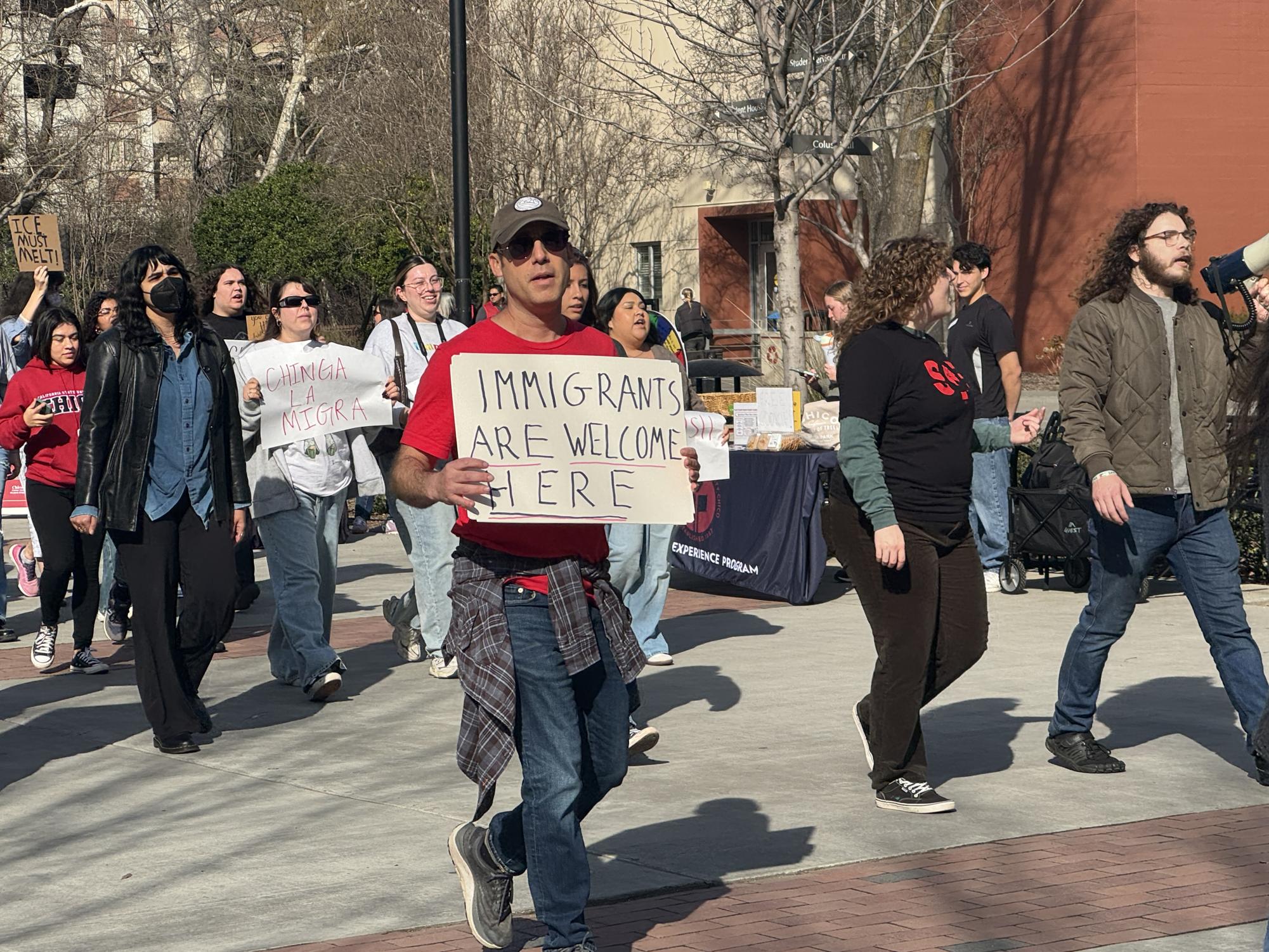
Chico State University is advising its community members to “refer, not interact” in the event of a potential U.S. Immigration and Customs Enforcement (ICE) raid on campus. This guidance comes from the university’s Diversity Officer, Joseph Morales, following recent reports of ICE arrests in nearby downtown Chico. The university aims to prepare students and faculty for possible encounters with immigration agents through a series of informational sessions titled “What To Do, What To Say.”
During one of these sessions held on March 2, 2024, Morales outlined the university’s protocol for responding to ICE activity. This includes immediate notification to the campus community and deploying a police officer equipped with a body camera to document any incidents. However, the process hinges on timely reporting by those who suspect ICE presence on campus. Morales underscored the importance of contacting either him, Risk Management Director Mike Thorpe, or the University Police Department (UPD) for any suspicions of ICE activity.
Morales emphasized the university’s commitment to inclusivity, noting, “Some universities have police as the only contact. But not everyone feels comfortable reporting to the police. That’s why we decided to include multiple contacts, including the police.” This approach aims to ensure that all members of the campus feel safe and supported in reporting any concerns.
In a recent instance, a campus member reported seeing an unfamiliar black Tahoe, commonly associated with law enforcement. Morales confirmed it was merely a university police lieutenant but reiterated the necessity of the reporting system. He encouraged individuals to reach out, even if they are uncertain about the situation.
If an ICE agent arrives with a warrant, Morales stated that it is not the responsibility of faculty to verify its legitimacy. Instead, they should promptly contact him, Thorpe, or the UPD. An attorney will assess the warrant’s validity before allowing any entry into non-public areas, except in situations where there is a clear and immediate threat to safety.
“Refer, don’t engage,” Morales advised. “It’s not your job to interpret immigration law. If agents claim, ‘This is an emergency. I don’t need a warrant. Step aside,’ let them proceed and call 911. This is the most prudent course of action — don’t put yourself in harm’s way.”
Under the California SAFE Act, the university is also required to notify community members promptly about confirmed ICE activity on campus via email, including details such as date, time, and location. If approached by ICE agents seeking information, Thorpe suggested asking, “Are these exigent circumstances?” to indicate awareness of immigration law.
Chief of Police Christopher Nicodemus highlighted that ICE does not typically inform UPD of their presence on campus, acknowledging the sensitive nature of immigration enforcement in educational settings. “They know not to ask us. They know we don’t work with them,” Nicodemus stated, adding that ICE is unlikely to create disruptions for isolated individuals on campus.
While ICE agents may enter public areas without a warrant, access to non-public spaces, such as classrooms and offices, requires legal documentation. A detailed list of what constitutes public and non-public areas at Chico State is available to the community.
For international students with questions regarding their visas or immigration status, Jennifer Gruber, Associate Vice President of International Education & Global Engagement, is available for assistance. Faculty members can consult Mahalley Allen, Vice Provost for Faculty Affairs, for similar inquiries.
The university plans to host additional “What To Do, What To Say” workshops later this semester, allowing students and faculty to ask specific questions. Scheduled sessions will take place from 12:00 to 13:00 on March 12, April 10, and May 7.
Chico State’s Dream Center serves as a resource hub for undocumented and mixed-status families, providing advocacy and support programs. “We have little control over what the federal government does. But we do have control over how we support each other as a community,” Morales concluded.