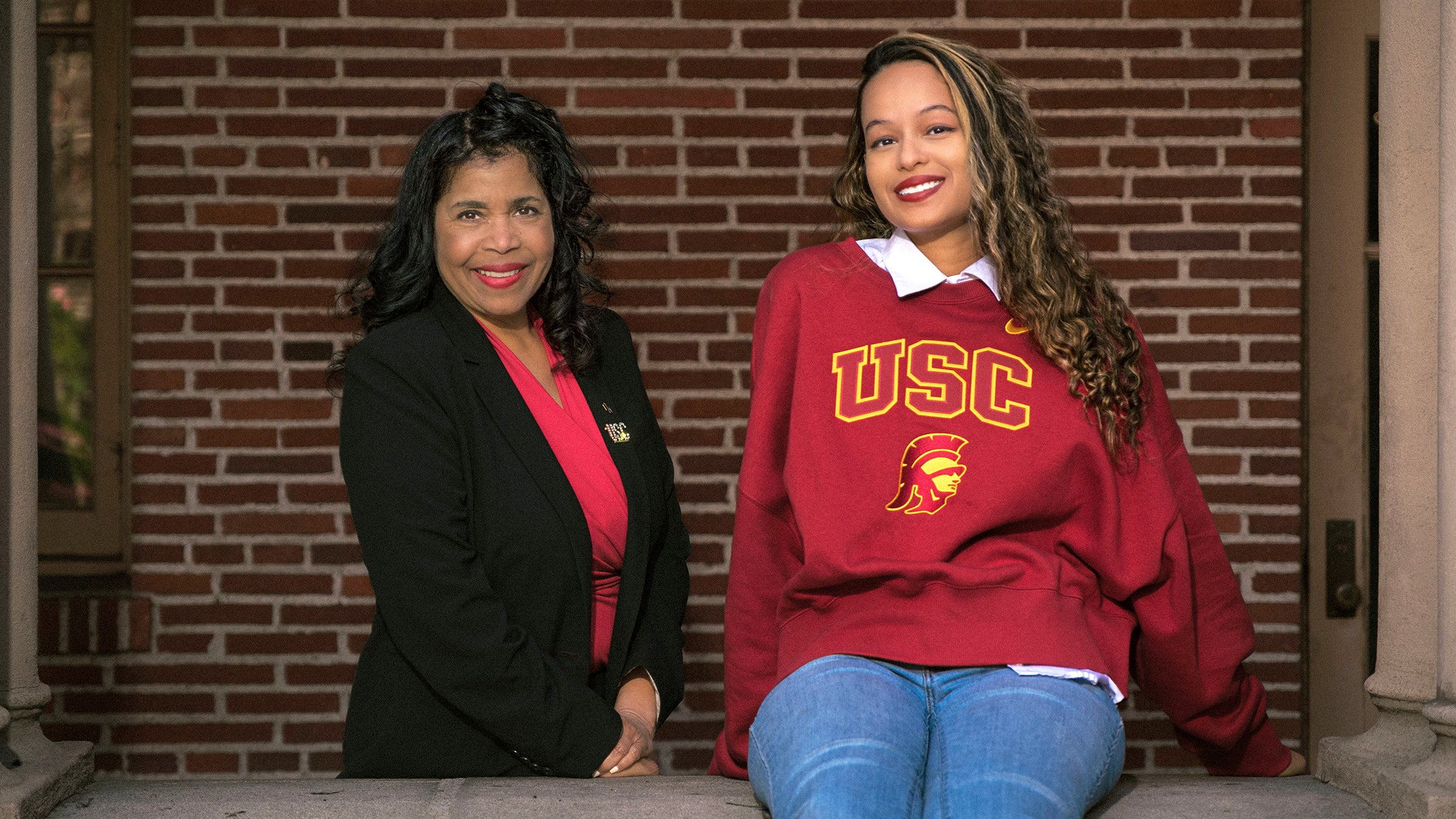
A chance meeting at the University of Southern California (USC) has led two students to uncover a shared lineage tied to the prominent abolitionist and activist Mary Ann Shadd Cary. Cyan Shreve, a graduate student at USC, and Lori Shreve Blake, a senior director for career engagement at USC, discovered their familial connection during a career advising session.
Shreve first encountered Shreve Blake during a USC Black Alumni Association Welcome Pinning Ceremony, where the latter was a speaker. Intrigued by Shreve Blake’s name and her inspirational presence, Shreve reached out to establish a professional connection. Their meeting quickly became personal as they realized that both women are descendants of Shadd Cary, a trailblazer known for being the first Black woman in North America to publish a newspaper and one of the first to earn a law degree.
Uncovering Family Legacy
For Shreve Blake, Shadd Cary represents a familial hero. “She is the rock star of the Shreve family,” Shreve Blake remarked. “I always knew I had this great-great-great-aunt who did marvelous things to help people be free.” Their shared ancestor has inspired generations, reinforcing a strong sense of pride and connection to their roots.
Shreve, who is currently writing a film about Shadd Cary, has studied her ancestor extensively, particularly during her undergraduate years at Howard University. Shadd Cary’s legacy is not only significant because of her accomplishments but also due to her role in education and community empowerment. “It’s remarkable to be able to write something about a family member who inspires you,” Shreve expressed. “I’m proud that she is my great-great-great-great-aunt.”
As they delved deeper into their family history, Shreve and Shreve Blake discovered their roots trace back to Buxton, Ontario, a refuge for runaway enslaved people and free Black individuals during the era of slavery and the Reconstruction period.
Mary Ann Shadd Cary’s Impact
Born free in 1823 in Delaware, Shadd Cary came from an abolitionist family that actively participated in the Underground Railroad. Her parents’ home served as a station, aiding countless enslaved African Americans in their quest for freedom. The family relocated to Pennsylvania when Shadd Cary was ten, as Delaware’s laws at the time prohibited Black children from receiving an education.
After moving to Canada in 1851, Shadd Cary established a school for Black refugees fleeing the oppressive conditions in the U.S. Following the passage of the Fugitive Slave Act, which required escaped enslaved people to be returned to their enslavers even in free states, she played a critical role in educating and empowering the growing community.
According to Allissa V. Richardson, an associate professor at the USC Annenberg School for Communication and Journalism, Shadd Cary’s influence extends far beyond her notable achievements. “She understood that the press could be a tool of liberation,” Richardson noted. Shadd Cary published the weekly newspaper, the Provincial Freeman, initially using only her initials to obscure her identity as a woman.
Richardson highlighted Shadd Cary’s ability to create a public forum where Black intellect and self-determination could thrive. “She refused the constraints placed on Black women in the 19th century and instead modeled what civic leadership could look like when anchored in courage and clarity,” she added.
The connection between Shreve and Shreve Blake has transformed their relationship from professional acquaintances to family. They have spent time together, including during Thanksgiving, and Shreve has formed a bond with Shreve Blake’s daughter, a USC alumna. “It’s really something that the Trojan Family connected us to real blood family,” Shreve Blake said, expressing excitement about meeting newfound relatives.
Shreve Blake emphasized the importance of maintaining her maiden name, stating, “I’m a Shreve, and I’m a proud Shreve, and I’m an only girl. I felt it was very important for me to keep my family name. Had I been Blake, we would have never met.”
Shreve expressed gratitude for the serendipity of their meeting, stating, “To come to a new school and meet someone that you’re actually related to is something for which I will forever be grateful.” Richardson remarked on the significance of this discovery, noting that Shadd Cary’s belief in education and knowledge as bridges continues to resonate today. “Her legacy continues to bind generations in the work of possibility,” she concluded.