Walter Isaacson’s latest book, titled The Greatest Sentence Ever Written, delves into the profound implications of a single sentence from the United States Declaration of Independence. This short yet impactful work examines Thomas Jefferson’s assertion that “all men are created equal” and how it has shaped American ideology since its inception.
Unpacking a Revolutionary Idea
Isaacson’s book spans just a few pages per chapter, making it accessible for readers seeking a quick yet thought-provoking experience. He meticulously analyzes the foundational phrases of the Declaration, questioning the meaning behind terms like “We,” “all men,” and “unalienable rights.”
Historian Pauline Maier referred to this sentence as “American scripture,” while documentarian Ken Burns recently ranked it as the second greatest sentence in English, second only to “I love you.” Isaacson’s exploration provides insights not only into Jefferson’s original ideas but also into the influences of figures such as Benjamin Franklin and the Continental Congress.
The book’s brevity allows for a concentrated reflection on the themes of life, liberty, and the pursuit of happiness—concepts that continue to resonate today. Readers can easily digest this work during a lunch hour or a quiet morning, yet its content invites deeper contemplation long afterward.
Baier’s Portrait of a President
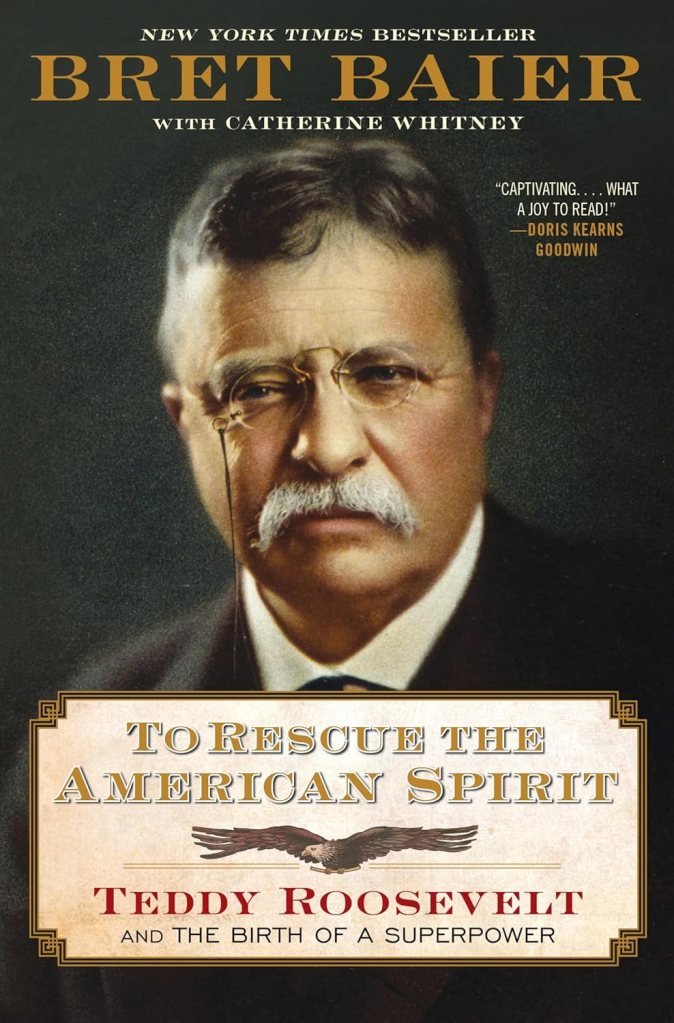
In a separate yet equally engaging offering, journalist Bret Baier presents To Rescue the American Spirit: Teddy Roosevelt and the Birth of a Superpower. This biography chronicles the life and presidency of Theodore Roosevelt, capturing the moment he ascended to the presidency following the assassination of William McKinley.
Baier recounts how Roosevelt learned of McKinley’s death while in the Adirondack mountains and hastily returned to take the oath of office. The narrative then shifts back to Roosevelt’s upbringing, detailing his lineage, health struggles, and early interests that shaped his character.
Throughout the book, Baier highlights Roosevelt’s remarkable achievements, including his Nobel-winning role in negotiating peace between Russia and Japan and championing the construction of the Panama Canal. The title emphasizes the “Birth of a Superpower,” reflecting the pivotal transformations that positioned the United States on the global stage.
Baier’s work is part of a series of presidential biographies, which includes titles focused on figures like George Washington and Ulysses S. Grant. Each biography explores defining moments in these leaders’ lives and the broader implications for the nation, making them essential reads for history enthusiasts.
Both Isaacson and Baier offer distinct perspectives on American history, encouraging readers to reflect on the foundational ideas that continue to influence the nation. Their works serve not only as historical accounts but also as invitations to engage with the evolving narrative of the American spirit.