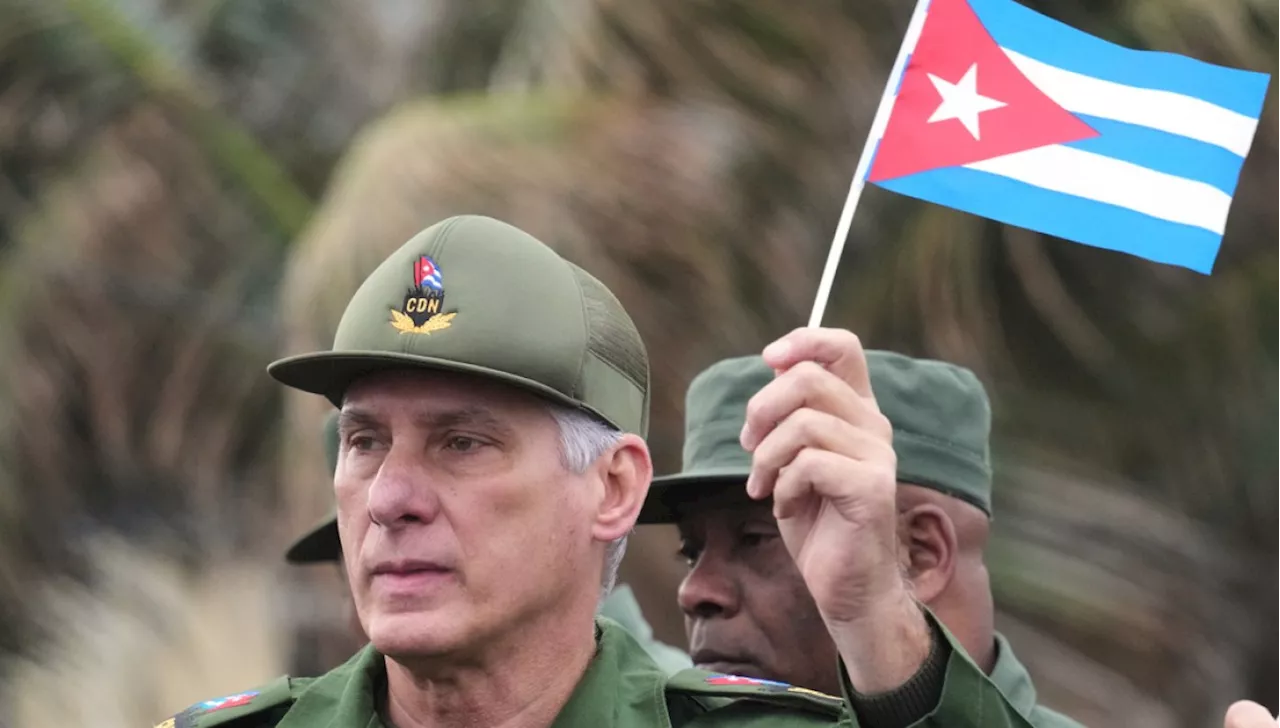
Cuban President Miguel Díaz-Canel issued a strong condemnation of the Trump administration on Friday, referring to U.S. leaders as “fascist, criminal, and genocidal.” This statement came in response to the latest round of tariffs imposed on Cuban imports, which Díaz-Canel argues are designed to weaken the Cuban economy.
In a statement shared on social media, Díaz-Canel criticized the U.S. government for what he described as a “mendacious and empty pretext,” claiming that these tariffs serve the personal interests of American political figures rather than the American populace. He accused the administration of targeting Cuba with economic sanctions that hinder its ability to engage in international trade, particularly regarding oil.
The tariffs were announced as part of a national emergency declared by President Donald Trump concerning Cuba’s alleged support for “malign actors” opposed to the United States. This directive includes the implementation of an additional ad valorem duty on goods sold directly or indirectly to Cuba, further complicating the already strained trade relations between the two nations.
Díaz-Canel questioned the U.S. government’s narrative, asking, “Didn’t the Secretary of State and his clowns keep saying the blockade didn’t exist?” He emphasized the irony of the U.S. portraying its actions as a simple “bilateral trade embargo,” while simultaneously enforcing strict sanctions that impact the livelihoods of the Cuban people.
The White House has accused the Cuban government of collaborating with nations deemed adversarial to U.S. interests, including Russia, China, Iran, and groups such as Hamas and Hezbollah. Marco Rubio, the Secretary of State, has been vocal about his desire to see a regime change in Cuba, advocating for a government that aligns more closely with U.S. values.
This diplomatic clash comes in the wake of significant tensions, particularly following an operation in Venezuela that reportedly resulted in the deaths of approximately 32 Cuban officers. These officers were part of President Nicolás Maduro‘s security detail, highlighting the intricate connections between Cuban and Venezuelan leadership.
The imposition of tariffs is part of a broader strategy by the U.S. to pressure the Cuban government. The Trump administration argues that Cuba’s cooperation with foreign powers poses a direct threat to U.S. national security. Rubio has stated, “Cuba blatantly hosts dangerous adversaries of the United States,” asserting that their presence in Cuba facilitates the establishment of military and intelligence operations that could jeopardize American safety.
As tensions continue to escalate, the implications of these economic measures are significant not only for Cuba but also for U.S.-Cuba relations moving forward. The ongoing rhetoric from both sides indicates a deepening divide that complicates the prospects for dialogue and resolution.