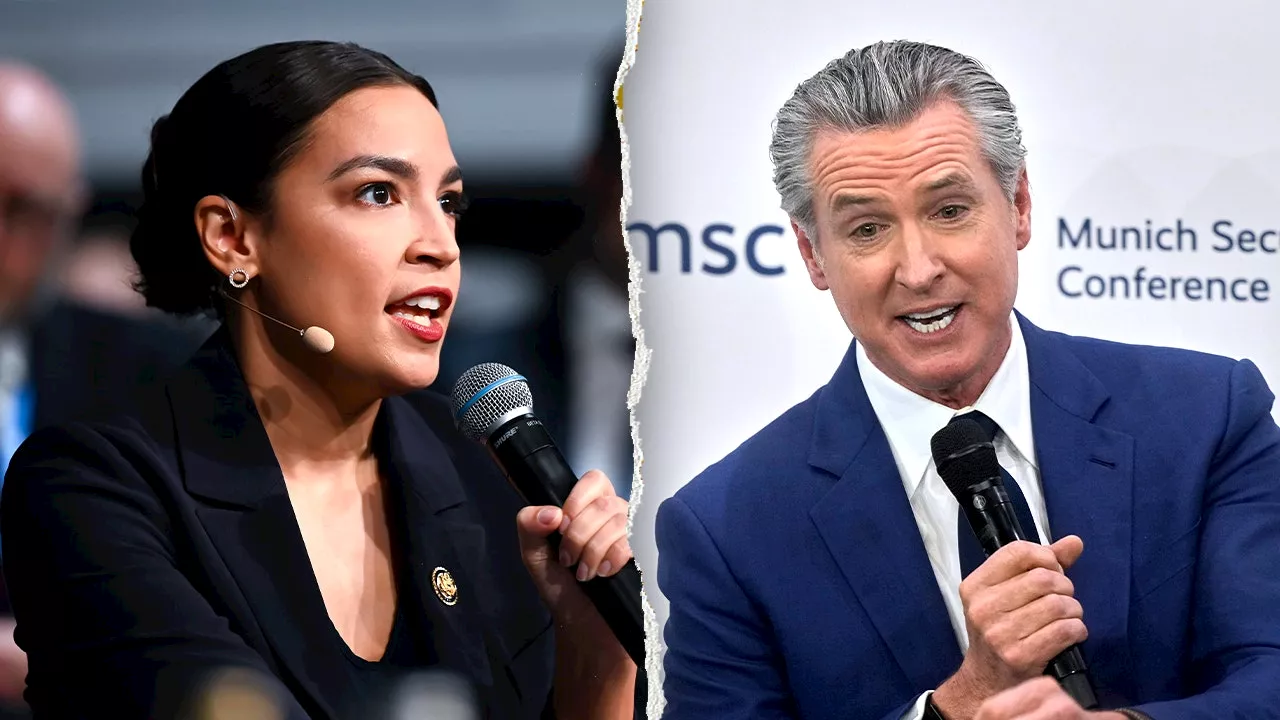
Prominent Democratic leaders are seizing the opportunity at the Munich Security Conference to criticize former President Donald Trump while bolstering their foreign policy credentials ahead of anticipated presidential runs in 2028. Notable figures such as Gavin Newsom and Alexandria Ocasio-Cortez are utilizing this high-profile international platform to draw contrasts between their visions and those of potential Republican contenders.
During a discussion on climate change, California Governor Gavin Newsom asserted, “Donald Trump is temporary. He’ll be gone in three years.” His remarks reflect a broader Democratic strategy to undermine the former president’s influence in international affairs. Ocasio-Cortez echoed this sentiment at a town hall event, stating, “We are seeing our presidential administration tear apart the transatlantic partnership, rip up every democratic norm.”
Newsom and Ocasio-Cortez are joined by other Democrats with national ambitions, including Michigan Governor Gretchen Whitmer and Senators Ruben Gallego and Mark Kelly from Arizona. These leaders are engaging with global counterparts, aiming to present a united front against the backdrop of rising Republican rhetoric, particularly from perceived front-runner JD Vance.
Criticism of Trump’s Foreign Policy
Ocasio-Cortez highlighted the deteriorating relationships with U.S. allies, asserting, “The United States is very much in a compromised position compared to where we were five years ago.” She pointed to the challenges in maintaining a consistent commitment to democratic values and human rights, which she believes have suffered under Trump’s administration.
In a separate discussion, Newsom criticized Trump’s climate policies, labeling them as “doubling down on stupid.” He stated, “Never in the history of the United States has there been a more destructive president than the current occupant of the White House in Washington, D.C.” This characterization aims to resonate with an international audience increasingly concerned about climate change.
Responses from the Current Administration
The White House has responded to the criticisms from Newsom and Ocasio-Cortez, asserting that they should focus on addressing issues in their home states instead of criticizing the federal government from abroad. A statement to Fox News Digital emphasized, “Gavin Newsom and AOC should be fixing California and New York’s many problems, but instead, they are frolicking in Europe, where no one knows or cares who they are.”
During her appearances, Ocasio-Cortez was also asked about her potential presidential platform, specifically regarding tax policies. Laughing, she indicated that implementing a wealth tax “needs to be done expeditiously,” reflecting her commitment to progressive fiscal reforms.
Political analysts are observing these developments closely. Matthew Bartlett, a former State Department official, noted that the Munich gathering has become a “cattle call for 2028” as various Democrats articulate their visions for the future. Terry Shumaker, a former U.S. ambassador, highlighted that such appearances provide candidates with valuable experience and confidence that they can leverage on the campaign trail.
The Munich Security Conference serves as an important stage for these potential candidates, allowing them to present their foreign policy credentials to both domestic and international audiences. As the race for the 2028 presidential election begins to take shape, the actions and rhetoric of Democratic leaders in Munich will likely play a significant role in framing the narrative surrounding U.S. foreign policy for years to come.