The global health landscape in 2025 experienced significant achievements alongside daunting challenges. Despite the disruption caused by the dissolution of the United States Agency for International Development (USAID) and budget cuts affecting health programs, notable progress emerged in disease control and preventive health measures around the world.
Amid the turbulence of U.S. aid reconfiguration, countries like France, Germany, and the United Kingdom also recalibrated their global health funding, raising concerns about future healthcare initiatives. According to Dr. Atul Gawande, former head of global health at USAID, the year has been particularly harsh. He noted, “We’re now closing in on 700,000 people who are estimated to have died by any conservative measure as a result of USAID’s shutdown.” This sentiment underscores the severity of the situation, with predictions of the first increase in child mortality rates since the 1960s.
In response to criticisms, Tommy Pigott, Principal Deputy Spokesperson for the U.S. State Department, countered these claims, labeling them as “false conclusions” based on “inaccurate assumptions.” He highlighted the new global health strategy aimed at fostering stable healthcare systems in various nations.
Remarkable Progress in Disease Elimination
Despite the challenges, 2025 marked a year of significant milestones in global health. One of the most remarkable achievements came from the Maldives, which became the first country to achieve the elimination of mother-to-child transmission of HIV, syphilis, and hepatitis B. In a statement, WHO Director General Tedros Adhanom Ghebreyesus expressed hope for other nations, stating, “This historic milestone provides hope and inspiration for countries everywhere working towards the same goal.”
In December, Brazil was also validated by the WHO for eliminating mother-to-child HIV transmission, making it the largest country in the Americas to achieve this feat. Anurita Bains, UNICEF associate director for HIV/AIDS, described the moment as witnessing “one of the greatest public health achievements of the last 50 years.”
Advancements in Malaria Control and Vaccine Initiatives
The fight against malaria saw encouraging developments as well. Countries such as Suriname, Timor-Leste, and Georgia received certification from WHO for being malaria-free. Suriname’s achievement is particularly noteworthy as it is the first nation in the Amazon region to eliminate the disease. The certification indicates no locally acquired malaria cases for three consecutive years.
In a notable stride against malaria, seven countries introduced a newly approved malaria vaccine in 2025, bringing the total to 24 nations utilizing this vital tool in disease prevention.
The introduction of the long-acting injectable lenacapavir also marked a breakthrough in HIV prevention. Approved in the United States and recommended by WHO, this drug has shown remarkable efficacy rates of 100% for women and 96% for men in clinical trials. The U.S. Department of State, in partnership with the Global Fund, began distributing 4 million doses to low- and middle-income countries, starting with Eswatini and Zambia.
Addressing Environmental Health Risks
In another positive development, a government survey in Bangladesh revealed a decline in blood lead levels among children, particularly a 10 percentage point reduction in the capital, Dhaka. Lead exposure, often associated with paints and dyes, can lead to severe developmental issues in children. Efforts by the Bangladeshi government, alongside new initiatives by Bloomberg Philanthropies, aim to continue addressing this critical health issue.
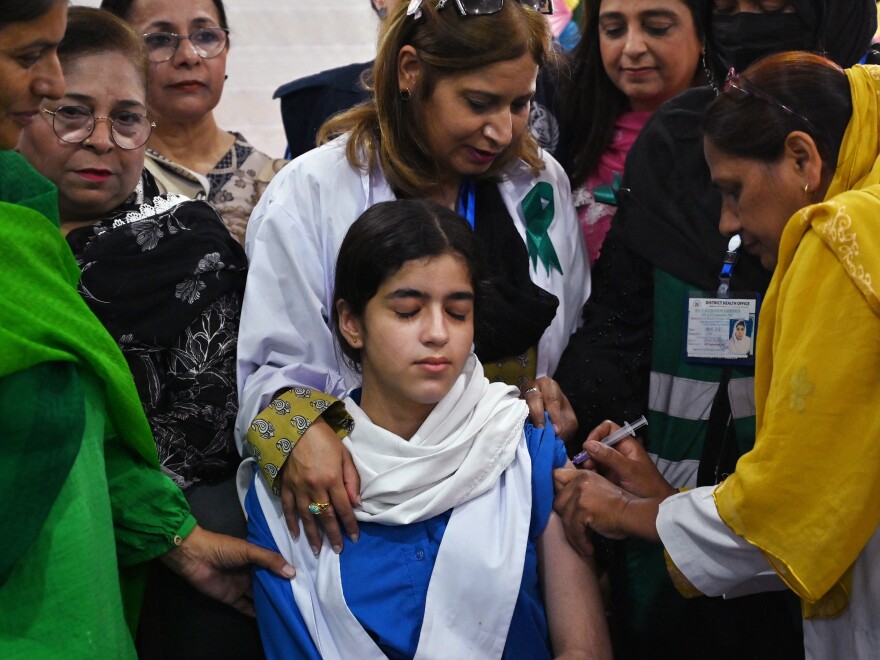
The year also saw progress in cervical cancer prevention through the human papillomavirus (HPV) vaccine. A new one-dose strategy gained traction in 2025, endorsed by 11 countries including Ghana and Pakistan. This approach significantly reduces logistical challenges for families and is expected to increase vaccination rates dramatically.
Moreover, the launch of a hexavalent vaccine in Mauritania and Senegal represents a significant advancement in childhood immunization, as it combines six disease protections into one shot, simplifying the vaccination process for parents.
Strengthening Pandemic Preparedness
In the realm of pandemic preparedness, the Africa Centres for Disease Control and Prevention launched an online platform for sharing genetic data on disease-causing pathogens. This initiative aims to enhance Africa’s capacity to quickly identify and respond to infectious disease outbreaks, potentially mitigating the impact of future pandemics.
As the global health community reflects on the dual narrative of hardship and achievement in 2025, the focus remains on building resilient healthcare systems and advancing initiatives that protect vulnerable populations worldwide.