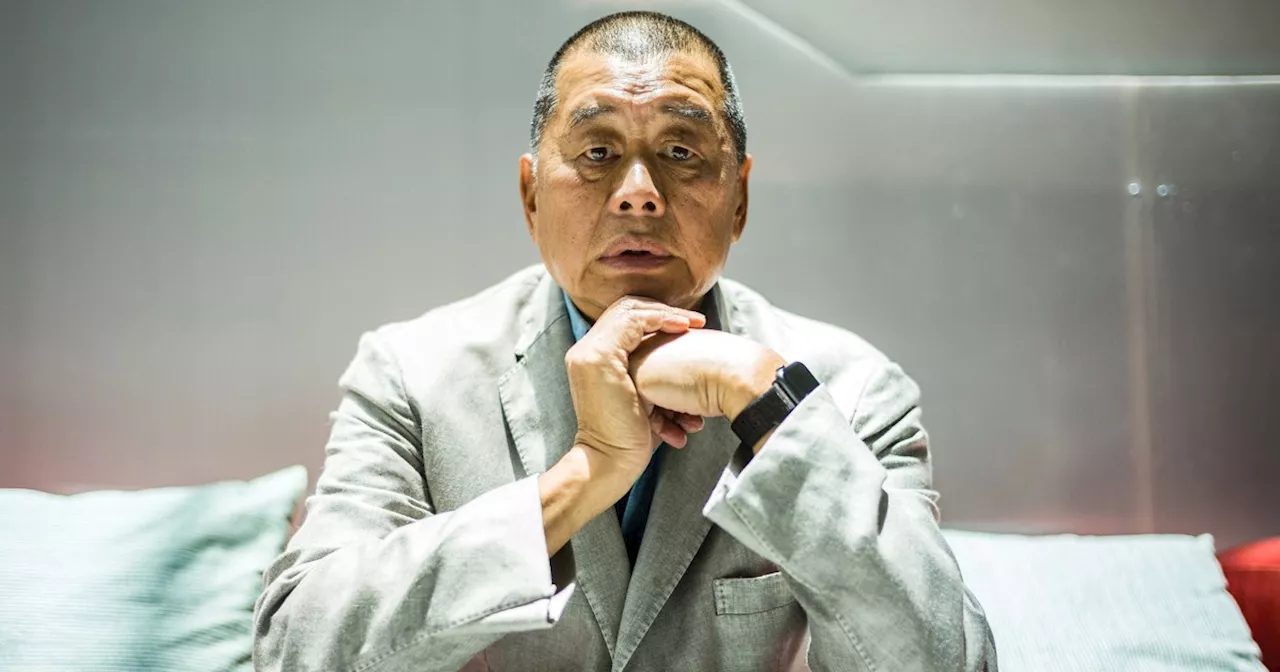
A Hong Kong court is preparing to announce its verdict in the national security trial of Jimmy Lai, a prominent pro-democracy activist and media entrepreneur. The ruling is expected at 10 a.m. local time on March 4, 2024. Lai’s case has garnered significant international attention, illustrating the ongoing tensions between Beijing and those advocating for democratic freedoms in the region.
Lai, one of the most vocal critics of the Chinese Communist Party, was arrested in 2020 shortly after the implementation of a sweeping national security law. This legislation was introduced in response to widespread anti-government protests that erupted in Hong Kong throughout 2019. Facing charges of colluding with foreign forces and conspiracy to publish seditious materials, Lai has pleaded not guilty to all counts.
Trial Highlights and International Reactions
The trial, which has persisted over 156 days, was conducted before three judges specifically selected to handle national security matters. Critics, including various Western governments and human rights organizations, have condemned the proceedings as politically motivated. Both the United States and the United Kingdom have publicly called for Lai’s release, emphasizing his British citizenship.
Former U.S. President Donald Trump has frequently advocated for Lai, declaring intentions to “free” him. This stance prompted warnings from Hong Kong’s leader, John Lee, who cautioned against foreign interference in the region’s legal matters. A White House official confirmed that Trump discussed Lai’s situation with Chinese President Xi Jinping during a meeting in South Korea in October.
Lai’s trial is a critical examination of judicial independence and media freedom in Hong Kong, a territory that was promised Western-style civil liberties for 50 years following its return to Chinese sovereignty in 1997. The Hong Kong and Chinese governments maintain that the trial is fair and necessary to uphold the rule of law, with a Chinese Foreign Ministry spokesperson stating that they fully support actions taken against individuals threatening national security.
Health Concerns and Legal Challenges
Since his arrest, Lai has spent nearly five years in solitary confinement, during which he has faced additional convictions related to unauthorized assembly and fraud. Concerns regarding his health have escalated, as he battles diabetes, high blood pressure, and heart palpitations. The Hong Kong government asserts that Lai has received “adequate and comprehensive” medical care while in custody, claiming that his separation from other inmates is for his safety.
Prosecutors have portrayed Lai as the “mastermind” of a conspiracy involving foreign lobbying to impose sanctions against China and Hong Kong. They referenced meetings he had with U.S. officials, including then-Vice President Mike Pence, during the unrest in 2019. Additionally, Lai is accused of utilizing his publication, Apple Daily, to disseminate articles deemed seditious, inciting animosity toward the Hong Kong and Chinese governments.
Throughout his extensive testimony, Lai has denied allegations of attempting to manipulate foreign policy. He stated that his aim was merely to provide factual commentary rather than “pollute” the minds of his readers.
According to John Burns, an emeritus professor at the University of Hong Kong, the implications of Lai’s potential conviction on press freedom remain uncertain. While the trial is among the most high-profile stemming from recent crackdowns, he noted that other cases, such as the convictions of two journalists for sedition and the subversion charges against 47 pro-democracy figures, have more profound implications for human rights in the city.
Under the national security law imposed by Beijing, dissent in Hong Kong has significantly diminished. Many pro-democracy advocates have either been imprisoned, departed from the political arena, or relocated abroad. The anticipated verdict coincides with a recent decision by Hong Kong’s last major opposition party, the Democratic Party, to disband, citing pressure from Chinese authorities.
Additionally, this ruling follows a legislative election characterized by stringent national security vetting of candidates, resulting in a voter turnout of only 31.9%, one of the lowest in recent history. Critics argue that such measures have effectively marginalized opposition voices within the legislature.
The forthcoming decision regarding Lai’s fate is poised to resonate beyond Hong Kong, serving as a potential barometer for the future of civil liberties and judicial independence in the territory.