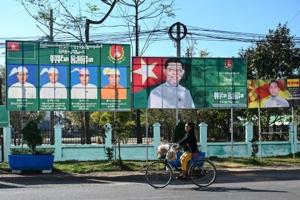
The military junta in Myanmar announced on March 6, 2024, its intention to prosecute more than 200 individuals for allegedly “disrupting” the upcoming elections. This decision follows the introduction of new legislation that rights monitors believe is designed to suppress dissent ahead of the military-run elections scheduled for later this month.
According to the junta’s spokesperson, the charges stem from a variety of activities that authorities claim could hinder the election process. These activities reportedly include protests and other forms of public dissent against the military government. The elections, set for March 30, 2024, are widely viewed as a means for the junta to legitimize its continued rule following the ousting of the elected government in February 2021.
Legislation and Human Rights Concerns
The junta’s recent legislative actions have drawn significant criticism from both local and international human rights organizations. The new laws, which grant authorities broad powers to detain and prosecute individuals for any perceived election-related disruption, have raised alarms about the erosion of civil liberties in Myanmar. Human Rights Watch and Amnesty International have condemned these measures, labeling them as a direct attack on democracy and freedom of expression.
The National League for Democracy (NLD), the party ousted from power in the 2021 coup, has described the junta’s actions as a blatant attempt to silence opposition. A spokesperson for the NLD stated, “These prosecutions are intended to intimidate and create fear among the populace, ensuring that dissent is quashed before the elections even begin.”
The junta’s approach has also drawn the attention of international bodies, including the United Nations and the Association of Southeast Asian Nations (ASEAN), which have expressed concerns about the potential for violence and repression during the electoral process.
International Reactions and Future Implications
The international community continues to monitor the situation closely. Several countries have issued statements urging the junta to respect human rights and allow for a free and fair electoral process. In a recent press release, the U.S. State Department reiterated its stance, emphasizing the need for Myanmar to return to democratic governance.
As the March election date approaches, the potential implications of these prosecutions remain significant. Analysts suggest that the junta’s heavy-handed tactics could lead to increased unrest and resistance from the populace, further complicating an already tense political landscape.
With the eyes of the world on Myanmar, it remains to be seen how the situation will unfold and what steps the international community will take in response to the junta’s actions. The upcoming elections, and the accompanying crackdown on dissent, will likely play a crucial role in shaping the future of Myanmar’s political environment.