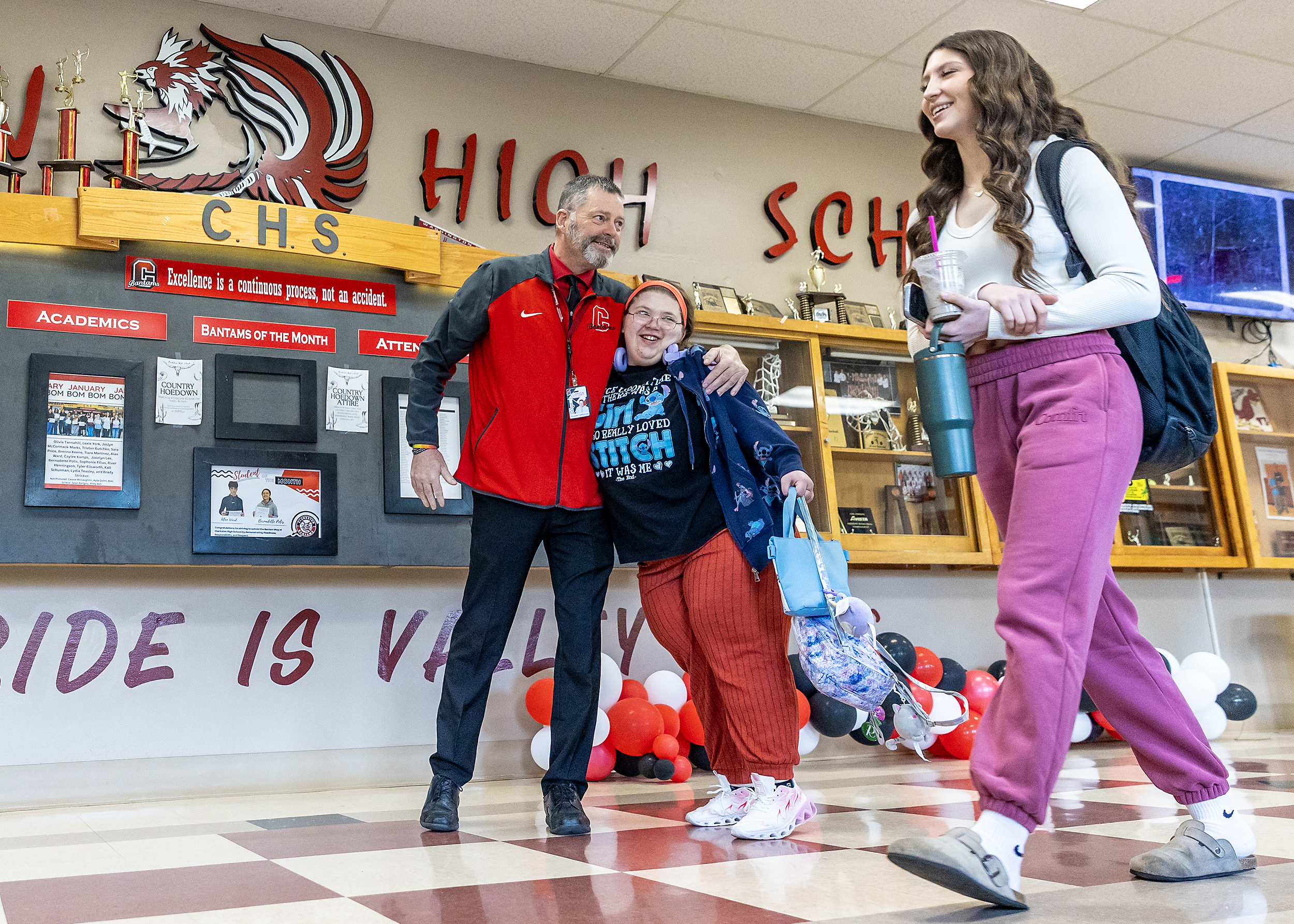
At Clarkston High School in Washington, Principal Doug LaMunyan engages with students as they arrive for their classes, recognizing the challenges they face in a rapidly changing environment. The legalization of cannabis in Washington in 2012 has made it increasingly difficult for educators to manage student use of the drug, which now affects many aspects of school life.
On a typical Monday morning, LaMunyan stands at the entrance, welcoming students with a warm smile. As students bustle past him, some are headed to certified nursing assistant training while others prepare for precalculus exams. With approximately 600 students enrolled, LaMunyan estimates that around 40 may arrive at school under the influence of cannabis or may consume it during the school day.
In the years since legalization, the availability of cannabis, particularly products with high concentrations of THC, has surged. LaMunyan notes, “I could say with 100% certainty that since marijuana has been legalized, the availability to youth has increased exponentially.” Unlike illegal dealers, state-licensed cannabis stores cannot sell to those under 21, yet the presence of the drug remains a concern for school officials.
The shift to edibles and oils has complicated detection efforts. “You can’t tell unless you see their eyes or they have behaviors,” LaMunyan explains. Even if a student smells of cannabis, they may attribute the odor to legal use by parents at home. This complicates LaMunyan’s ability to address the issue directly with students.
Later that same day, LaMunyan was alerted to a strong smell of cannabis in one of the school bathrooms. After investigating, he found no one present, underscoring the challenges of addressing issues when identifying the responsible parties is difficult. Incidents of cannabis use at Clarkston High School are relatively infrequent, with about a dozen cases of confiscated cannabis recorded this academic year. However, LaMunyan remains vigilant, concerned about the potential risks for students.
A 2020 report by the Washington State Prevention Research Subcommittee highlights that even occasional cannabis use can lead to decreased perceptual reasoning and increased anxiety among teenagers. More frequent use can impair learning and memory, affecting academic performance for weeks.
Clarkston Police Department’s school resource officer, Colby Martin, notes that students often find clever ways to conceal cannabis. Many smuggle it in backpacks or hide it in bathrooms, making it challenging for staff to monitor effectively. The increasing prevalence of cannabis vapes, which can easily be confused with tobacco vapes, adds to the complexity.
Students themselves acknowledge the appeal of cannabis as a means to cope with academic and personal challenges. “It works and they don’t think about the long-term,” one student remarked. Many students may not fully understand the immediate effects of cannabis and its potential long-term consequences.
The issue extends beyond high school. Martin has also confiscated cannabis from Clarkston Middle School and elementary schools, indicating that the problem permeates various educational levels. In one notable incident, a young girl mistakenly consumed a cannabis edible, highlighting the potential dangers associated with the drug.
While cannabis incidents may be rare, their impact can reverberate throughout the school community. LaMunyan recalls a past incident at Pomeroy High School shortly after legalization, where one student consumed too many edibles, creating a situation that required law enforcement intervention.
Despite the challenges, LaMunyan and his staff strive to foster an environment focused on students’ futures. They work collaboratively to address concerns about cannabis use, providing resources and support for those in need. “We’ve had success with that mentality,” LaMunyan stated, emphasizing the importance of maintaining open lines of communication with students.
As schools navigate the complexities of legal cannabis, the focus remains on ensuring a safe and productive learning environment for all students.