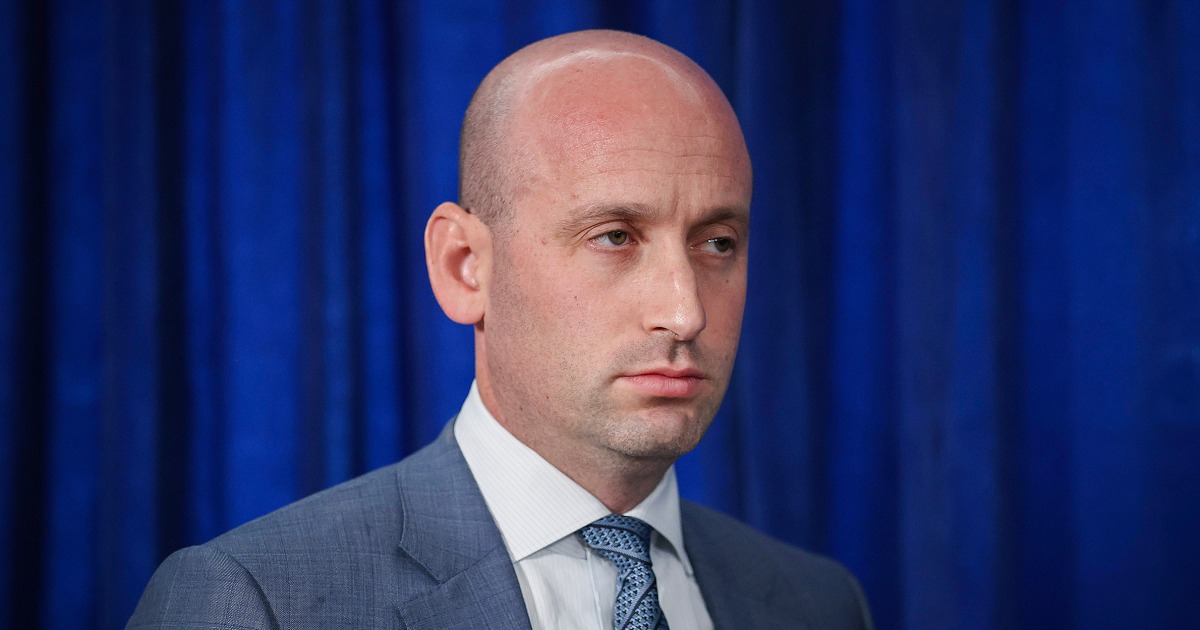
The recent capture of Venezuelan leader Nicolás Maduro by U.S. forces has reignited pro-colonial sentiments among certain figures in the Trump administration and the broader political movement supporting former President Donald Trump. Following the operation, White House Deputy Chief of Staff Stephen Miller, who has been tasked with overseeing Venezuela, shared his views on social media, suggesting a need for a reevaluation of the West’s historical relationship with former colonies.
In a post on X (formerly Twitter), Miller commented on the West’s historical role in dissolving empires after World War II, suggesting that the influx of aid to former territories has resulted in a kind of “reverse colonization.” He stated, “The neoliberal experiment, at its core, has been a long self-punishment of the places and peoples that built the modern world.” This perspective, however, diverges sharply from established academic views on colonialism, which emphasize the moral injustices of such practices.
Historically, colonialism has been critiqued for its foundational belief that colonizers viewed the colonized as incapable of self-governance. Professors Ritwik Agrawal and Allen Buchanan from the University of Arizona articulated this in a February article, noting that this mindset justified ongoing power imbalances and economic injustices that persist today.
As the situation in Venezuela remains fluid, Trump appears to be adopting a strategy that resembles imperialism rather than traditional colonialism. Bruce Gilley, a professor at Portland State University, defined imperialism as external control over a territory without necessarily altering its internal systems. “Imperialism is simply when country A externally controls country B or territory B,” Gilley clarified, indicating that the U.S. approach to Venezuela may reflect this form of governance.
Public discussions within the MAGA movement have also begun to embrace interventionist views that seem contradictory to the previously held skepticism towards foreign wars. Right-wing broadcaster Jesse Kelly recently remarked on X, “Colonization is one of the greatest things that ever happened to the backwards parts of the world,” suggesting that education systems have misrepresented the benefits of colonialism.
The dialogue surrounding colonialism has even reached influential figures close to Trump. On January 4, conservative commentator Lauren Chen argued that the developing world struggles with governance, claiming, “They are poor because they do not know how to run and administer their own countries.” Such statements, while provocative, highlight the complex and often contentious nature of the discourse on colonialism.
In an interview with CNN, Miller reiterated the U.S. position on Venezuela, stating, “By definition, we are in charge because we have the United States military stationed outside the country.” This assertion reinforces the notion of U.S. oversight during what the administration describes as a transition period for Venezuela.
Some Republican lawmakers have raised concerns about the alignment of U.S. actions in Venezuela with the “America First” principles championed by Trump during his campaign. Representative Thomas Massie from Kentucky voiced his concerns on X, arguing that the focus on oil and regime change does not resonate with the priorities of the American public.
While Trump maintains that his support remains strong among his base, he emphasized in an NBC News interview that “MAGA loves it. MAGA loves what I’m doing.” His comments suggest a steadfast belief in the administration’s strategy regarding Venezuela.
U.S. officials are currently collaborating with Delcy Rodriguez, a former ally of Maduro who has assumed the presidency of Venezuela. Trump stated that Rodriguez has been cooperative with U.S. representatives, including Secretary of State Marco Rubio. The historical context of U.S. involvement in Latin America underscores a longstanding pattern where American leaders have sought to influence regional governance based on perceived national interests.
According to John D. French, a history professor at Duke University, Trump’s actions are consistent with a broader U.S. foreign policy approach that prioritizes national interests over ideological commitments. “The U.S. never intended to annex Iraq or Afghanistan… What we want to do is put people in power who we believe will serve our interests,” he explained.
As the situation unfolds, U.S. officials continue to gauge how best to exert influence in Venezuela while navigating the complexities of its political landscape. For now, the administration is treading cautiously, aware of the significant leverage it possesses in this critical geopolitical situation.