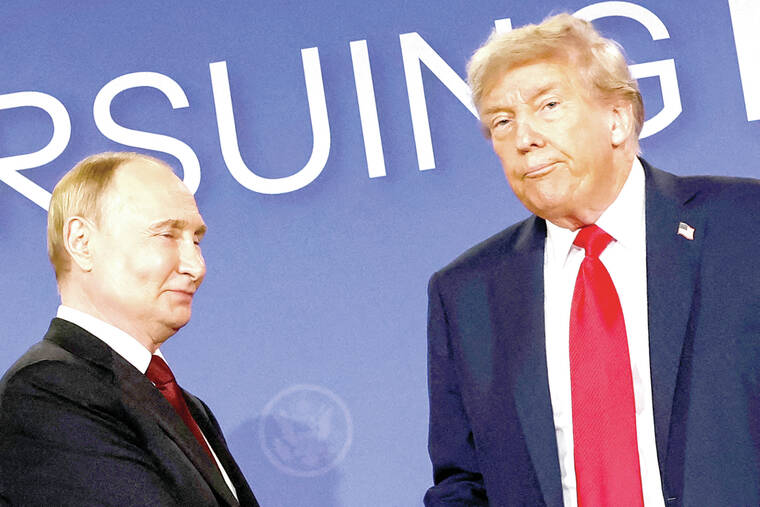
Russia has provided intelligence to Iran during the ongoing conflict involving the United States and Israel, according to U.S. officials. The intelligence includes satellite imagery detailing the locations of military personnel and warships, a move that could further complicate the already tense relations between the U.S. and Russia. This intelligence sharing represents a notable development in the context of the conflict, which escalated significantly following hostilities that began on March 10, 2024.
Intelligence Sharing Details
While some U.S. officials have downplayed the significance of the partnership, noting that Russia has historically supplied similar intelligence to Iran, the latest updates could enhance Iran’s military capabilities. It is unclear how effectively Tehran can utilize this information, particularly given its current missile technology, which lags behind that of Russia. Despite possessing advanced missiles, Iran’s ability to target U.S. naval assets remains uncertain.
The ongoing U.S.-Israeli military campaign has imposed substantial pressure on Iran, degrading its missile launch capabilities. U.S. officials confirmed that Russia’s intelligence updates on American assets aim to assist Iranian operations. Although Iranian forces have not yet targeted U.S. warships, they have attacked military bases in the region, resulting in the deaths of six service members in Kuwait and damage to facilities in Bahrain.
In a separate incident, Iranian drones struck a building in Riyadh, Saudi Arabia, that houses a Central Intelligence Agency (CIA) station. Fortunately, there were no injuries reported from the attack. The intelligence sharing was first reported by The Washington Post.
Diplomatic Contacts and Military Developments
On March 15, 2024, Russian President Vladimir Putin spoke with Iranian President Masoud Pezeshkian to discuss the U.S.-Israeli operations. A Kremlin statement indicated that the leaders agreed to maintain communication, with Putin expressing condolences for the death of Iranian Supreme Leader Ayatollah Ali Khamenei. Although the statement did not explicitly address the intelligence sharing, it emphasized the continuation of dialogue through “various channels.”
Initially, Iran launched a significant offensive that involved thousands of drones and hundreds of missiles targeting U.S. bases across the Middle East. However, according to the Pentagon, Iranian military activity has begun to diminish as U.S. airstrikes intensify against Iranian launch sites and command centers.
Iran’s role in supplying attack drones to Russia for its military operations in Ukraine has been pivotal. In return for this support, Russia has provided technology and intelligence to Iran. Throughout the Biden administration, the White House has consistently declassified information regarding Iranian drone shipments to Russia, aiming to curb Tehran’s military collaboration with Moscow.
Both the U.S. Central Command and the CIA declined to comment on the classified intelligence sharing. In a statement, White House spokesperson Anna Kelly highlighted the reduced pace of Iranian retaliation, stating, “The Iranian regime is being absolutely crushed. Their ballistic missile retaliation is decreasing every day, their navy is being wiped out, their production capacity is being demolished, and proxies are hardly putting up a fight.”
The ongoing dynamics between Iran, Russia, and the United States continue to evolve, with the potential for significant geopolitical ramifications as intelligence sharing and military engagements unfold in the region.