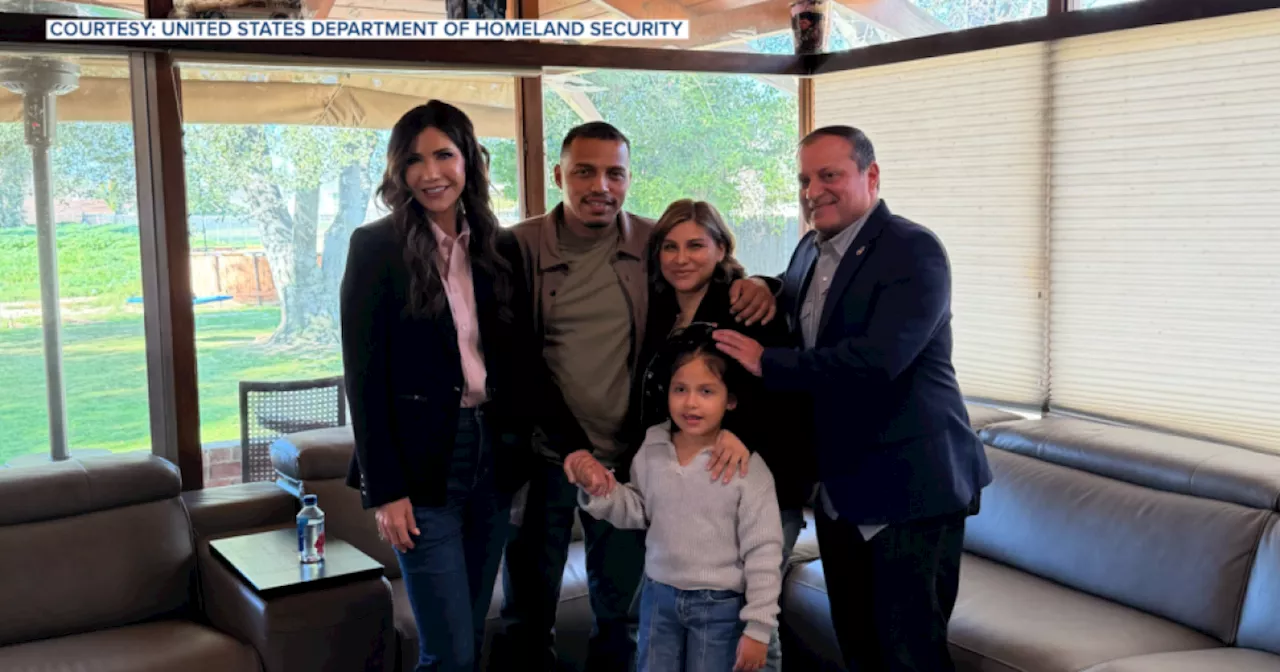
Secretary of Homeland Security Kristi Noem visited Bakersfield on Thursday to highlight incidents involving undocumented immigrants, emphasizing the case of Dalilah Coleman, a young girl severely injured in a 2024 crash. The visit forms part of a nationwide initiative aimed at addressing crime linked to undocumented immigrants.
Dalilah, who was only five years old at the time of the accident, suffered critical injuries in a six-vehicle collision on Highway 395 in San Bernardino County. The crash resulted in severe brain swelling, necessitating life support. Now seven, Dalilah’s family describes her as nonverbal but still radiating positivity and joy. Her father, Marcus Coleman, recalls the days when she would play energetically around their home, filling it with laughter.
The truck driver involved in the accident, Partap Singh, has been identified by U.S. Immigration and Customs Enforcement (ICE) as an undocumented immigrant from India. Currently, he is in ICE custody in Texas. Secretary Noem’s engagement with the Coleman family forms part of her broader efforts to connect with “angel families,” who have endured loss or injury due to incidents involving undocumented immigrants.
Dalilah’s mother, Ileana Krause, expressed her surprise at the attention their family’s story has received. The Colemans had traveled to Washington D.C. seeking to share their narrative but did not expect such a public response. Marcus Coleman reflected on a visit they made to Singh while he was detained, noting how they initially felt resentment towards him.
Krause elaborated on the family’s journey to transcend negative emotions. She emphasized that holding onto anger was unproductive and that their focus had shifted from the driver to supporting Dalilah’s recovery. Nearly two years after the accident, Dalilah continues her rehabilitation, with another surgery scheduled for next year.
The family is actively preparing for this medical procedure while balancing their emotional recovery. Marcus Coleman voiced concerns regarding the trucking industry’s standards, advocating for stricter training and testing regulations. He argued that current practices allow individuals too young to operate heavy machinery independently, which could compromise road safety.
Despite the political implications surrounding their experience, the Colemans prioritize Dalilah’s healing and well-being. They aim to provide her with the necessary resources for recovery while also fostering compassion and understanding in their community. Their hope is that Dalilah’s story will promote unity instead of division, focusing on family values and support.
The visit by Secretary Noem underscores the ongoing dialogue about immigration enforcement and its human impact, as families like the Colemans navigate their complex realities amidst broader societal issues. For them, the journey is about healing, understanding, and embracing a future where compassion prevails.