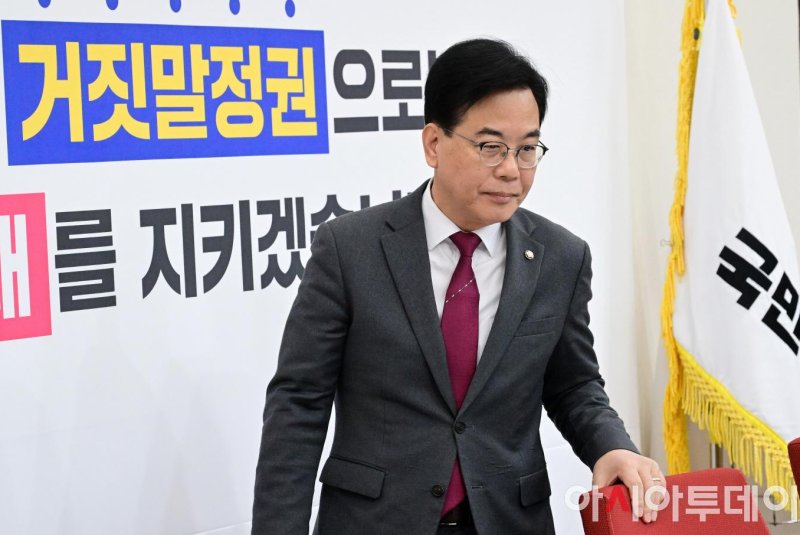
Song Eon-seok, the floor leader of South Korea’s ruling People Power Party, has called for the appointment of a special prosecutor to investigate allegations that political figures received money and gifts linked to the Unification Church. During a press briefing at the National Assembly on December 15, 2023, he also urged a separate inquiry into special prosecutor Min Jung-ki, alleging that his investigations have been politically biased.
Song stated that a special prosecutor is essential “to restore judicial justice.” He emphasized the need for a thorough examination of allegations concerning political funds associated with the Unification Church, particularly claims involving the opposition Democratic Party. According to Song, these allegations have not been sufficiently addressed by Min’s team.
The floor leader criticized Min’s investigation as politically motivated. He accused the special prosecutor of abandoning neutrality and fairness, suggesting that the office operates as a tool for retaliation against opposition figures. Song proposed that the special prosecutor’s office should be disbanded and itself investigated.
In discussing the specifics of any probe related to the Unification Church, Song asserted that investigators should not differentiate between ruling and opposition parties. When asked whether individuals from the People Power Party should also be scrutinized, he asserted that any person accused of receiving money or valuables from the Unification Church must be investigated, regardless of party affiliation.
Song also mentioned the possibility of collaboration with the minor Reform Party to advance the proposal for a special prosecutor. He expressed openness to cooperation with any political entity sharing a similar vision. He indicated that discussions within the People Power Party regarding this issue will take place after Reform Party floor leader Cheon Ha-ram returns to South Korea.
The ongoing controversy surrounding the Unification Church and its alleged connections with political figures has raised significant concerns about the integrity of political processes in South Korea. As calls for accountability grow, the focus remains on how these investigations will unfold and their implications for the current political landscape.