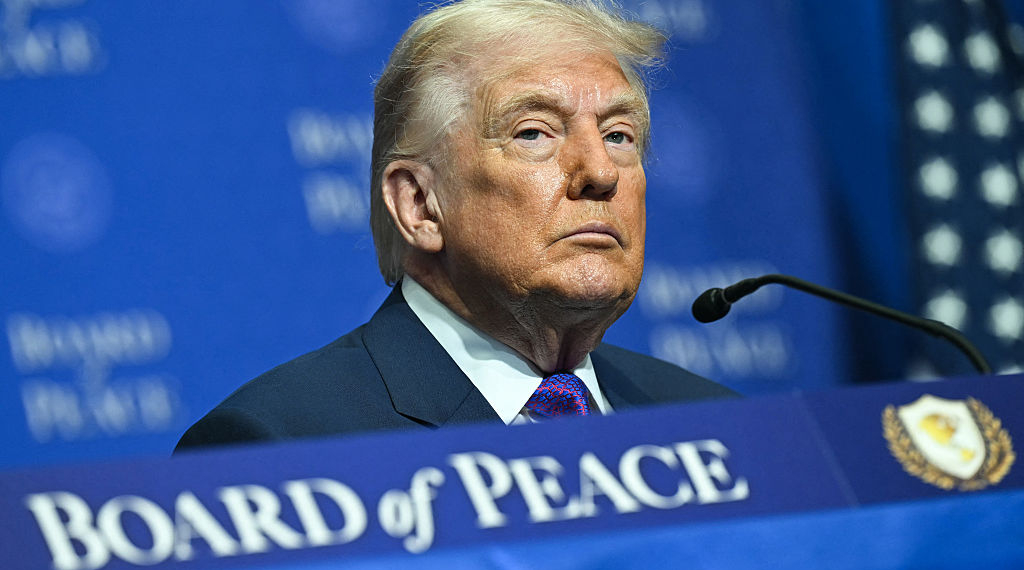
The Board of Peace, chaired by President Donald Trump, convened its inaugural meeting on March 15, 2024, at the U.S. Institute of Peace in Washington, D.C. This summit aimed to address global conflict resolution, although key U.S. allies opted not to attend due to concerns over Trump’s intentions to challenge the role of the United Nations in peacekeeping.
Despite the absence of significant allies such as the United Kingdom, France, and Norway, the meeting attracted representatives from at least 40 countries, including prominent leaders like Hungarian Prime Minister Viktor Orbán and Argentinian President Javier Milei. According to reports from NBC News, the gathering focused on various initiatives, including a multi-billion-dollar reconstruction plan for Gaza, which Trump indicated has already garnered over $5 billion in pledges from unnamed nations.
Trump opened the proceedings with familiar campaign rally music and distributed red hats emblazoned with “USA,” setting a distinct tone for the event. He was joined by Vice President JD Vance, Secretary of State Marco Rubio, U.S. Special Envoy Steve Witkoff, and his son-in-law and adviser Jared Kushner. During his remarks, Trump emphasized the simplicity and importance of the term “peace,” describing the initiative as “one of the important and consequential things” he will be involved in.
The summit is expected to outline comprehensive plans for a United Nations-authorized stabilization force in Gaza, with a senior U.S. official indicating that several countries plan to contribute thousands of troops. The meeting will also cover humanitarian assistance efforts and the establishment of the National Committee for the Administration of Gaza.
Despite the potential benefits of the initiative, the absence of several key allies raises questions about its implications for international cooperation. Countries like Slovenia have expressed concerns that Trump’s approach may undermine the United Nations’ established role in peacekeeping and conflict resolution.
As the meeting progresses, it remains to be seen how the Board of Peace will navigate these diplomatic challenges while pursuing its ambitious goals in the region.