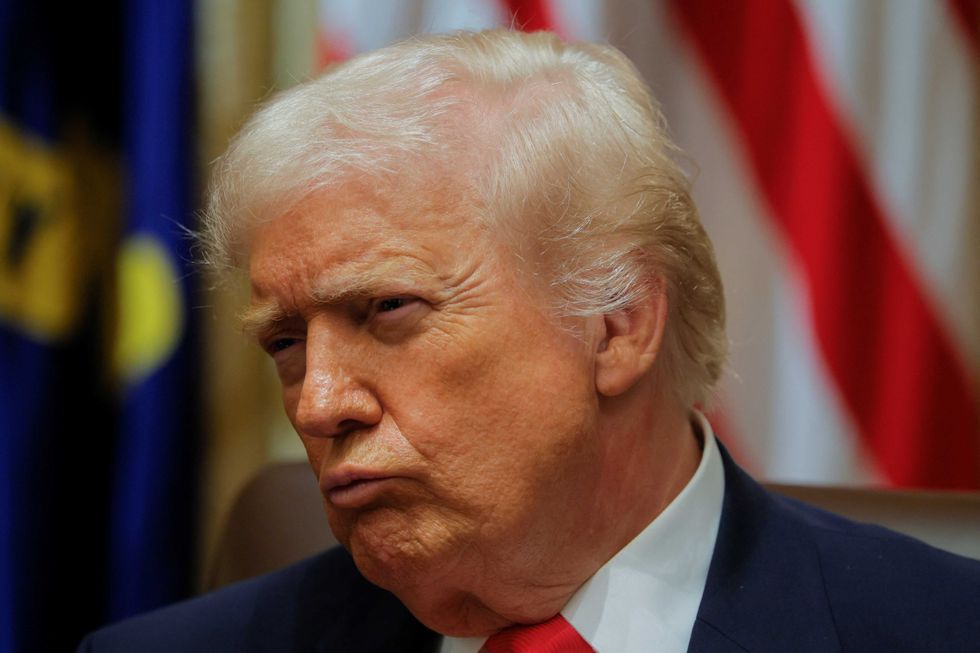
President Donald Trump indicated on Sunday that he possesses “other ways” to impose tariffs on foreign nations, irrespective of an impending ruling from the Supreme Court. The Court is set to deliver its decision this week regarding Trump’s legal authority to unilaterally enact tariffs against foreign countries, a matter that has significant implications for international trade.
Trump’s administration has already enacted a broad range of tariffs on several of America’s largest trading partners, affecting various goods from appliances to lumber and electrical components. His remarks came in a post on Truth Social, where he appeared to reference the forthcoming Supreme Court opinion.
Trump’s Position on Tariffs
In his message, Trump emphasized the necessity of expediency in tariff implementation, arguing that alternative methods exist that could circumvent the legal proceedings currently before the Supreme Court. He stated, “While the United States has other methods of charging TARIFFS against foreign countries, many of whom have, for YEARS, TAKEN ADVANTAGE OF OUR NATION, the current method of Tariffing before the United States Supreme Court is far more DIRECT, LESS CUMBERSOME, and MUCH FASTER.”
Trump’s comments reflect a continued commitment to a strong national security posture, underscoring the importance of speed, power, and certainty in achieving effective results. He further asserted that these factors are essential for accomplishing objectives in a “lasting and victorious manner.”
Implications of the Supreme Court Ruling
The upcoming Supreme Court ruling could significantly affect Trump’s approach to tariffs and broader trade policy. Should the Court affirm his authority to impose tariffs unilaterally, it would bolster his administration’s ongoing trade initiatives. Conversely, a decision against him could limit his ability to implement tariffs without congressional approval.
As international trade relationships continue to evolve, the implications of this ruling will resonate not just within the United States but also with foreign nations that engage in trade with the country. The outcome may influence both economic strategies and diplomatic relations as the world watches closely.
In the context of these developments, Trump’s assertion that he has alternative methods to impose tariffs indicates a willingness to explore various strategies to maintain his administration’s trade agenda, regardless of judicial outcomes. The forthcoming decision from the Supreme Court will be a pivotal moment in shaping U.S. trade policy moving forward.