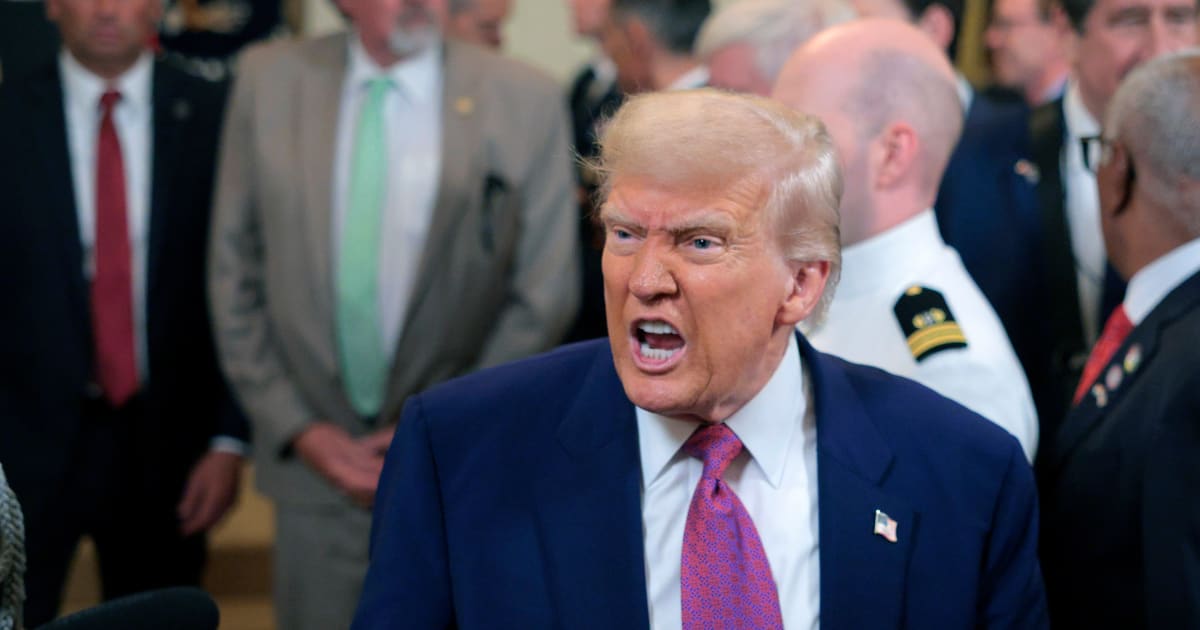
Former President Donald Trump has renewed his threats against Indiana Senate Republicans who rejected his proposal for gerrymandered district maps. In a post on Truth Social, Trump expressed his discontent late Friday, stating, “Republicans in the Indiana State Senate, who voted against a Majority in the U.S. House of Representatives, should be ashamed of themselves.” He specifically targeted Rodric Bray, the Indiana Senate Republican leader, labeling him a “total loser” and suggesting that those who voted against the new map should face primary challenges.
On Thursday, a coalition of Indiana Senate Republicans, with support from Democrats, voted against a congressional map that would have potentially given Republicans an advantage in two U.S. House seats currently held by Democrats. This decision marked a significant blow to Trump, who had pressured the legislators to back the proposal. Despite this pressure, Trump later claimed he “wasn’t very much involved” in the redistricting effort.
Trump’s push for redistricting is part of a broader strategy aimed at maintaining or expanding the Republican Party’s narrow majority in the U.S. House. States like Texas have complied with his calls, successfully passing a gerrymandered map in August 2023, which the Supreme Court recently allowed to take effect.
Indiana Republicans Stand Their Ground
The Indiana Senate’s rejection of the proposed map comes amid increasing tensions within the party. Trump had previously threatened to primary those who defied him, particularly targeting Bray for his opposition. He accused Bray of being “the only person in the United States of America who is against Republicans picking up extra seats.”
Indiana Senate Republicans have cited various reasons for their decision, including the violent threats directed at them and their families stemming from the contentious vote. The situation reflects a growing divide within the party as some members prioritize their constituents’ safety over party loyalty.
As the Republican Party grapples with internal dissent, Democratic lawmakers are also seeking to reshape district maps to counter the Republican-led efforts. In March 2025, voters in California approved Governor Gavin Newsom’s proposal to redraw the state’s district map, which is currently facing a challenge from the Justice Department.
This latest episode in Indiana underscores the escalating tensions between Trump and Republican legislators who resist his influence. As the political landscape continues to shift, the implications for future elections remain uncertain, with primary challenges potentially reshaping the state’s political dynamics.