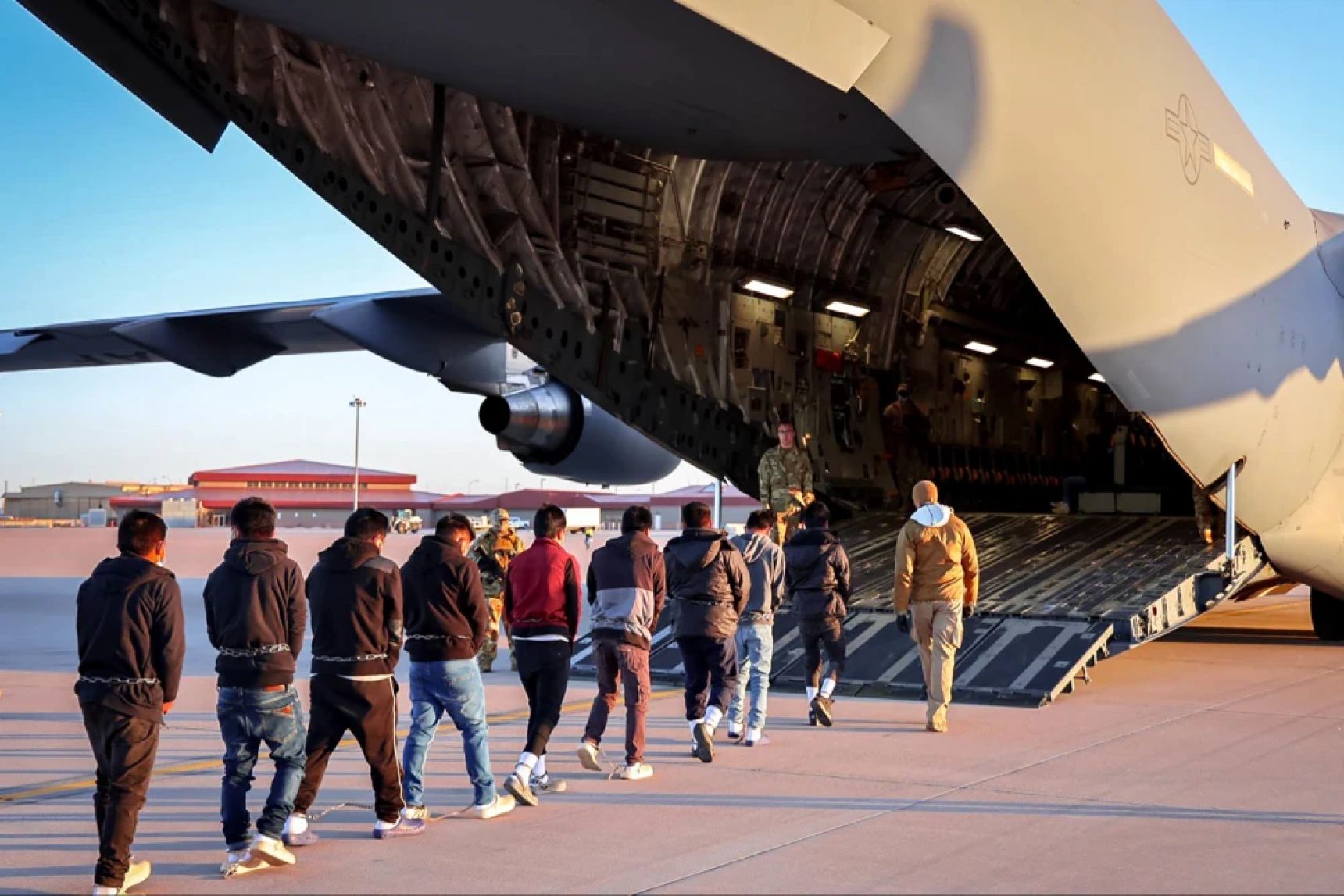
On July 15, 2023, Orville Etoria, a 62-year-old man who had lived in the United States for nearly 50 years, found himself on a chartered flight to an unexpected destination. Alongside four other men, Etoria was taken from the Immigration and Customs Enforcement (ICE) detention center in El Paso without any clear explanation. As the plane crossed the Atlantic, he realized he was not being deported to his native Jamaica, as he had expected, but instead to the Kingdom of Eswatini, a small landlocked country in southern Africa. This incident is part of a controversial agreement between the U.S. and Eswatini, which raises serious human rights concerns.
The men were not informed of their destination until shortly before landing in Eswatini. According to Mia Unger, Etoria’s attorney from the Legal Aid Society, “Mr. Etoria’s deportation to Eswatini and his imprisonment in a maximum security prison with no charges was a grotesque abuse of government power.” The agreement, signed in May 2023, allowed the U.S. to send deportees to Eswatini, circumventing due process and basic legal rights.
Deportation Under a Secretive Agreement
The U.S. Department of Homeland Security (DHS) characterizes these deportations as a necessary measure for individuals whose home countries refuse to accept them. However, the reality is more complex. Many of those deported had been living in the U.S. for years under ICE supervision, having completed their sentences for previous convictions. Instead of being given a chance to contest their deportation, they were sent to Eswatini under a nonbinding memorandum of understanding that lacks legal obligations.
Critics argue that this arrangement resembles human trafficking. The agreement allows the U.S. to send up to 160 deportees within a one-year period while providing $5.1 million for “capacity-building” in Eswatini. However, this funding does not come with guarantees for the legal rights of those deported. The men are held in isolation without formal charges or the opportunity to contest their detention.
The first group of deportees included individuals from Cuba, Jamaica, Laos, Vietnam, and Yemen. U.S. officials have portrayed them as dangerous offenders, but their families and attorneys argue that they are victims of a process that prioritizes speed and secrecy over justice. Under U.S. law, deportations to third countries are permissible only when returning to the home country is impracticable. This provision is currently being challenged in the 1st U.S. Circuit Court of Appeals case known as D.V.D. v. DHS.
Legal and Human Rights Implications
The legal implications of the U.S.-Eswatini agreement are profound. Jaya Ramji-Nogales, a law professor at Temple University, argues that the transfers violate principles of non-refoulement, which prohibits sending individuals to places where they could face harm. The U.S. law governing such deportations is rarely invoked and is being exploited in this context, stripping individuals of meaningful avenues to contest their deportation.
Once in Eswatini, the deportees were taken to the Matsapha maximum-security complex, where they remain in indefinite detention. Local attorney Sibusiso Nhlabatsi faced significant barriers in trying to represent the deportees. Access to legal counsel was repeatedly denied, leading to a situation where the men could not communicate with their families or seek legal recourse.
The conditions of this agreement have sparked outrage among human rights advocates. Organizations like Human Rights Watch have raised alarms about arbitrary detention and the lack of legal representation for deportees. The situation has been described as a “legal black hole,” where individuals are held without any clear path to freedom or legal recourse.
As the situation evolves, the Trump administration appears poised to expand these deportations, with more individuals facing the prospect of being sent to Eswatini and potentially other African nations. Eswatini government spokesperson Thabile Mdluli confirmed that the government has not received communication regarding some individuals slated for deportation, highlighting the opaque nature of these arrangements.
The implications of these deportations extend beyond individual stories. They reflect a broader trend of outsourcing immigration control to countries with weak legal systems, raising significant ethical questions about the U.S. commitment to protecting human rights. Critics contend that this approach undermines the rule of law and erodes the constitutional rights of individuals who have already served their sentences.
As legal challenges unfold and more deportees are sent to Eswatini and potentially other nations, the need for transparency and accountability in U.S. immigration policy becomes increasingly urgent. The stories of individuals like Orville Etoria serve as a reminder of the human cost associated with these agreements, emphasizing the importance of due process and the fundamental rights of all individuals, regardless of their immigration status.