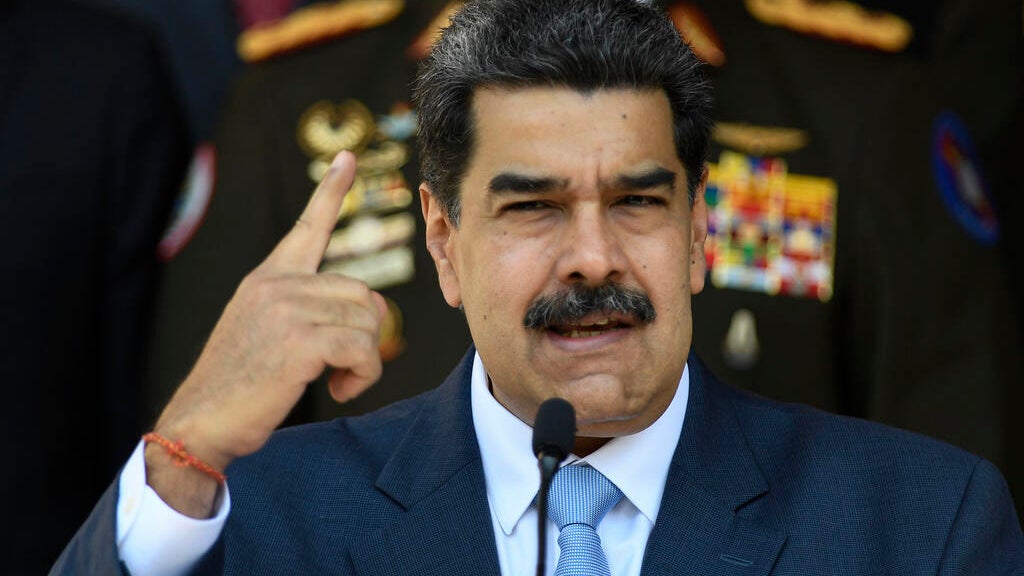
Leaders across Northern California and the Bay Area are responding to the recent announcement by President Donald Trump regarding military strikes in Venezuela and the capture of President Nicolás Maduro. Following an operation targeting military facilities in Venezuela, Maduro arrived at the Stewart Air National Guard Base in New York on Saturday evening to face federal drug trafficking and weapons charges. Trump characterized the U.S. actions as a means to “run the country” of Venezuela until a “safe, proper and judicious transition” can occur.
The strikes on Saturday followed earlier maritime operations where the U.S. seized two oil tankers off the Venezuelan coast. Trump stated that the military’s involvement is necessary for the future governance of Venezuela, raising significant concerns among various political leaders regarding the legality and implications of such actions.
Political Leaders React to Military Action
Democratic Congresswoman Doris Matsui expressed strong opposition to the military strikes, stating that “military conflict should be a last resort.” She criticized the operation as “illegal and reckless” and emphasized that it risks entangling the United States in a broader conflict. Matsui further stated, “This action demands accountability,” arguing that the Trump administration’s shift towards military intervention contradicts previous claims of not pursuing regime change.
Congressman John Garamendi echoed these sentiments, labeling the attack as an unconstitutional action. He questioned the administration’s strategy for establishing a democratic government in Venezuela, asking, “How can this be done without American boots on the ground and without bloodshed?” Garamendi’s concerns highlight the potential ramifications of U.S. military actions on international relations and regional stability.
In contrast, Republican Congressman Kevin Kiley praised the military operation, asserting that the removal of Maduro represents a significant improvement for both the United States and Venezuela. He stated, “Today marks the end of Maduro’s illegitimate rule and narco-terrorist reign,” emphasizing the potential for a new beginning for the Venezuelan people. Kiley called for Congressional involvement in shaping future U.S. actions in the region.
Congressman Doug LaMalfa also commended the military’s precision during the operation, stating, “Today’s actions send a clear message to the world.” He expressed anticipation for further briefings on the operation and the administration’s plans for future actions in the Western Hemisphere.
Bay Area Leaders Criticize Intervention
In the Bay Area, leaders like Democratic Congresswoman Lateefah Simon and state Senator Scott Wiener raised concerns about the U.S. intervention, labeling it unconstitutional. Simon stated, “This is illegal under the Constitution,” and accused the administration of disguising its motives for the military action, linking it to desires for Venezuelan oil. “This is a war being sold to the American people under false pretenses,” she asserted.
Wiener reinforced Simon’s perspective, calling the operation grounds for impeachment and questioning Trump’s motives. He claimed, “Trump cares nothing for the human or economic cost of conquering another country,” framing the military action as self-serving and devoid of legal justification.
Former House Speaker Nancy Pelosi also condemned the Trump administration’s actions, stating that while Venezuela is under an illegitimate regime, the administration has not established a credible national security threat to justify the military force used. She criticized Trump’s approach as a disregard for Congressional authority, emphasizing the importance of checks and balances in the U.S. political system.
Democratic Congressman Mike Thompson described the operation as “illegal military actions,” asserting that decisions regarding military force should involve Congressional oversight, especially when the U.S. faces no immediate danger. He called for an urgent convening of Congress to discuss the legal justifications for the military action and its potential impact on regional stability.
The mixed reactions from leaders reflect a significant divide in opinions regarding U.S. foreign policy and military intervention, raising questions about the future of U.S.-Venezuela relations and the role of Congress in military decisions.