The United States military has seized another oil tanker, the Olina, linked to Venezuela, marking the fifth such action in recent weeks. The operation took place early on a Friday morning in the Caribbean, off the coast of Trinidad, as US authorities continued to tighten their grip on oil shipments from the sanctioned nation. This seizure comes amidst heightened tensions surrounding Venezuela’s oil supply, which the Trump administration has described as a “tremendous wealth” resource.
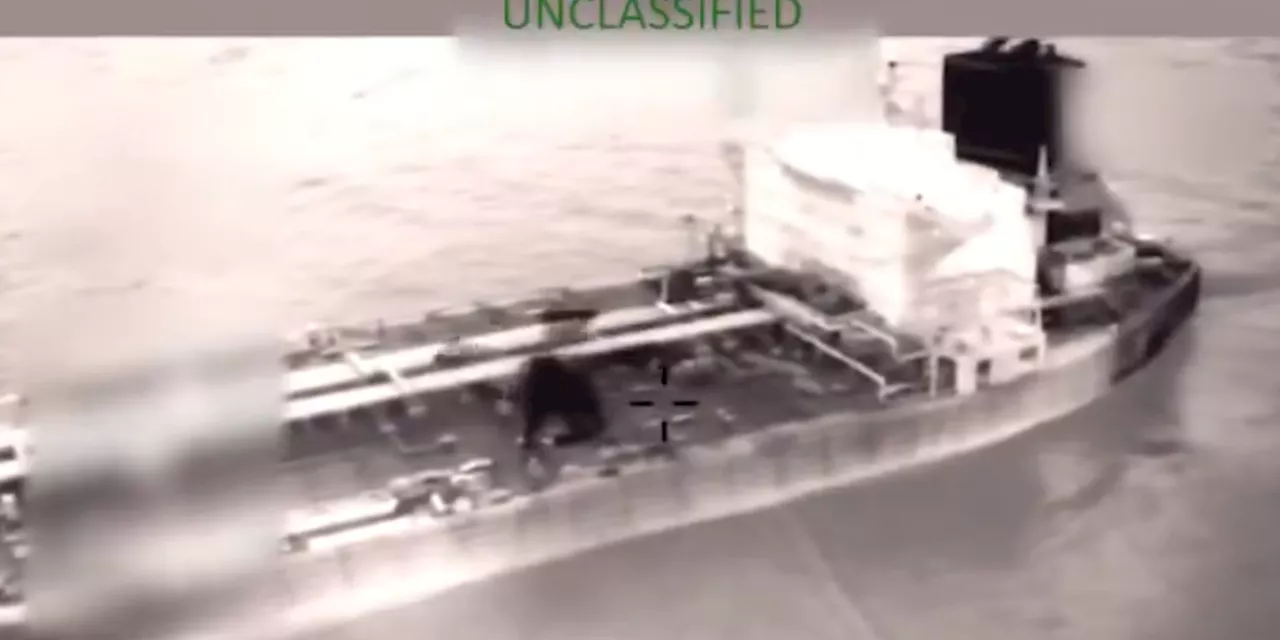
Homeland Security Secretary Kristi Noem shared unclassified footage on social media, depicting US forces boarding the Olina and deploying explosives. She stated, “As another ‘ghost fleet’ tanker ship suspected of carrying embargoed oil, this vessel had departed Venezuela attempting to evade US forces. This is owning the sea.” The Olina was reported to be carrying approximately 700,000 barrels of crude oil, further complicating the already strained economic situation in Venezuela.
The recent seizure is part of a broader strategy that has seen the US military intercept multiple vessels tied to Venezuela. Since the imposition of a blockade on sanctioned oil tankers in December, the military has captured three tankers within just three days. According to TankerTrackers.com, the US has seized five tankers and a total of 6.15 million barrels of oil within the past month, valued at over $300 million.
US officials have characterized the Olina and other seized vessels as part of a “shadow fleet” involved in transporting oil for sanctioned countries, including Venezuela, Russia, and Iran. The blockade has been justified based on allegations that the Venezuelan government is linked to a foreign terrorist organization known as the Cartel de los Soles. However, these claims have come under scrutiny.
In late December, a group of United Nations experts condemned the blockade, asserting that the alleged cartel does not exist. Among the experts, Ben Saul, the UN’s special rapporteur on human rights and counterterrorism, and Gina Romero, the special rapporteur on freedom of association and assembly, described the blockade as a violation of international law. They stated, “There is no right to enforce unilateral sanctions through an armed blockade,” emphasizing that such actions without UN Security Council approval are illegal.
In a recent indictment, the US Department of Justice acknowledged that the “Cartel de los Soles” is not an actual organization. Venezuelan President Nicolás Maduro has pleaded not guilty to US narco-terrorism charges, further complicating the diplomatic landscape surrounding Venezuela’s leadership and its oil resources.
The ongoing military actions and economic strategies underscore the US government’s intent to control Venezuela’s oil distribution, a move that critics argue exacerbates the humanitarian crisis in the country. The blockade has drawn international condemnation for its potential violation of fundamental human rights, raising concerns about the impact on the Venezuelan populace.
As the situation continues to evolve, the implications of these actions on both regional stability and international relations remain significant. The US’s approach to managing Venezuela’s oil sales and revenues may have lasting effects on the geopolitical landscape in the Americas.