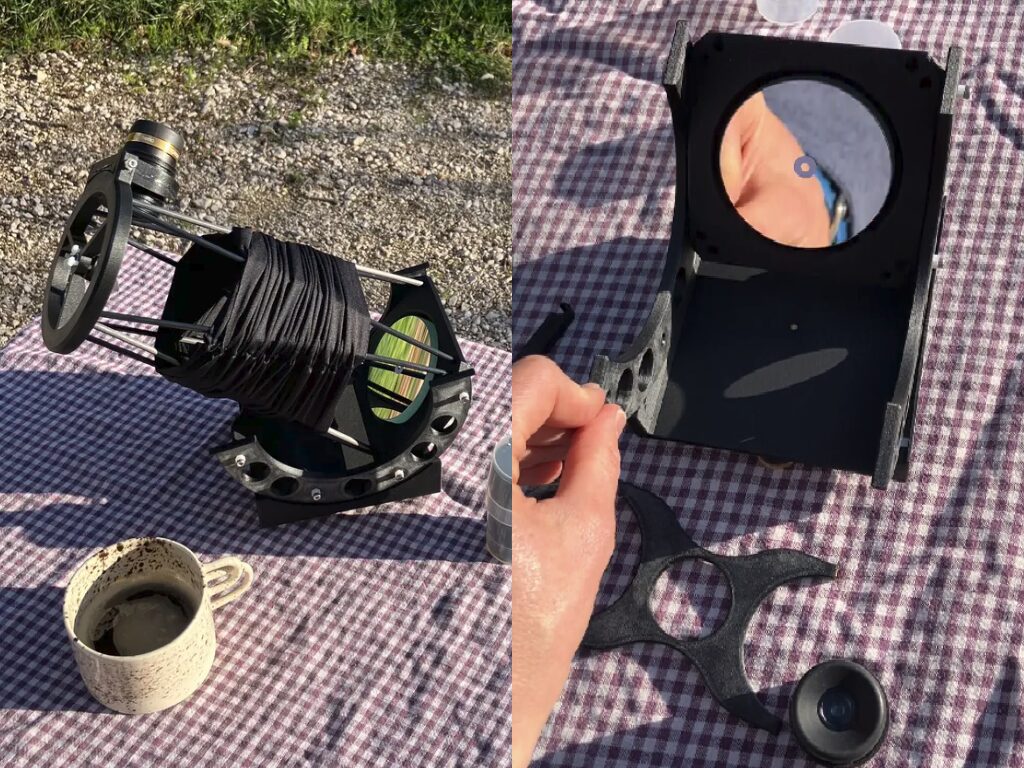
A new innovation in the field of amateur astronomy has emerged with the introduction of an affordable, pocket-sized telescope designed for easy portability. Developed by inventor Lucas Sifoni, this 3D-printed telescope can be assembled at home using inexpensive materials, making it accessible for educational purposes and personal use.
The telescope’s design focuses on convenience, measuring just 30 centimeters when fully assembled. This compact size allows users to easily carry it in a jacket pocket, ensuring that stargazing opportunities can be seized whenever they arise. The telescope includes user-friendly features that cater to both beginners and experienced astronomers alike.
Sifoni’s creation utilizes 3D printing technology, which has become increasingly popular for producing customized tools and devices. The DIY nature of the telescope encourages individuals to engage in hands-on learning, fostering a greater interest in science and technology. It also allows users to modify their telescope to suit personal preferences or specific viewing needs.
Accessible Astronomy for Everyone
The affordability of the telescope makes it particularly appealing. With an estimated cost of less than $50 USD for materials, it provides an economical alternative to traditional telescopes, which can often be priced in the hundreds. This cost-effective approach aims to democratize access to astronomy, encouraging more people to explore the night sky without the burden of financial constraints.
Educational institutions may benefit significantly from this innovation. Schools and community programs can utilize the telescope as a teaching tool, inspiring students to delve into subjects such as physics and astronomy. By incorporating practical, hands-on experiences, educators can enhance students’ understanding of complex scientific concepts.
Sifoni’s telescope also aligns with current trends in the maker movement, which promotes creativity and innovation through DIY projects. As more individuals seek to engage with technology in a meaningful way, such projects empower them to learn and create, bridging the gap between theoretical knowledge and practical application.
Future Potential and Community Engagement
The response to Sifoni’s telescope has been overwhelmingly positive, with many enthusiasts expressing excitement about its potential. In addition to its educational applications, the telescope is expected to foster community engagement among amateur astronomers. Local clubs and star parties can encourage participants to share their experiences and tips, creating a collaborative environment for learning and exploration.
As 3D printing technology continues to advance, the possibilities for future iterations of the telescope are vast. Users may find enhancements or custom designs that suit their individual preferences, from improved optics to additional features that enhance usability.
In conclusion, Lucas Sifoni’s 3D-printed DIY telescope represents a significant step forward in making astronomy accessible to a broader audience. With its compact design and low cost, it paves the way for enhanced engagement in the sciences. As more people take to the skies with this innovative tool, the stars may become a little closer for all.