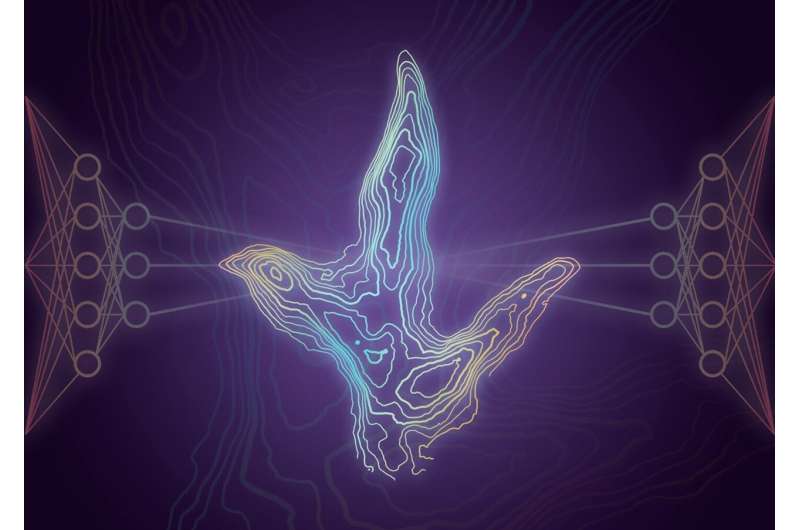
A groundbreaking application powered by artificial intelligence (AI) is poised to revolutionize how researchers and enthusiasts identify dinosaur footprints that date back millions of years. According to a study published on January 26, 2026, by the University of Edinburgh, the DinoTracker app allows users to upload images or sketches of dinosaur tracks for instant analysis. This development could significantly enhance the understanding of prehistoric life.
Fossilized dinosaur footprints serve as crucial indicators of ancient ecosystems. Yet, identifying the specific species responsible for these tracks has long presented challenges for paleontologists. Traditional methods often involved manual comparisons and biases that could skew results. The new AI-driven approach aims to eliminate these issues by employing advanced algorithms to recognize and classify variations in footprint shapes.
The Mechanism Behind the AI Application
Research conducted by the Helmholtz-Zentrum research center in Berlin, in collaboration with the University of Edinburgh, has led to the creation of a sophisticated AI model. This model was trained on nearly 2,000 fossilized footprints, along with millions of simulated variations that replicate realistic changes, such as compression and edge displacement.
The AI identifies eight critical features of footprint variation, including toe spread, heel position, contact area size, and weight distribution across the foot. Remarkably, this technology achieved approximately 90% agreement with classifications made by human experts, even in cases involving contentious species.
The implications of this research extend beyond identification. The AI has revealed intriguing connections between certain dinosaur tracks and both extinct and modern bird species. This suggests that the origins of birds may date back tens of millions of years earlier than previously assumed. Alternatively, some primitive dinosaurs may have had foot structures that closely resembled those of birds.
Historical Insights from the Isle of Skye
One of the study’s notable findings pertains to ancient footprints discovered on the Isle of Skye, which were created approximately 170 million years ago. The analysis indicates these tracks may belong to some of the oldest known relatives of duck-billed dinosaurs, providing new insights into the evolutionary history of these creatures.
The DinoTracker app not only opens new avenues for research but also democratizes the process of fossil analysis. As Dr. Gregor Hartmann from the Helmholtz-Zentrum research center stated, “Our method provides an unbiased way to recognize variation in footprints and test hypotheses about their makers. It’s an excellent tool for research, education, and even fieldwork.”
Professor Steve Brusatte, Personal Chair of Paleontology and Evolution at the University of Edinburgh, expressed enthusiasm for the study’s contributions to paleontology. He remarked, “This study is an exciting contribution to paleontology and an objective, data-driven way to classify dinosaur footprints—something that has stumped experts for over a century. It opens up exciting new possibilities for understanding how these incredible animals lived and moved, and when major groups like birds first evolved.”
As researchers continue to explore the potential of AI in paleontological studies, the DinoTracker app stands as a testament to how technology can enhance our understanding of Earth’s prehistoric inhabitants. This innovative tool not only enriches scientific inquiry but also invites the public to engage in the exploration of ancient life.