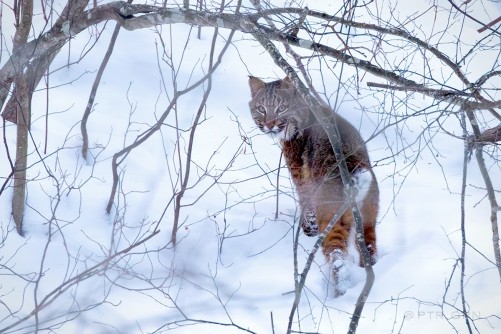
Bobcats, once eradicated from Rhode Island and neighboring states, are making a notable comeback. Recent reports confirm that these elusive felines are increasingly visible across southern New England, with over 1,000 sightings documented in a matter of months. This surge is part of the ongoing efforts of the Rhode Island Bobcat Project, spearheaded by researchers at the University of Rhode Island (URI) in collaboration with local partners, including the Rhode Island Department of Environmental Management and the Wildlife Clinic of Rhode Island.
Understanding Bobcat Habits and Habitat
Data from the project is being utilized by URI Assistant Professor of Quantitative Ecology Kathleen Carroll and Ph.D. student Christopher Hickling to analyze the bobcats’ movements, habitat preferences, and population dynamics. The increase in bobcat sightings is not only a positive indicator for the species but also reflects a growing public fascination with these animals.
Carroll noted, “Bobcats in this area appear very tolerant of people compared to bobcats in other regions. This makes sense since southern New England is so densely populated. In other states, cats can be more wary; here, they are walking across driveways at night.” This adaptability to urban environments suggests that bobcats are adjusting well to human presence.
The team has gathered valuable information from public sightings, camera traps, and GPS radiocollars. This data is essential for formulating land management practices that promote wildlife conservation while accommodating human activities. “We are happy people are excited about seeing bobcats and interested in their importance for biodiversity,” Carroll added. “The reports we’ve received will enable us to better support their populations here in the future.”
Bobcat Behavior and Public Engagement
Since the launch of the bobcat survey in September 2023, the researchers have observed several trends in bobcat behavior. Most sightings have originated from southern Rhode Island, although reports have come from various locations within the state, excluding the islands. As spring approaches, residents are encouraged to be aware that female bobcats typically give birth to litters of two to four kittens during this time. They often establish dens in secluded areas, away from human activity.
URI’s naming convention for the bobcats, which ties their names to native birds such as Osprey, Falcon, and Plover, adds an engaging element to the research. Each bobcat receives a formal identification number like B03M or B11F, but the memorable names make it easier for the public to connect with these animals.
Bobcats have large home ranges and tend to move frequently. Younger males especially are known to disperse to new areas, making sightings variable. Despite their mobility, some individuals may be spotted repeatedly if their habitats overlap with human residences. The researchers noted, “Many of our cats seem to ‘hang around’ certain areas.”
The appeal of bobcats lies in their charismatic nature, which resonates with the local population. These animals bear a striking resemblance to domestic cats, exhibiting behaviors that many find relatable. Carroll explained that most people will likely never encounter a wild wolverine, but the presence of bobcats makes the experience of wildlife viewing more accessible to the public. “That combination is magic,” Carroll said.
To learn more about the Rhode Island Bobcat Project, interested individuals can visit connectivityandconservation.com/bobcat-project. For specific inquiries, contact [email protected] or [email protected].