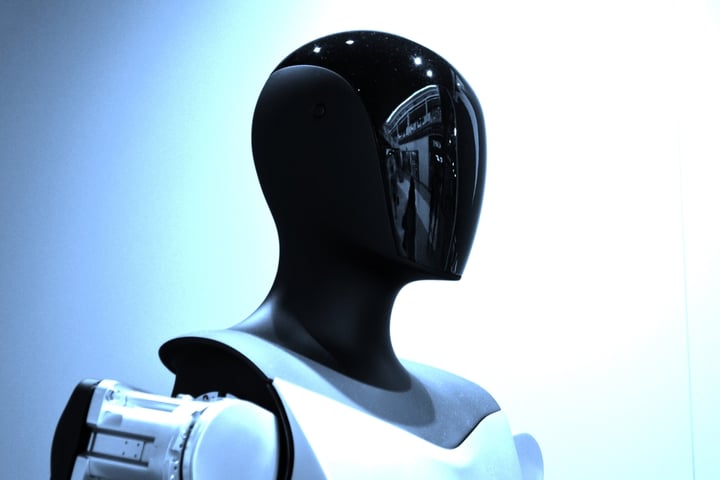
Elon Musk has made a bold statement regarding Tesla’s humanoid robot, Optimus, claiming it could be the first machine capable of building civilizations on other planets. This assertion was made during a response to a user on the social media platform X, where Musk discussed the potential of AI technology and its implications for future space exploration.
In a conversation initiated by user Ryan Dahl about the recent merger between SpaceX and xAI, Musk noted, “Optimus will be the first Von Neumann machine, capable of building civilization by itself on any viable planet.” This response reflects Musk’s ongoing ambition to push the boundaries of technology and its applications for humanity’s future among the stars.
Understanding the Concept of a Von Neumann Machine
The term “von Neumann machine” originates from the theoretical concepts proposed by Hungarian-American mathematician and physicist John von Neumann. Such machines are envisioned as self-replicating spacecraft that can gather raw materials from various planetary systems to create duplicates of themselves. These replicas could then be dispatched to explore further into the cosmos.
Musk’s reference to Optimus as a potential von Neumann machine suggests a vision where artificial intelligence could autonomously manage and control robotic systems on distant planets. This idea aligns with Musk’s broader narrative of integrating advanced AI with space exploration, highlighting the potential of robotics in establishing human presence beyond Earth.
Optimus and Tesla’s Future Aspirations
Optimus has been a focal point for Musk, who believes it could revolutionize productivity on Earth and beyond. He has stated that the robot could eventually surpass the collective productivity of the entire planet, especially when combined with space-based AI computing.
In a strategic shift, Musk announced that Tesla would discontinue its premium vehicles, namely the Model S and Model X, to streamline production of the Optimus robot in Fremont, aiming for an ambitious target of 1 million units per year. This decision is part of Tesla’s broader strategy to scale operations and meet growing demand for innovative technologies.
The stock performance of Tesla has seen fluctuations, with shares identified by Benzinga as experiencing a 0.67% decline to $419.15 in after-hours trading on Tuesday. Despite this, the company’s momentum metrics remain strong, indicating a positive long-term price trend.
Musk’s vision continues to captivate the public, intertwining the possibilities of AI, robotics, and space exploration, while simultaneously aiming to redefine productivity on Earth. As Tesla and SpaceX advance their technological agendas, the potential for Optimus to play a pivotal role in the future of civilization remains a topic of significant interest and speculation.