A new roadmap has been established to direct future exploration missions to Enceladus, a moon of Saturn recognized for its potential to harbor life. This initiative outlines key hypotheses and scientific objectives for the current decadal cycle and beyond, reflecting the moon’s status as a high-priority target in the fields of astrobiology and planetary science.
The 2023–2032 Planetary Science and Astrobiology Decadal Survey, published by the National Academies of Sciences, Engineering, and Medicine, underscores Enceladus as a prime destination for a NASA New Frontiers class mission. It has also recommended the Enceladus Orbilander mission, marking it as the second priority Flagship mission. This prioritization is based on the moon’s unique combination of essential life-supporting ingredients: organic materials, a liquid solvent, and a viable energy source.
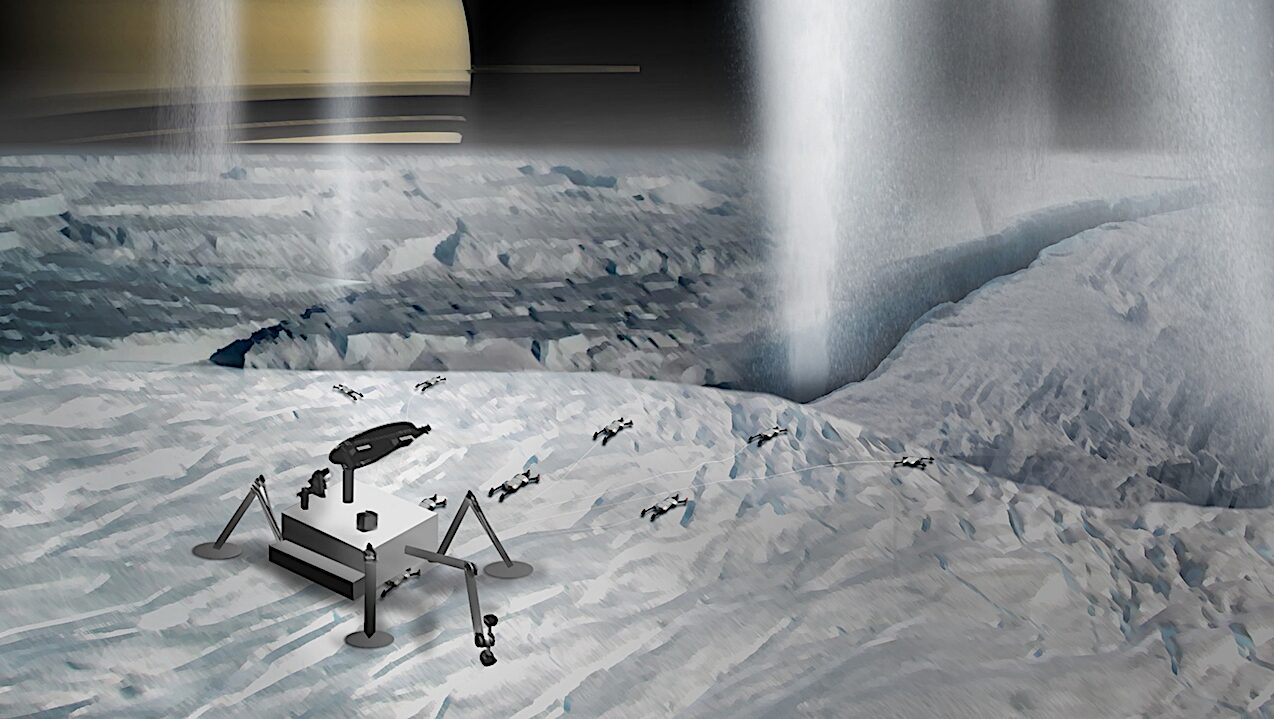
In a significant step towards advancing our understanding of this intriguing celestial body, a science definition team for the Enceladus Vent Explorer was initiated under NASA’s Innovative Advanced Concepts program. In 2021, the team conducted three workshops focusing on high-priority scientific inquiries. The collaborative discussions resulted in two central science goals: firstly, examining how the thermal evolution of Enceladus has influenced its ability to maintain a liquid ocean and sustain nutrient recycling; secondly, investigating how the astrobiological potential of Enceladus has evolved over time.
Proposed Investigations and Hypotheses
The current roadmap details a range of investigations aimed at addressing these science goals. Each proposed study will explore the physical parameters and hypotheses necessary to deepen our understanding of Enceladus’ environment and its ability to support life.
Additionally, the roadmap introduces a new approach to conceptualize the organic state of planetary bodies. This innovative framework is intended to facilitate the formulation of hypotheses related to the emergence of life and provide context for possible biosignatures that may be found on Enceladus.
As the scientific community prepares for these missions, there is an emphasis on the need for further technological development and research focused on ocean world exploration. This is critical for maximizing the potential of future missions to Enceladus and similar celestial bodies.
The graphic depiction of the Enceladus Vent Explorer: Phase II concept, credited to Masahiro Ono, visually represents the mission’s ambitious scope and innovative approach. The roadmap not only sets the stage for groundbreaking research but also aligns with the broader goals of understanding habitable environments beyond Earth.
With this strategic direction, missions to Enceladus could significantly advance our knowledge of astrobiology and the potential for life in our solar system, making it a focal point for future explorations.