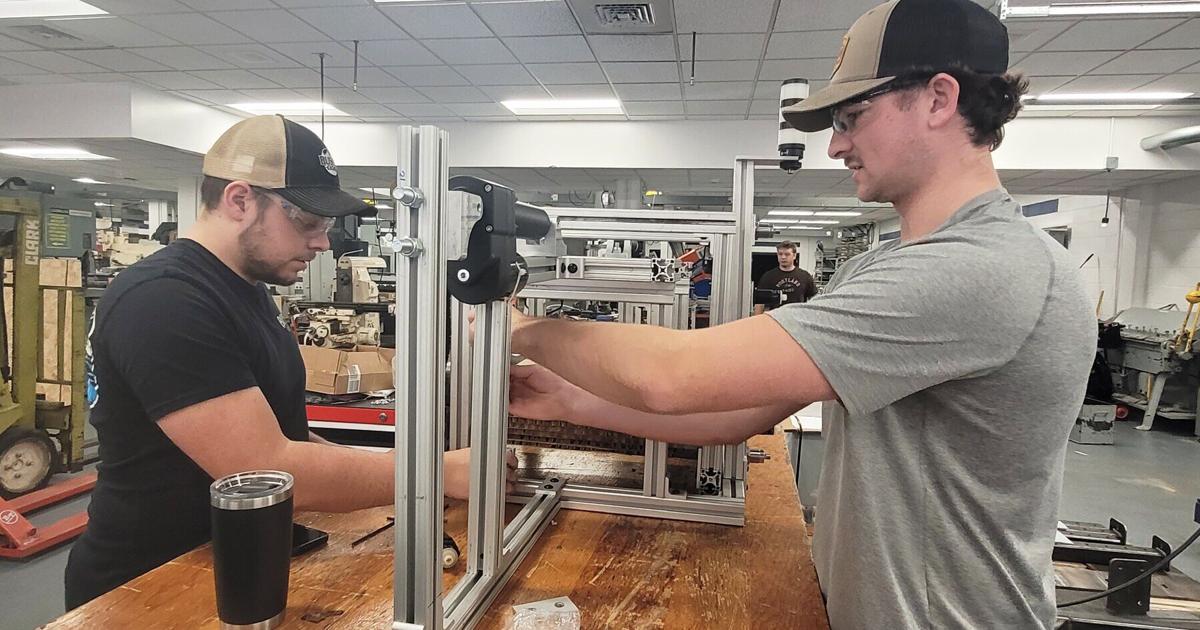
A group of engineering students at the University of Wisconsin-Stout has developed a prototype for a nonstandard pallet stacker as part of a project sponsored by Ashley Furniture. This initiative not only provided students with hands-on experience but also resulted in a product that aims to improve efficiency in material handling.
Chase Rodewald and Riley Stiehl were pivotal in assembling the prototype, showcasing their skills in practical engineering. Their work reflects the university’s commitment to bridging the gap between academic learning and real-world application. The project emphasizes innovation while addressing specific industry needs.
In addition to Rodewald and Stiehl, students Zachary Morgan and Luke Mertens also contributed to the project by presenting their own design of the pallet stacker. This collaboration has fostered a competitive yet supportive environment where students can refine their engineering capabilities.
Enhancing Material Handling Efficiency
The nonstandard pallet stacker prototype is designed to improve the efficiency of material handling processes at Ashley Furniture. By focusing on ergonomic design and functional capabilities, the students aimed to create a product that meets the demands of modern manufacturing environments.
Utilizing SolidWorks, a leading design software, the team developed a digital model that allows for precise engineering specifications. This approach ensures that the final product can be effectively integrated into existing workflows at Ashley Furniture. The emphasis on practical application underscores the educational value of the project, aligning academic objectives with industry standards.
Real-World Impact and Future Prospects
The collaboration with Ashley Furniture not only enhances the students’ learning experience but also provides the company with valuable insights into emerging engineering practices. The project exemplifies how partnerships between academia and industry can lead to tangible improvements in product development.
Following the successful completion of the prototype, the students are optimistic about the potential for further innovation in their designs. The experience gained through this project will serve them well as they transition into professional roles within the engineering field.
Through initiatives like this, the University of Wisconsin-Stout continues to demonstrate its dedication to fostering future leaders in engineering, equipped with practical skills and a deep understanding of industry requirements. The development of the nonstandard pallet stacker is just one example of how students can make meaningful contributions to their fields while still in school.