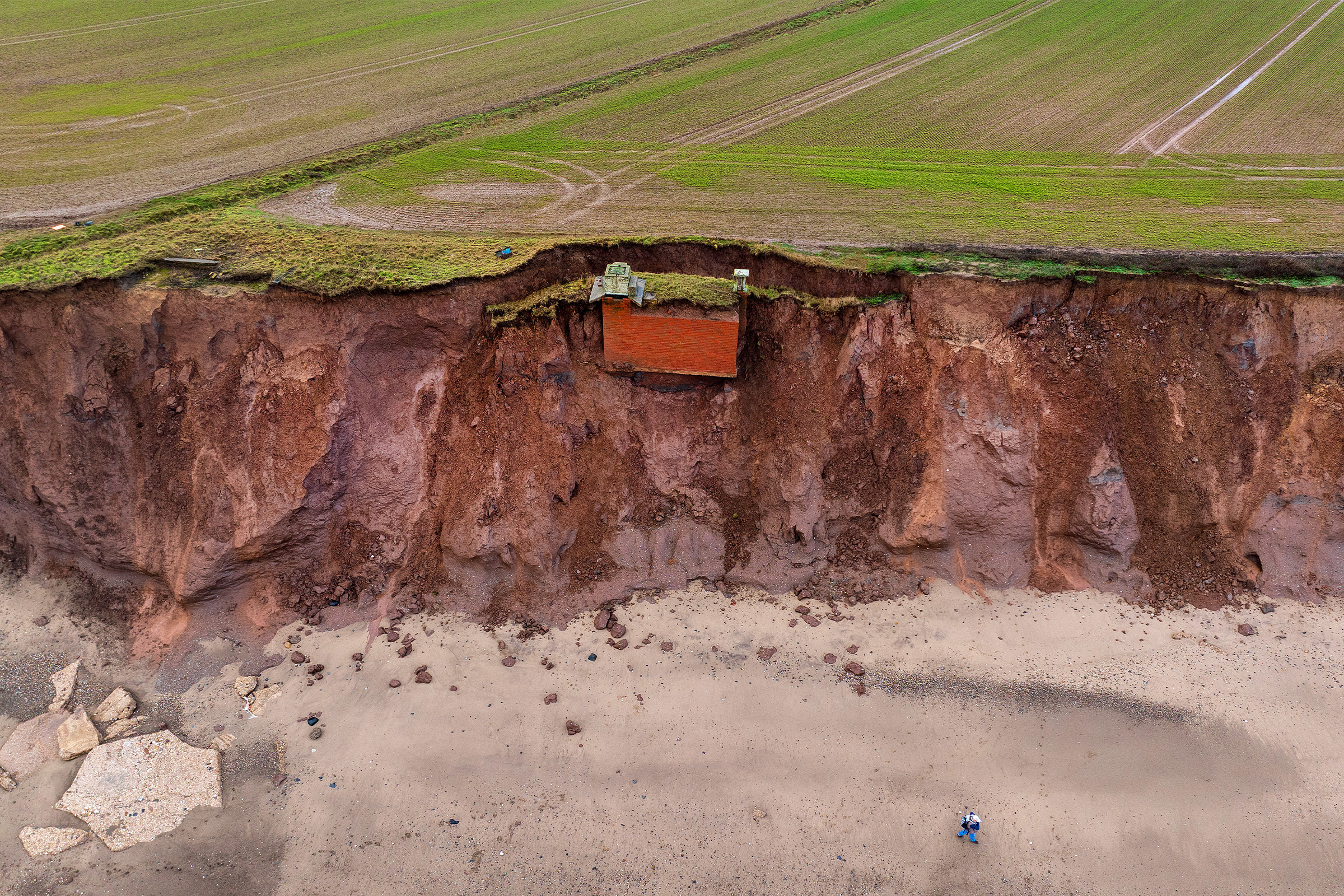
A nuclear bunker located near Tunstall on the East Yorkshire coast is on the verge of collapse due to severe coastal erosion. Initially built in 1959 as a lookout post during the Cold War, the bunker now faces imminent danger as the cliff it sits upon deteriorates. Local authorities, including the East Riding of Yorkshire Council, have urged residents to avoid the area for safety reasons, as the structure could fall into the sea within days.
The Tunstall Royal Observer Corps Post, as the bunker is officially known, was designed to serve as a refuge during a potential nuclear conflict. It allowed personnel to monitor nuclear explosions and communicate with other bunkers across the country. Today, it stands as a stark reminder of the region’s vulnerability to erosion, a natural process that is reportedly being accelerated by climate change. According to Davey Robinson, an amateur historian documenting the bunker’s decline, the site illustrates the rapid changes happening along the coast.
“We live on one of the most eroded coastlines in Europe and this bunker hasn’t got long left, perhaps just a few days,” Robinson stated. He has been visiting the site daily for the past nine days, sharing footage of the bunker on their YouTube channel, which has garnered international attention.
As coastal erosion affects approximately 17 percent of the UK’s extensive coastline, communities like Tunstall are feeling the consequences. Robinson commented, “This whole area is eroding at a rapid rate, and to see an actual physical thing moving just shows what’s happening really.”
The Tunstall bunker serves as both a historical artifact and a symbol of the urgent environmental challenges facing coastal regions. As rising sea levels due to global warming threaten infrastructure and communities, the plight of this Cold War relic highlights the broader implications of climate change on human settlements.
As the situation develops, the future of the Tunstall Royal Observer Corps Post remains uncertain, leaving residents and historians alike to ponder the lasting impact of erosion on their coastal heritage.