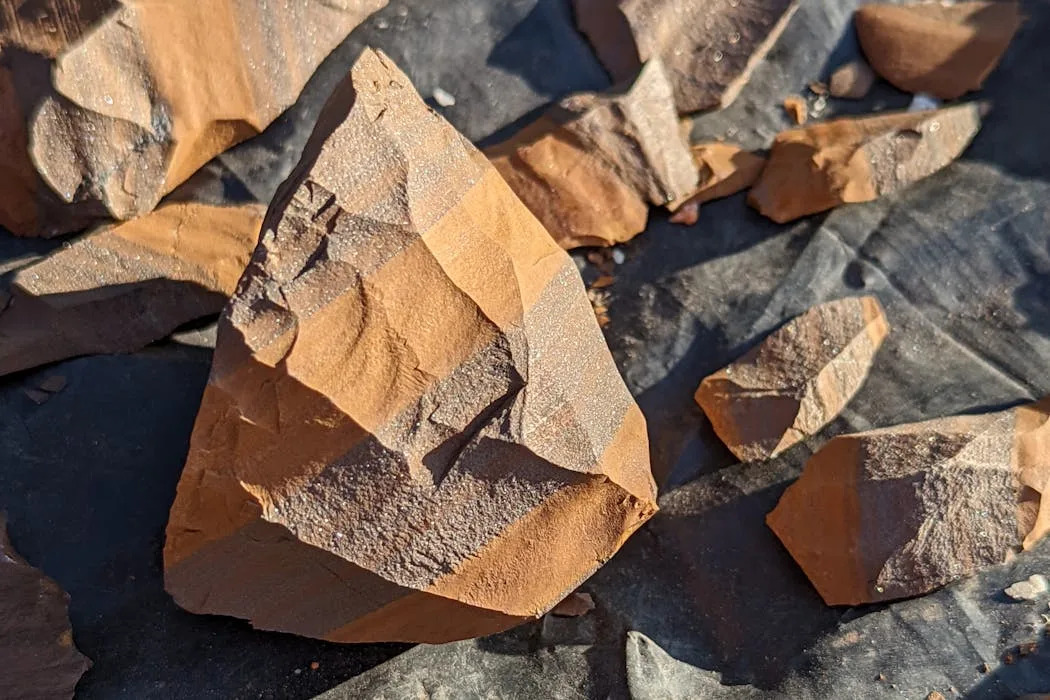
The distinction between stone tools and ordinary rocks stems from intricate scientific analysis, as highlighted by archaeologists studying human origins. According to John K. Murray, an experimental archaeologist at Arizona State University, specific characteristics can reveal whether a rock has been intentionally modified by humans or their ancient ancestors, known as hominins.
Stone tools, which first appeared approximately 3.3 million years ago, have played a critical role in human evolution. They are not merely rocks; they are selected and shaped to serve various purposes, such as cutting meat, scraping hides, or woodworking. While many primates use stones for basic tasks, hominins exhibit a unique ability to modify these materials extensively, a skill that sets them apart in the animal kingdom.
Understanding Flintknapping and Tool Creation
The manufacturing of stone tools involves a process known as flintknapping, where rocks are fractured or abraded to create sharp edges. This technique primarily involves flaked stone technology, which dominates archaeological findings. Hominins apply precise force to the edge of a rock, referred to as the striking platform, either through percussion or pressure, to detach portions of the stone called flakes.
With practice and guidance, flintknappers can identify prime areas on a rock, or core, to strike effectively, producing numerous sharp flakes that can be further refined into specialized tools. A classic example of this is the hand axe, shaped into a teardrop form through skillful flaking. As Kurray notes, the repetitive nature of this process not only generates a significant cutting edge but also allows for shaping the core into desired forms, albeit with risks of personal injury along the way.
Not all rocks are suitable for tool-making. The ideal stones exhibit what is known as conchoidal fracture, a smooth break characterized by concentric ripples, similar to how glass shatters. An excellent example is obsidian, a volcanic glass that displays this feature prominently. While some early toolmakers preferred quality stones for durability, they also utilized lesser-quality materials when necessary.
Identifying Stone Tools
Determining whether a rock is a stone tool requires careful examination of specific features left by the flintknapping process. One key indicator is the presence of flake scars—negative removals that reveal previous strikes on the rock. These scars often exhibit consistent patterns in orientation and size, suggesting intentional modification rather than random natural occurrences.
Another crucial feature is the bulb of percussion, a bulge formed just below the striking platform due to the concentrated force applied during flaking. This characteristic is unlikely to arise from natural processes, although naturally occurring sharp stone fragments, known as naturaliths, can be found worldwide. When multiple flakes with these distinctive features are discovered in proximity, it strengthens the case that they were deliberately crafted by hominins.
The context in which a rock is found also plays a significant role in its identification. If numerous stones in an area display the expected characteristics of stone tools, it may indicate an ancient flintknapping workshop. Conversely, if a tool is made from a material typically found far from the site, it raises questions about trade or transportation practices among early humans.
Kurray encourages individuals interested in this field to try flintknapping themselves. He has instructed over 100 people of various ages, many of whom express surprise at the complexity of the task. Engaging in this ancient practice can provide insight into the challenges faced by our hominin ancestors, who relied on their ingenuity to produce sharp tools from raw stones.
This informative exploration into the world of stone tools not only highlights their importance in understanding human evolution but also sheds light on the intricate skills involved in their creation. The ongoing study of these artifacts continues to reveal the behavioral patterns of hominins, offering a window into our shared past.