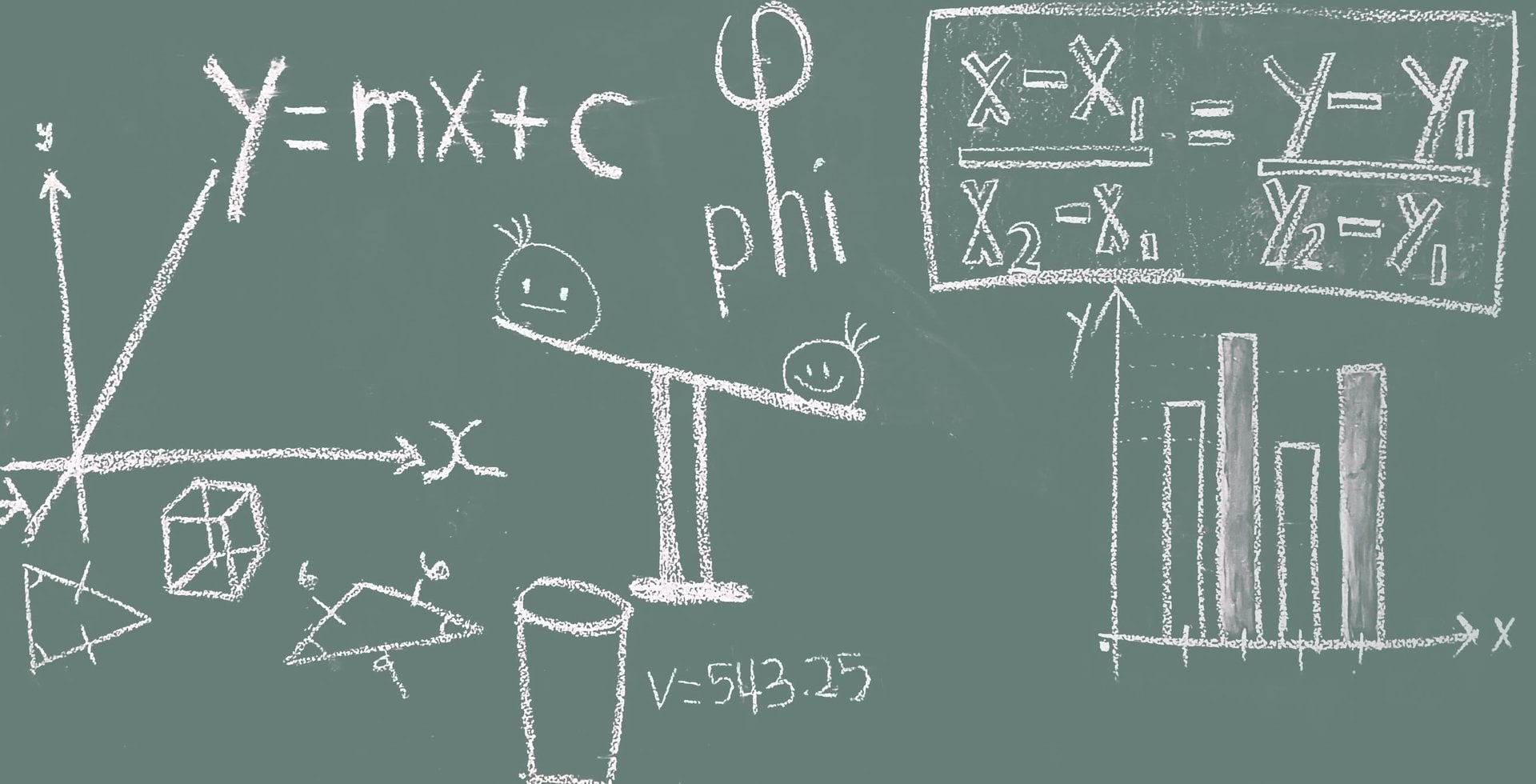
The mathematical universe hypothesis, proposed by cosmologist Max Tegmark, suggests that the universe is fundamentally composed of mathematical structures rather than physical entities. In his 2014 book, Our Mathematical Universe, Tegmark argues that math is not merely a tool for understanding nature, but is, in fact, the essence of reality itself.
This perspective challenges conventional views by proposing that if one strips away the layers of human interpretation and subjective concepts from scientific theories, what remains is pure mathematics. Tegmark posits that the complexities of the universe can be reduced to mathematical relationships and structures, devoid of any additional “baggage.”
The Role of Mathematics in Science
Throughout history, humans have relied on mathematics to unlock the secrets of the universe. From the development of smartphones to the accuracy of GPS satellites, mathematical principles have powered technological advancements. Yet, as Tegmark emphasizes, there is a distinction between the mathematical descriptions we use and the reality those descriptions aim to encapsulate.
He suggests that the scientific process seeks to uncover an external, objective reality that exists independently of human perception. While mathematics has proven successful in this endeavor, the additional concepts we use—such as wave functions and spacetime—are human constructs that may obscure the true nature of reality. According to Tegmark, these constructs represent a form of “baggage” that complicates our understanding.
Stripping Down to Pure Mathematics
Applying Occam’s razor, which advocates for simplicity in explanations, Tegmark argues that we should discard these layers of human-derived concepts to reveal a more streamlined understanding of the universe. He asserts that when one removes this baggage, what remains is a world of relationships and mathematical structures. In this view, the universe is not merely described by mathematics; it is mathematics.
Tegmark’s hypothesis pushes the boundaries of traditional physics. He suggests that the pursuit of a Theory of Everything (TOE), which aims to unify the fundamental forces of nature, would not only encompass these forces but also eliminate constants such as the speed of light or the charge of an electron. Instead, a true TOE would be represented by a single mathematical equation capable of explaining all aspects of reality, including its own existence.
This radical notion invites deeper contemplation about the nature of reality itself. If mathematics is indeed the essence of the universe, then the implications for scientific inquiry are profound. Rather than merely serving as a descriptive framework, mathematics becomes the very fabric of existence—an elegant equation that encapsulates everything.
In conclusion, Max Tegmark’s mathematical universe hypothesis offers a provocative lens through which to view reality. By suggesting that the universe is fundamentally mathematical, it challenges scientists and philosophers alike to reconsider the nature of existence and the tools we use to understand it. As discussions around this hypothesis continue, they may pave the way for new insights into the universe’s structure and the principles that govern it.