A recent study has unveiled a new upper temperature limit for eukaryotic life, identifying a novel geothermal amoeba named Incendiamoeba cascadensis. This organism can divide at an extraordinary temperature of 63°C (145.4°F), marking a significant advancement in our understanding of life’s thermal boundaries. The research, conducted by scientists at the University of California, Berkeley, challenges existing paradigms regarding the environmental limits for eukaryotic cells.
Through a series of growth experiments, researchers demonstrated that I. cascadensis not only thrives but actively proliferates in extreme heat. Advanced techniques, including expansion microscopy and high-temperature live-cell imaging, revealed that the amoeba can sustain cellular movement at temperatures reaching 64°C. These findings suggest that eukaryotic organisms can endure and adapt to environments previously thought inhospitable.
The genomic analysis of I. cascadensis provided further insights into its biology. Researchers conducted comparative genomics, revealing an enrichment of genes associated with proteostasis, genome stability, and environmental sensing. Such genetic features may equip the organism to survive in extreme geothermal settings, reshaping our understanding of eukaryotic resilience.
Implications for Astrobiology and Future Research
The implications of this discovery extend beyond Earth. As scientists study organisms like I. cascadensis, they are gaining insights into the potential for life on other planets, particularly in extreme environments such as those found on Jupiter’s moon, Europa, or Saturn’s moon, Enceladus. The findings could inform astrobiological missions aimed at searching for life beyond our planet.
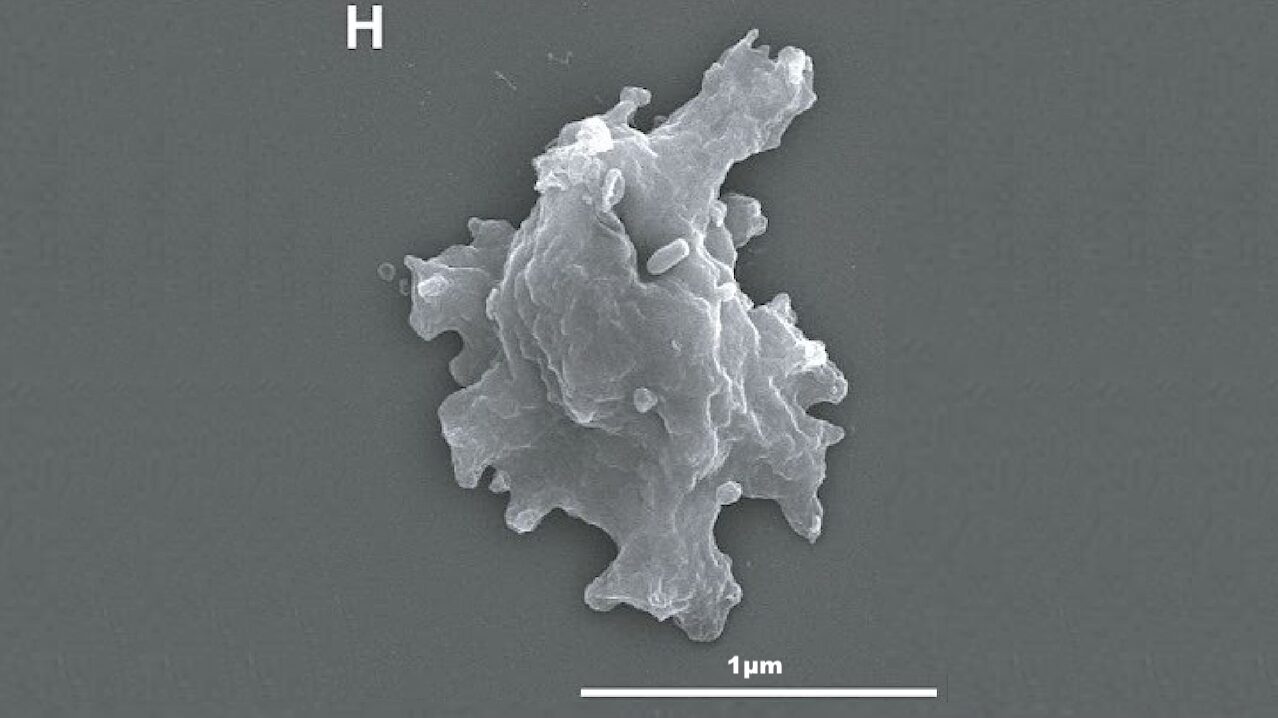
Phylogenetic, morphological, and physiological data support the classification of Incendiamoeba cascadensis as a distinct genus and species within the group Amoebozoa. This classification is bolstered by a detailed analysis of its cellular structure, which was captured using electron microscopy. Images revealed unique features, including a lobate nucleus and specialized mitochondria, highlighting evolutionary adaptations that facilitate survival at high temperatures.
In summary, the discovery of Incendiamoeba cascadensis not only sets a new benchmark for the thermal limits of eukaryotic life but also opens new avenues for research into extremophiles. As our understanding of these organisms expands, so does our perspective on the potential for life in extreme conditions across the universe.