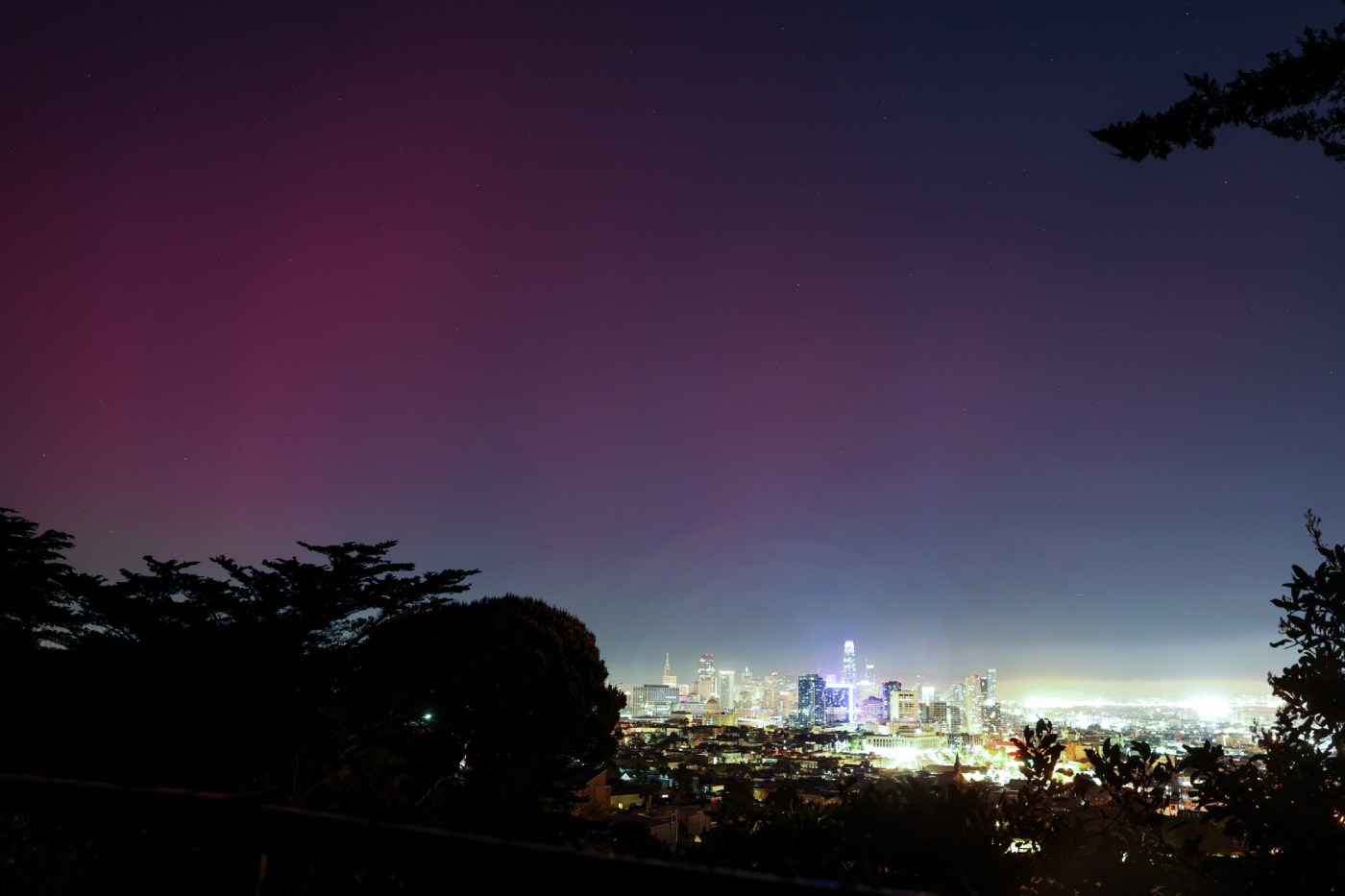
Artificial intelligence (AI) is being harnessed to improve data collection on the aurora borealis, thanks to the innovative work of recent graduate Jason Press. Currently a senior at Pepperdine University in Malibu, California, Press is conducting a research project focused on enhancing the understanding of this stunning natural phenomenon, which is often obscured by atmospheric conditions.
The challenge of collecting accurate data about the aurora borealis arises from the fact that cloud cover frequently disrupts visibility. “There are very few clear-sky nights with aurora data,” stated Press, 22, in an email. He explained that when clouds move in, valuable data is often lost, prompting him to create a model capable of “seeing through the clouds.”
Press and his research team made significant strides last summer, successfully clarifying images from 90 minutes of satellite video depicting the aurora borealis. Their accomplishments earned them an invitation to present their findings at the American Geophysical Union conference in December, a respected gathering of scientific minds dedicated to geophysical research.
Innovative Approach and Academic Support
Press’s academic journey has been supported by his mentors at Pepperdine, including computer science professor Fabien Scalzo. “I’m thrilled by the work Jason has done,” Scalzo remarked. He commended Press for his curiosity and hard work at the intersection of computer vision and AI, emphasizing that this research is paving the way for new analytical methods in studying auroras.
According to Press, approximately half of the data collected from satellite videos has been rendered unusable due to cloud interference. His chief mentor, Gerard Fasel, a physics professor at Pepperdine, highlighted the potential implications of improved data collection. Accurately interpreting the aurora borealis could enable scientists to predict severe events caused by solar flares or emissions from solar wind.
Fasel referred to historical incidents, such as the catastrophic solar wind event in 1859, which caused telegraph lines to catch fire, and the 1989 solar storm that resulted in a power grid failure in Quebec. “We’d like to be able to predict these storms so that we can power our spacecraft down to avoid losing electrical circuits,” he explained.
A Bright Future for Science
The research conducted by Press and his team promises to enhance the understanding of solar-terrestrial interactions, ultimately improving predictive capabilities for future solar events. “By being able to see more of the aurora and coupling that with spacecraft data, we will gain a better understanding of these interactions,” Fasel noted.
Press, who grew up in Mill Valley, California, is one of five children in a family of veterinarians. His parents, Mary and Curtis Press, moved the family to Belvedere when he was 18. The principal of Marin Catholic High School, Chris Valdez, recognized the Press family’s commitment to academic excellence and community involvement. “Jason Press is one of five Press siblings who attended Marin Catholic, each excelling academically and contributing to service, sports, and music,” Valdez said.
The creativity and intellectual curiosity evident in Jason’s project reflect a familial trait. Valdez remarked, “It is no surprise that Jason is using his intellectual gifts and curiosity to explore this data recovery project, employing his creative ingenuity to develop tools that aid in the process.”
As technological advancements continue to evolve, the work of Jason Press represents a meaningful step forward in the scientific community’s efforts to unlock the mysteries of the aurora borealis while addressing the challenges posed by environmental factors. The potential benefits of this research extend beyond academic interest, with far-reaching implications for understanding solar phenomena and safeguarding technology.