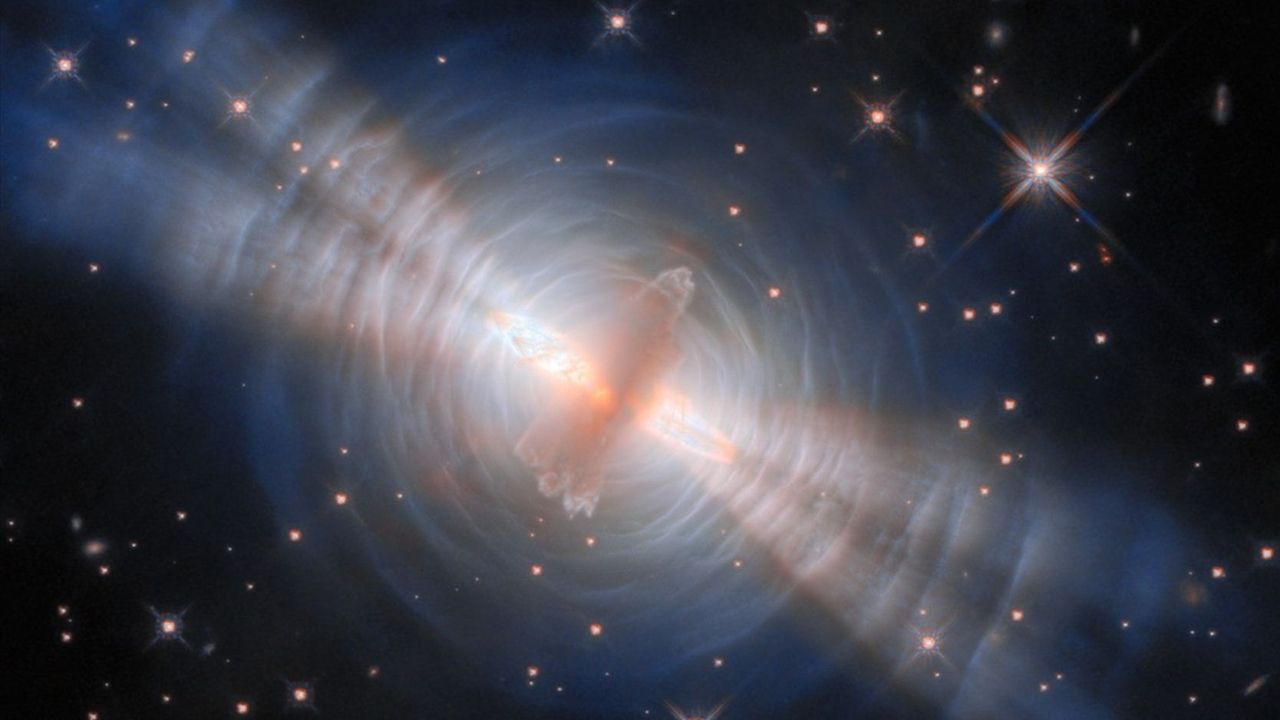
A remarkable cosmic event has been documented by the Hubble Space Telescope, showcasing the final stages of a star located in the constellation Cygnus, approximately 1,000 light-years from Earth. This dying star, known as the Egg Nebula, is providing scientists with a stunning visual and valuable insights into stellar evolution.
The Egg Nebula, characterized by its unique shape resembling an egg, features a central star surrounded by clouds of dust and gas. Unlike many other nebulae that emit light due to ionized gases, the illumination observed in this case originates from the star itself, which shines through gaps in its dusty exterior. This extraordinary phenomenon presents both a captivating image and a significant opportunity for research.
Understanding the Egg Nebula’s Significance
The Egg Nebula represents a pre-planetary nebula, an early form of a planetary nebula formed from material expelled by a dying star similar to our Sun. NASA has classified it as “the first, youngest, and closest pre-planetary nebula ever discovered.” While these nebulae do not directly relate to planets, they play a crucial role in supplying the materials necessary for future star systems that may host planets.
The pre-planetary phase lasts only a few thousand years, making the Egg Nebula an ideal subject for real-time observation of the ejection process. As the star’s core heats up, it will begin to ionize the surrounding gas, causing the nebula to emit its own light, marking a significant evolutionary transition.
Research Insights and Future Studies
Initial investigations have focused on the symmetrical patterns observed within the nebula. The orderly nature of these patterns suggests they did not arise from a cataclysmic supernova. Instead, NASA scientists believe they may result from “a coordinated series of poorly understood sputtering events in the carbon-enriched core of the dying star.” This intriguing hypothesis highlights numerous avenues for further exploration.
By synthesizing both historical and recent observations from the Hubble Space Telescope, researchers are piecing together an intricate portrait of the Egg Nebula’s structure. This detailed analysis offers new insights into how dying stars shape and influence the material that will ultimately contribute to the formation of new stars and planetary systems.
The findings surrounding the Egg Nebula not only enhance our understanding of stellar life cycles but also underscore the ongoing importance of the Hubble Space Telescope in advancing our knowledge of the universe. As scientists continue to study this remarkable nebula, the implications for future research and discoveries are vast.