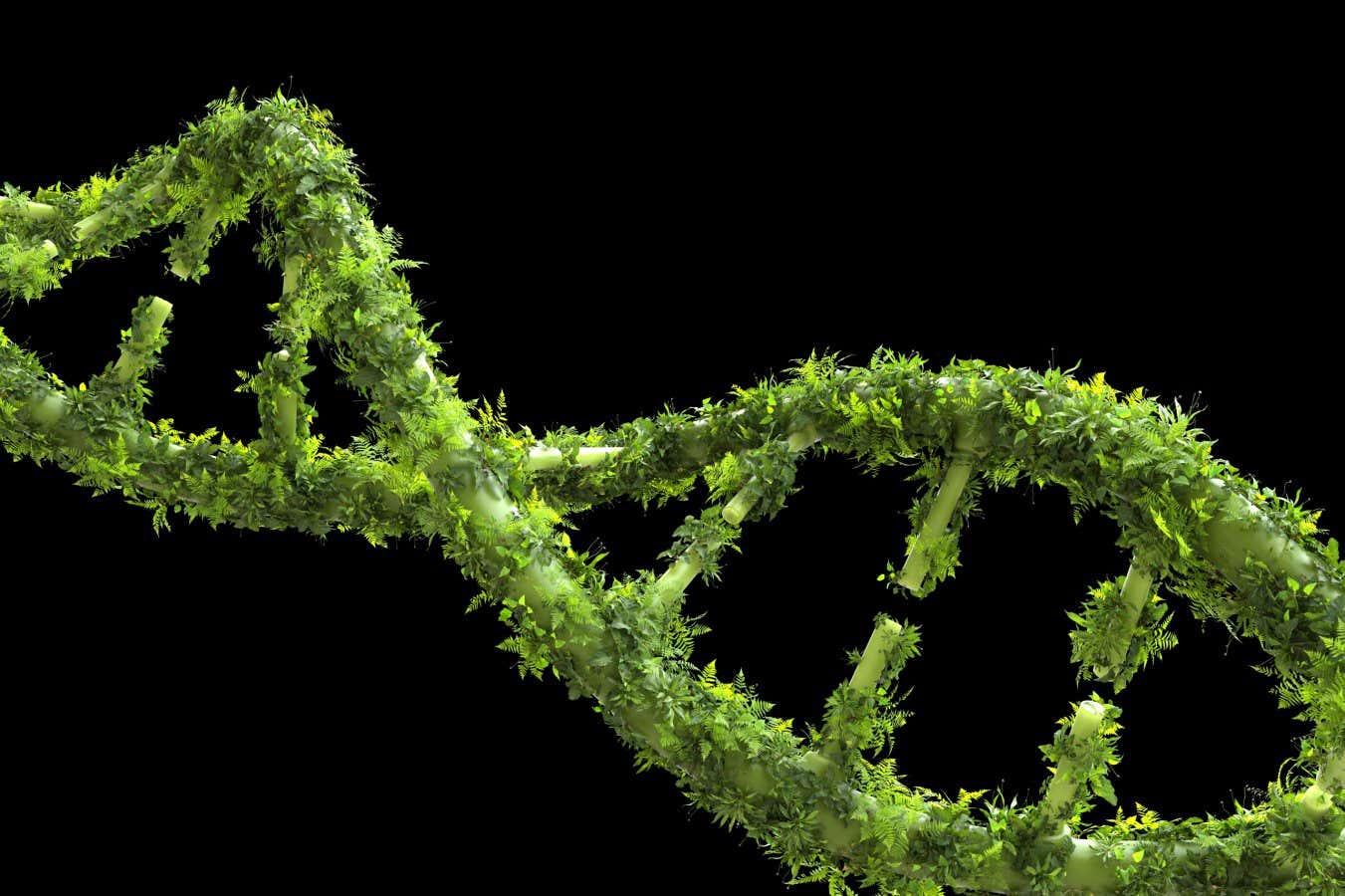
Research involving hybrid cells that integrate human and plant DNA has provided new insights into the complexities of our genome. A study conducted by researchers from the University of Auckland reveals that non-coding DNA, often considered “junk,” may not serve significant functions as previously thought. This finding challenges the long-held belief that a substantial portion of the genome is vital for biological processes.
The investigation focused on human cells engineered with substantial segments of DNA from the plant species Arabidopsis thaliana. The study aimed to determine the activity levels of this plant DNA compared to human DNA. According to Brett Adey, a researcher involved in the study, the results indicate that a considerable amount of genomic activity might simply be background noise rather than serving a functional purpose.
Insights into Non-Coding DNA Activity
Historically, DNA was believed to primarily function as a blueprint for proteins, with only about 1.2 percent of the human genome coding for these proteins. The question of what the remaining majority of the genome does has sparked debate among biologists. Many have suggested that a significant portion is indeed junk. A 2011 study further supported this notion, finding that only 5 percent of the genome is conserved throughout evolutionary history.
In contrast, proponents of the “dark DNA” concept argue that even non-coding DNA plays roles we have yet to understand. This view gained traction following the findings of the ENCODE project, which concluded that over 80 percent of the human genome exhibits activity. Critics, however, including Harvard University’s Sean Eddy, have pointed out that simply measuring activity does not necessarily indicate function.
Adey and his colleague Austen Ganley capitalized on this debate by examining hybrid cells containing 35 million base pairs of plant DNA. This represents one of the largest random genome projects conducted to date. By assessing the number of transcription start sites for converting DNA into RNA within these hybrid cells, they aimed to establish a baseline for distinguishing meaningful activity from mere noise.
The results revealed that the plant DNA exhibited about 80 percent of the activity observed in human non-coding DNA, suggesting that much of the genomic activity previously identified could be attributed to noise rather than function. Chris Ponting from the University of Edinburgh remarked that this finding reinforces the understanding of biological systems as inherently noisy.
Implications for Our Understanding of Genomic Function
The study’s findings have significant implications for the ongoing debate about the human genome. Dan Graur of the University of Houston described the research as a necessary demonstration that supports the notion that most of the human genome is indeed junk. He criticized the term “dark DNA,” labeling it as a misleading concept that distracts from understanding the true nature of genomic activity.
Despite the compelling results, Adey and Ganley noted that they could not fully explain the 25 percent greater activity observed in human DNA compared to the plant DNA. While some of this activity may correspond to functional roles, the majority likely remains as background noise. The researchers are now applying machine learning techniques to further explore the distinctions between meaningful genomic activity and noise.
The findings from this study will soon be published, contributing to our evolving understanding of genetic material and its implications for biology. As researchers continue to unravel the complexities of the genome, this work serves as a vital reminder of the intricate balance between function and redundancy embedded within our DNA.