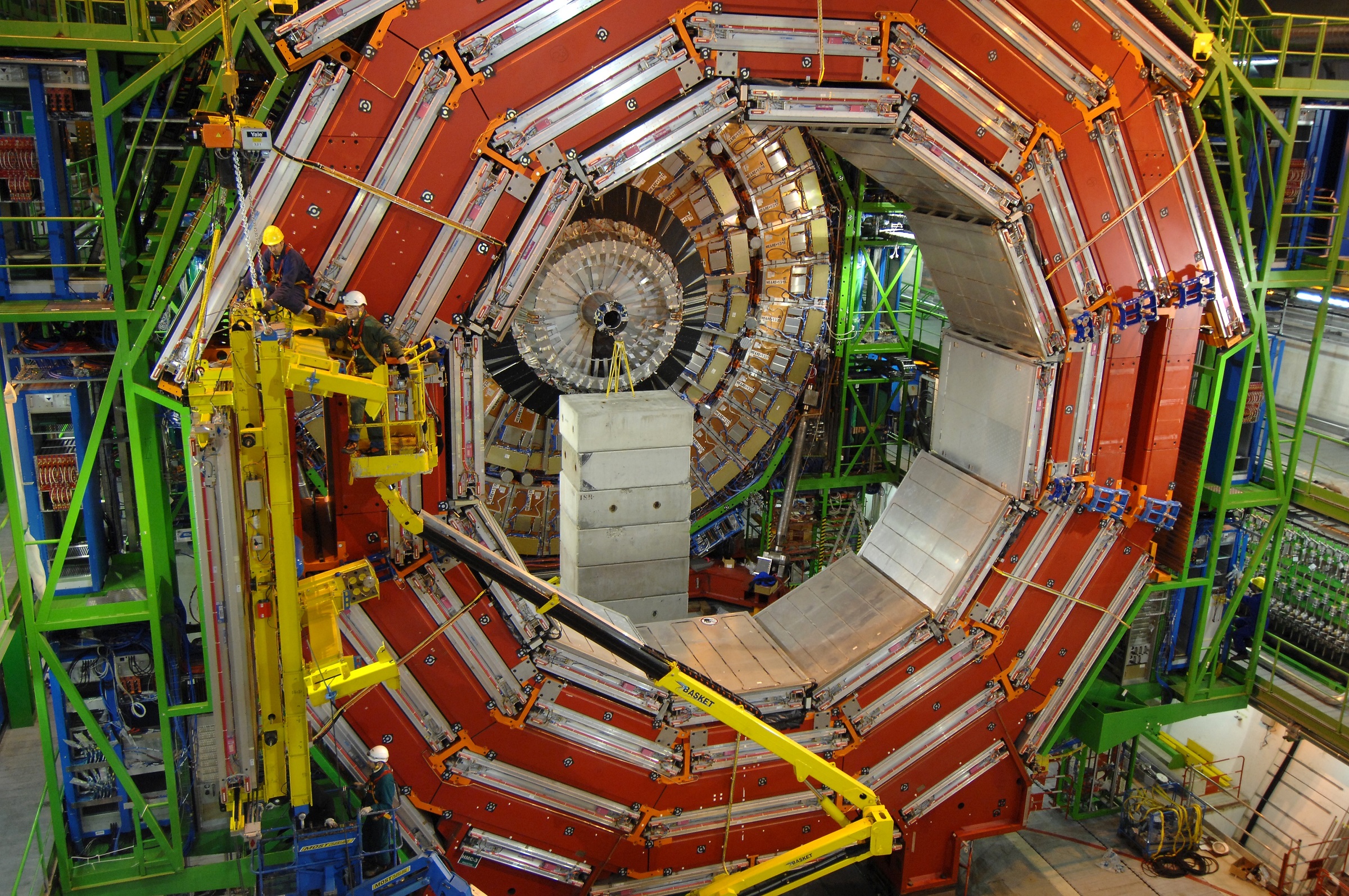
The Large Hadron Collider (LHC) will be shut down for extensive upgrades, with operations not expected to resume until mid-2030. This temporary closure is part of a significant initiative to enhance the particle accelerator’s capabilities, allowing it to conduct ten times the current number of particle collisions. The LHC, located in a 16-mile tunnel near the Swiss-French border, has played a crucial role in advancing our understanding of fundamental physics, notably through the discovery of the Higgs boson in 2012.
Upgrades and Future Plans for the LHC
Beginning in June 2023, engineers at CERN will embark on the high-luminosity LHC project, which is set to last approximately five years. This upgrade aims to vastly increase the volume of data generated from particle collisions, thus facilitating a broader range of experiments. According to Mark Thomson, the new director general of CERN, this project is essential for the future of particle physics. He stated, “The machine is running brilliantly and we’re recording huge amounts of data. There’s going to be plenty to analyze over the period. The physics results will keep on coming.”
Thomson, who assumed his role on January 1, 2023, expressed enthusiasm about overseeing the upgrades, acknowledging the importance of this phase for ongoing research. Although the LHC will be offline during almost his entire tenure, he views the impending advancements as an exciting opportunity for the scientific community.
Looking Ahead: The Future Circular Collider
As CERN plans for the LHC’s eventual successor, discussions are underway regarding the proposed Future Circular Collider (FCC). This ambitious project, projected to span 56 miles, aims to surpass the capabilities of the LHC significantly. The initial stage of the FCC would focus on collisions between electrons and positrons, with the first construction phase anticipated in the late 2040s. A subsequent phase, designed to accelerate protons, is slated for the 2070s.
Despite the promising prospects of the FCC, its future remains uncertain, primarily due to its estimated cost of nearly $19 billion. CERN faces challenges in securing funding and addressing concerns over the efficacy of large particle accelerators in exploring critical scientific questions, such as the nature of dark matter and dark energy. Nevertheless, Thomson remains optimistic about the trajectory of particle physics research, asserting, “We’ve not got to the point where we have stopped making discoveries and the FCC is the natural progression. Our goal is to understand the universe at its most fundamental level, and this is absolutely not the time to give up.”
The LHC’s temporary shutdown marks a pivotal moment in the ongoing quest to unlock the mysteries of the universe. As scientists prepare for this new chapter in particle physics, the anticipation surrounding the upcoming upgrades and future projects continues to grow.