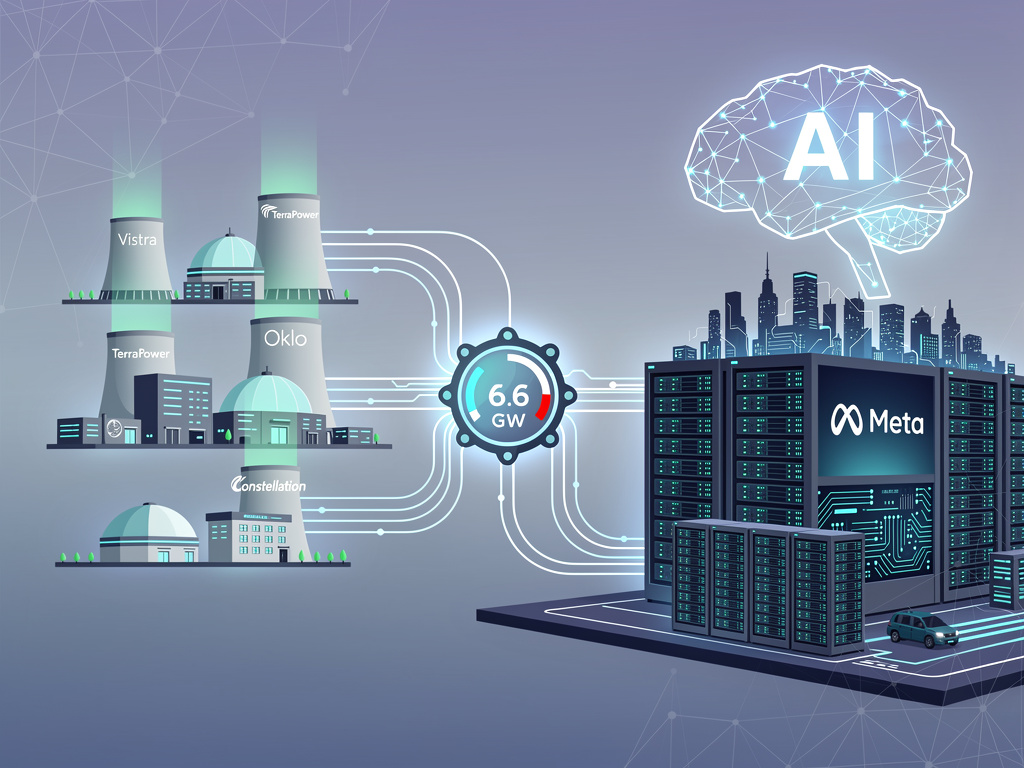
Meta Platforms Inc. has unveiled a groundbreaking energy procurement initiative that could provide up to 6.6 gigawatts of nuclear power to support its rapidly expanding artificial intelligence infrastructure. Announced on January 9, 2026, the agreements with Vistra Corp., TerraPower LLC, Oklo Inc., and Constellation Energy Corp. establish Meta as a critical player in enhancing U.S. nuclear capacity at a time when electricity demands driven by AI technologies are surging.
The agreements include long-term power purchase contracts from three existing Vistra nuclear plants located in Illinois, Pennsylvania, and Texas, as well as development support for advanced small modular reactors from TerraPower and Oklo. In a post on its official blog, Meta characterized these pacts as “landmark agreements” that will not only extend the operational lives of the plants but also foster innovation in nuclear technology and generate jobs in American communities.
As the demand for data center power escalates, fueled by AI training and inference workloads, Meta’s upcoming Prometheus AI supercluster requires reliable, carbon-free baseload power. Industry analysts project that U.S. data centers could consume 8% of the nation’s electricity by 2030, signaling a critical need for energy sources that can consistently meet this demand. Meta’s pivot toward nuclear energy reflects a strategic shift from its previous renewable commitments, emphasizing the density and reliability of nuclear power over intermittent renewable sources.
Strategic Partnerships and Economic Impact
The agreements involve 20-year power purchase contracts with Vistra, aiming to extend the operational lives of its nuclear facilities. Constellation, recognized as the largest operator of nuclear power in the U.S., is also engaged in capacity expansions. Joel Kaplan, Meta’s Chief Policy Officer, highlighted the company’s role in becoming “one of the most significant corporate purchasers of nuclear energy in American history.”
The partnerships with TerraPower and Oklo, both innovators in next-generation reactor designs, signal a commitment to advancing nuclear technology. TerraPower’s Natrium reactor, utilizing liquid sodium coolant, aims for 345 megawatts per unit, while Oklo’s Aurora microreactors, designed for rapid deployment, target outputs of 15-75 megawatts. Meta’s financial backing is expected to help mitigate regulatory and financing obstacles that these technologies face.
Following the announcement, Vistra’s market capitalization surged by $10 billion, reflecting investor optimism regarding the nuclear sector’s revival.
Long-Term Vision and Community Benefits
The agreements align with a broader trend in the technology sector, where companies are seeking alternatives to reliance on natural gas. Kaplan emphasized that the partnerships not only support Meta’s AI ambitions but also strengthen the nation’s energy infrastructure. With nuclear power providing a steady output, it offers a solution that is less susceptible to weather-related disruptions, positioning it as a key player in achieving energy stability.
Meta’s commitment to nuclear energy is expected to generate thousands of high-wage jobs across construction, operations, and supply chain sectors. Each Vistra plant currently employs hundreds of workers, and planned expansions could double that figure. The company has highlighted the potential for job growth in American communities, an initiative that could bolster local economies.
Despite the enthusiasm surrounding these developments, challenges remain, particularly concerning regulatory risks and waste management discussions. Nonetheless, Meta’s substantial investment—projected at $50 billion in capital expenditures by 2025—equips it to navigate these complexities effectively.
As the landscape of corporate energy strategies evolves, Meta’s ambitious nuclear power agreements could redefine the role of technology companies in the energy sector globally. With nuclear energy poised to offset 20 million tons of CO2 emissions annually compared to gas alternatives by 2035, the implications for U.S. clean power generation are significant. This strategic move not only enhances Meta’s operational capabilities but also aligns with broader environmental goals, potentially transforming the energy landscape for years to come.