A proposed advanced computing campus valued at $1.25 billion has sparked significant opposition from local officials in Washtenaw County, Michigan. The facility, which will incorporate a 230,000-square-foot federal research center and a 50,000-square-foot nonclassified research area for faculty and students from the University of Michigan, is set to begin construction in 2028.
The ambitious project is the result of a collaboration between the University of Michigan and the Los Alamos National Laboratory. In 2024, these institutions established a five-year, $15 million research contract aimed at innovating advanced computing technologies, including applications in artificial intelligence. Supporters of the campus assert it will generate hundreds of jobs in both construction and research, while also advancing critical work in national security, health, and energy sectors.
Despite these anticipated benefits, local officials in Ypsilanti, the expected site for the campus, have voiced strong concerns. The Ypsilanti Township Board of Trustees unanimously passed a resolution in August 2023 urging the university and Los Alamos to reconsider the project location. Following this, the Ypsilanti City Council adopted its own resolution opposing the project in late October 2023, citing apprehensions regarding the center’s potential involvement in nuclear weapons development.
Funding for the $1.25 billion initiative includes $300 million from Los Alamos, a $100 million grant from the state of Michigan, and $220 million from the university. The remaining $630 million will be funded through various financing mechanisms facilitated by the university, as noted by Kay Jarvis, the University of Michigan’s Director of Public Affairs.
Jarvis emphasized the project’s potential to enhance research capabilities, stating, “The partnership is anticipated to strengthen U-M’s impact and excellence in research and education.” She added that the university’s ongoing high-performance computing research has been limited by scale, and the new facility would enable tackling more complex issues such as cybersecurity and clean energy solutions.
One aspect that sets this project apart is the University of Michigan’s exemption from local zoning codes, which grants it significant regulatory autonomy, according to a publication from the university’s architecture and engineering department. The university is currently evaluating two potential sites for the campus, with the final decision expected to be a collaborative effort between the university and Los Alamos.
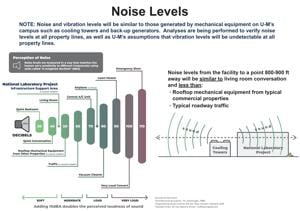
Opponents, including local organizer Vidhya Aravind from the group Stop the Data Center, express concerns about the project’s classified research components. Aravind believes that the classified nature of the research obscures vital details regarding environmental impact and water usage. High-level computing operations typically require substantial cooling, which can vary significantly based on the technologies employed.
“Everything is under NDA. They’re just keeping everyone in the dark about what exactly it is they’re building,” Aravind stated. Given Michigan’s abundant fresh water resources compared to New Mexico, she worries about cumulative environmental impacts, especially with multiple data center projects being considered across the state.
“This is becoming a statewide issue that requires state-level action, and it is a nationwide concern how rapidly these expansions are occurring with little contest,” Aravind added.
As discussions continue, the future of the proposed computing campus remains uncertain, with local voices advocating for a reconsideration of its implications on the community and environment.