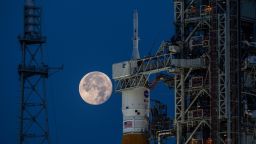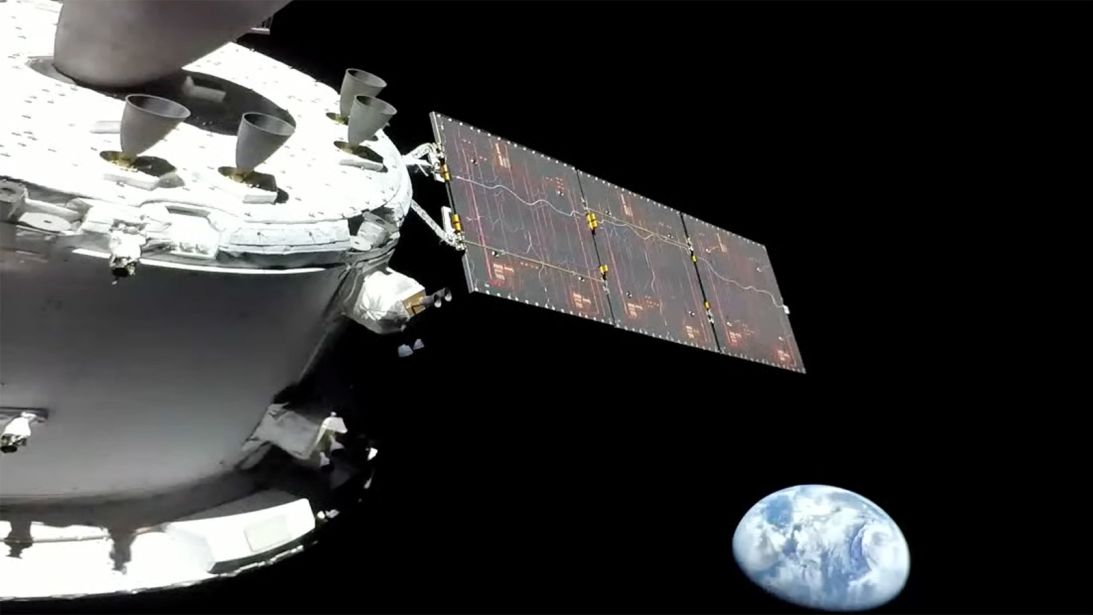
NASA is set to make significant strides in lunar exploration with the upcoming Artemis II mission, which will see four astronauts journey to the vicinity of the moon for the first time since Apollo 17 in 1972. The mission is scheduled to launch as soon as February 6, 2024, following a rollout of the Space Launch System (SLS) rocket and Orion capsule from the Vehicle Assembly Building to a launchpad at the Kennedy Space Center in Florida.
This ten-day mission will carry NASA astronauts Reid Wiseman, Victor Glover, and Christina Koch, along with Jeremy Hansen from the Canadian Space Agency. Their journey aims to push the boundaries of human space travel, potentially setting a new record for the farthest distance humans have traveled from Earth, a record currently held by Apollo 13.
While the mission is historic, it will not include a lunar landing. According to Patty Casas Horn, deputy lead for Mission Analysis and Integrated Assessments at NASA, “The short answer is because it doesn’t have the capability. This is not a lunar lander.” Horn emphasized that NASA’s approach is to build capabilities and test them, ensuring safety and mission success before attempting a landing.
The Artemis II mission follows the launch of Artemis I in November 2022, which was an uncrewed 25-day test flight that orbited the moon. The upcoming Artemis II will be the first mission with astronauts on board, and it will focus on testing various systems necessary for future lunar explorations.
Mission Goals and Safety Priorities
Crew safety and health are primary objectives for Artemis II. The Orion capsule will need to maintain thermal stability for astronaut comfort while accommodating essential life support needs, including food and water. Horn outlined that the mission will also test exercise devices aboard Orion, which are crucial for the crew’s well-being during extended spaceflight.
The mission profile of Artemis II shares similarities with Apollo 8, which launched in 1968 and became the first crewed mission to orbit the moon. Like Artemis II, Apollo 8 did not land on the lunar surface due to the lunar lander’s unavailability at that time. Instead, it focused on navigation training, similar to Artemis II’s objectives. Horn noted, “We are not actually going into lunar orbit — Artemis II is a ‘free return,’ meaning that once we leave Earth’s orbit, we’re already on our way home.”
Historical Context and Future Aspirations
The Artemis program’s first planned lunar lander, the Starship HLS, is currently under development by SpaceX. NASA anticipates that during Artemis III, scheduled for 2028, astronauts will use the Orion capsule to dock with the lunar lander and make their descent to the moon’s surface. Concerns about the development timeline of the Starship have prompted NASA to explore additional contracts for lunar landing capabilities.
The current record for the farthest distance from Earth traveled by humans stands at 248,655 miles (approximately 400,171 kilometers) from Apollo 13. Artemis II has the potential to surpass this distance, although Horn cautioned that trajectory optimization may affect the outcome. The mission will begin with two revolutions around Earth before executing a translunar injection maneuver approximately 26 hours into the flight.
As Artemis II prepares for launch, experts and historians alike draw parallels between this mission and the Apollo program. James W. Head, a professor of Earth, environmental and planetary sciences at Brown University, participated in the Apollo program and sees the potential for Artemis II to inspire a renewed sense of unity and purpose. “It could even be a force for bringing people together,” he remarked.
The Artemis program embodies NASA’s commitment to rigorous testing and safety protocols, ensuring that each element is thoroughly vetted before mission deployment. The cautious approach taken for Artemis II is consistent with NASA’s history of ensuring human safety and mission success.
As the launch date approaches, excitement builds not only for the mission itself but for the broader implications of humanity’s return to deep space exploration. The Artemis II mission stands as a pivotal step in laying the groundwork for future lunar and Martian endeavors, reaffirming NASA’s dedication to pushing the boundaries of human exploration.