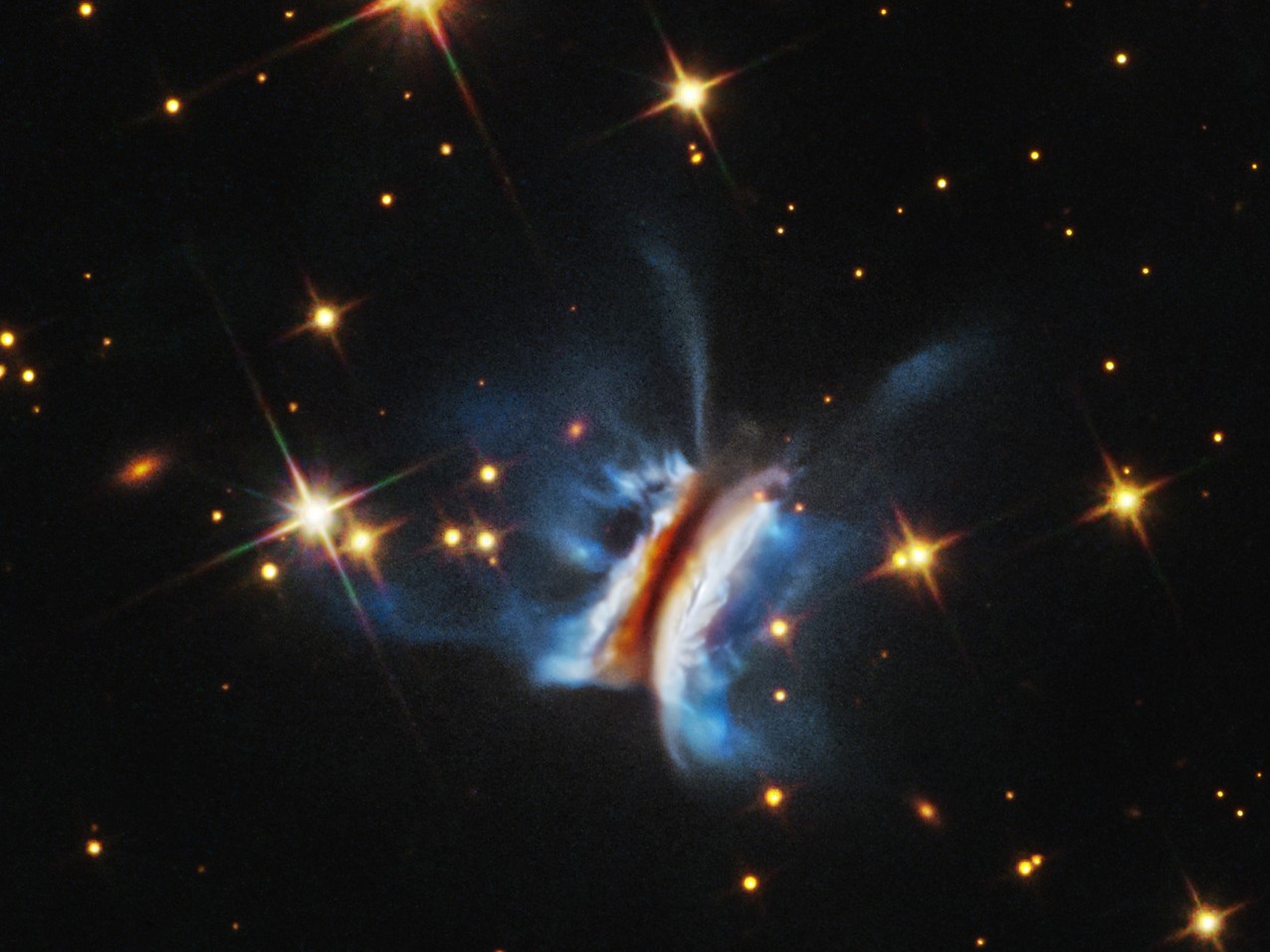
NASA’s Hubble Space Telescope has unveiled a significant discovery, revealing turbulence in the largest known region for planet formation. This newly observed turbulence is located in the Orion Nebula, specifically in areas designated as Cores 1 and 2. The findings, published in *The Astrophysical Journal* on March 15, 2024, provide crucial insights into the complex processes that govern the birth of new planets.
The research team, led by astronomer Kristina Monsch, utilized Hubble’s advanced imaging capabilities to capture detailed observations of the Orion Nebula. This region, approximately 1,344 light-years from Earth, is renowned for its vibrant star-forming activities. The turbulence detected suggests that the environment within this nebula may play a pivotal role in shaping the conditions necessary for planet formation.
Hubble’s observations revealed that the turbulence within the Cores 1 and 2 regions is not uniform. Certain areas exhibited signs of chaotic movement, which could influence the distribution of materials necessary for forming planets. Joseph DePasquale, a member of the research team, emphasized that understanding these turbulent conditions is essential for comprehending how planets, including Earth-like ones, come into existence.
The implications of this research extend beyond the Orion Nebula. By studying the turbulence in this massive star-forming region, scientists can draw parallels to other areas in the universe where planets are born. Such insights could enhance our understanding of the conditions that lead to the emergence of planetary systems across the cosmos.
Hubble’s findings also highlight the telescope’s continuing importance in astronomical research. Since its launch in 1990, the Hubble Space Telescope has provided invaluable data that has shaped our understanding of the universe. This latest discovery underscores its role in unraveling the mysteries of space and the birth of celestial bodies.
As the scientific community continues to analyze the data from Hubble, researchers are optimistic that it will lead to further breakthroughs in our understanding of planetary formation. The study also opens avenues for future investigations, potentially leading to new discoveries about the origins of Earth’s own solar system.
In summary, NASA’s Hubble Space Telescope has identified turbulence in the Orion Nebula, shedding light on the intricate processes involved in planet formation. With ongoing analysis and research, this discovery may help scientists piece together the complex puzzle of how planets form and evolve in the universe.