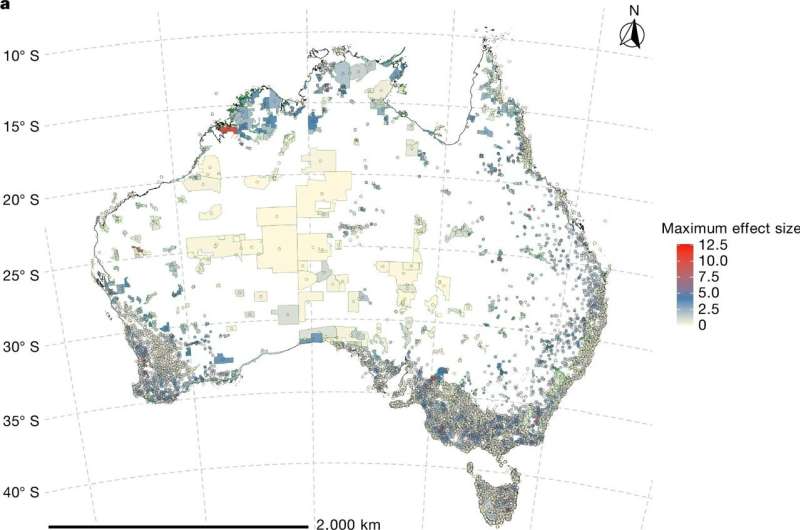
Protected areas such as national parks and wildlife reserves significantly enhance biodiversity beyond their borders, according to new research published in Nature. This study, conducted by Professor Graeme Cumming of the University of Western Australia, emphasizes the importance of “spillovers,” where the ecological benefits from protected areas extend into surrounding landscapes.
Key findings indicate that approximately 71% of the 3,063 protected areas analyzed in Australia exhibited vegetation spillovers within 5 kilometers of their boundaries. This effect was found to diminish with increasing distance from these areas. Notable locations in Western Australia that demonstrated significant spillover effects include Monadnocks Conservation Park, Lane Poole Reserve, and Beelu National Park.
Understanding Vegetation Spillovers
The study sheds light on how the presence of protected areas can alter plant composition in adjacent lands. Professor Cumming stated, “Spillovers from protected areas multiply the benefits of area-based conservation by increasing the range of places endangered and beneficial or useful species can live and grow.” This research aims to inform strategies to combat ongoing biodiversity loss and ecosystem degradation.
The analysis further revealed that environmental factors, including rainfall patterns and topographical variations, significantly influence plant growth at the edges of protected areas. After accounting for these variables, the research suggested that the size of the vegetation spillover effect correlates with the management practices employed within the protected areas.
Implications for Conservation Policy
This study challenges the conventional focus on the biodiversity contained within protected areas alone. Professor Cumming remarked, “Biodiversity conservation efforts and value assessments often focus on what is inside protected areas, but greater attention to spillovers is likely to show that protected areas are more valuable to society than most estimates suggest.”
The findings have potential implications for conservation policy at both state and federal levels. By emphasizing the importance of spillovers, policymakers can create frameworks that promote the spread of biodiversity and its associated benefits beyond protected zones.
This groundbreaking research not only highlights the ecological significance of protected areas but also reinforces the need for comprehensive management strategies that consider the broader landscape. For more detailed insights, the study can be accessed in the journal Nature with the DOI: 10.1038/s41586-025-09837-8.