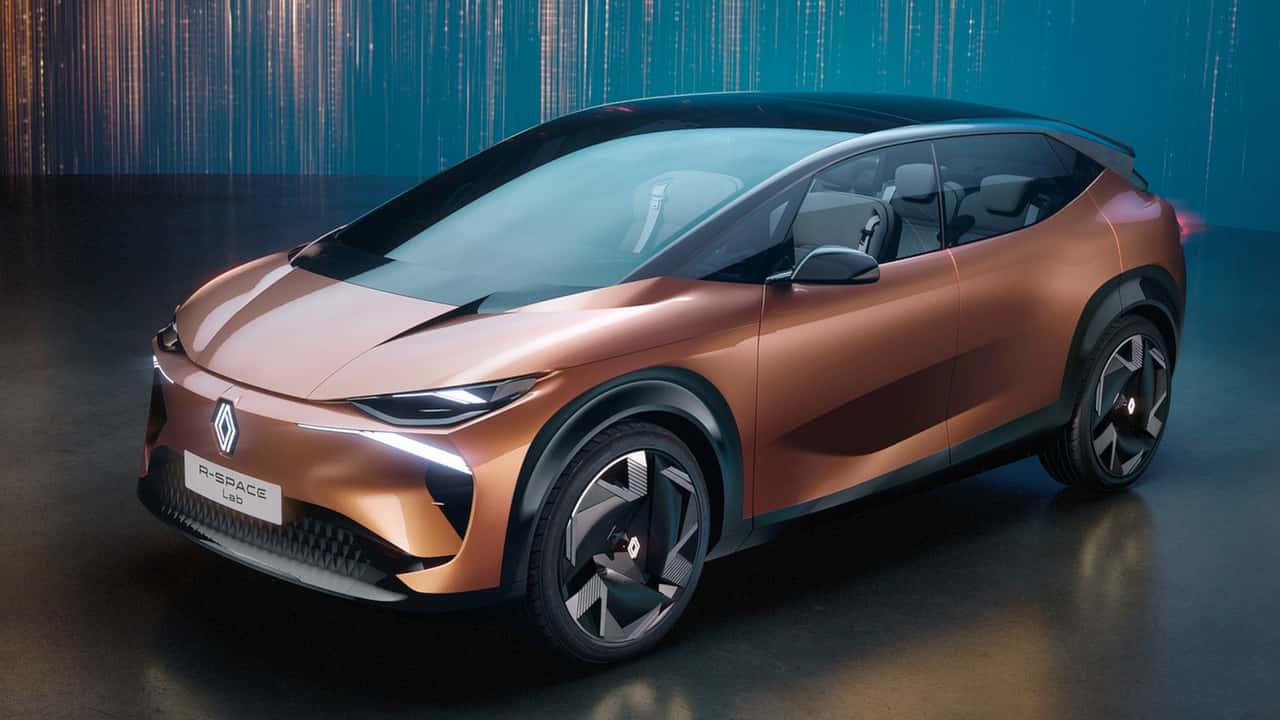
Renault has introduced the R-Space Lab, a concept vehicle aimed at redefining interior design and enhancing user experience in automobiles. Developed through the company’s innovation platform, Garage Futurama, this project explores potential vehicle concepts for the years leading up to 2030. While some may liken it to a new version of the Megane or a revival of the Espace minivan, Renault emphasizes that the model is not intended for production. Instead, it serves as a demonstration of the company’s “voitures à vivre” philosophy, focusing on vehicles designed around everyday needs.
Innovative Design and Advanced Features
The interior of the R-Space Lab features a highly digitized cockpit, showcasing a curved OpenR Panorama display that spans the entire dashboard. This display integrates driving information, multimedia options, and alerts from driver-assistance systems. Most controls are centralized on a touchscreen, simplifying user interaction. The vehicle also incorporates a compact steering wheel with steer-by-wire technology, which removes the mechanical connection to the steering system, offering a more modern driving experience.
Significantly, Renault is evaluating safety enhancements, including a tactile alcohol tester aimed particularly at younger drivers. The company is also testing artificial intelligence applications to support a digital safety assistant and allow for personalized adjustments to vehicle functions.
Flexible and Spacious Interior
The R-Space Lab showcases a flexible cabin design, utilizing a compact one-box layout measuring approximately 4.5 meters (14.8 feet) in length and 1.5 meters (4.9 feet) in height. By integrating passenger-side airbags into the seat structure, the dashboard remains uncluttered, creating space for a configurable glovebox that can serve multiple functions, such as storage or a shelf.
The front passenger seat is designed to slide back significantly, facilitating communication with rear passengers. In the back, the vehicle features three individual seats of equal width, each capable of folding down or flipping up to create additional cargo space. This reconfigurable setup allows for versatile storage options, accommodating items such as bicycles or larger goods.
To enhance accessibility, the rear doors open to 90 degrees, simplifying entry and exit. The vehicle’s design incorporates large glass surfaces, with a windshield that seamlessly transitions into a fully glazed roof. Slim body pillars and frameless doors further enhance the sense of openness and natural light within the cabin.
Renault’s exploration with the R-Space Lab reflects a commitment to merging spatial design, usability, and advanced digital features in future vehicle concepts. The styling marks a departure from the retro designs seen in models like the Twingo, 4, and 5, suggesting that a potential Espace revival may lean more toward innovative aesthetics rather than nostalgic ones.
As Renault continues to develop ideas within the R-Space Lab, the automaker aims to influence how vehicles will evolve to meet the needs of future drivers and passengers. The emphasis on flexibility and technology highlights the automotive industry’s shift toward more adaptable and user-focused designs.