A multidisciplinary group of researchers at Syracuse University is advancing the understanding of neurodegenerative diseases, including Alzheimer’s, through collaborative efforts across various fields. This initiative aims to integrate insights from molecular biology, neuroscience, and social sciences to address the complexities of these conditions affecting aging populations.
The university recently welcomed new faculty members specializing in neuroscience and disordered proteins, enhancing its capacity for holistic research. Duncan Brown, vice president for research, emphasized the unique role that universities play in fostering such collaborations. “Universities are the only places that have this kind of breadth and depth of expertise,” he stated, highlighting the importance of addressing diseases that impact many families.
Conversations Across Disciplines
Syracuse has a strong foundation in aging-related research, particularly through the Aging Studies Institute. Janet Wilmoth, the institute’s director, noted that the university’s approach focuses on understanding aging “from cells to society.” With strategic hires, the initiative aims to deepen knowledge regarding the molecular processes contributing to Alzheimer’s and related dementias.
“This is really enabling us to build some synergies that will be helpful moving forward,” Wilmoth explained. Efforts are being made to foster communication among experts in physical, biological, and social sciences, enhancing the collaborative research environment.
Much of the molecular and cellular research occurs at the BioInspired Institute, where scientists are examining the role of disordered proteins—molecules that lack a fixed structure—in neurodegenerative diseases. Jennifer Ross, interim dean of the College of Engineering and Computer Science, noted the potential for collaboration across disciplines, stating, “There are some opportunities to make that bridge across.”
New Faculty Members Strengthen Research Cohort
Three of the new faculty members join a research cohort led by Carlos Castañeda, an associate professor of biology and chemistry. His work focuses on proteins related to neurodegenerative and neuromuscular diseases, particularly amyotrophic lateral sclerosis (ALS). Castañeda remarked, “We have a tremendous opportunity here to set the University and the broader Syracuse area as a national hub for new ways to study disordered proteins and their role in disease.”
Among the new members is Shahar Sukenik, an assistant professor of chemistry, whose research investigates protein interactions, particularly disordered proteins. He aims to understand their roles in health and disease.
Also contributing is Li-En Jao, an associate professor of biology, who studies centrosomes—critical for cell organization and division. Jao’s research explores how centrosome dysfunction relates to human diseases.
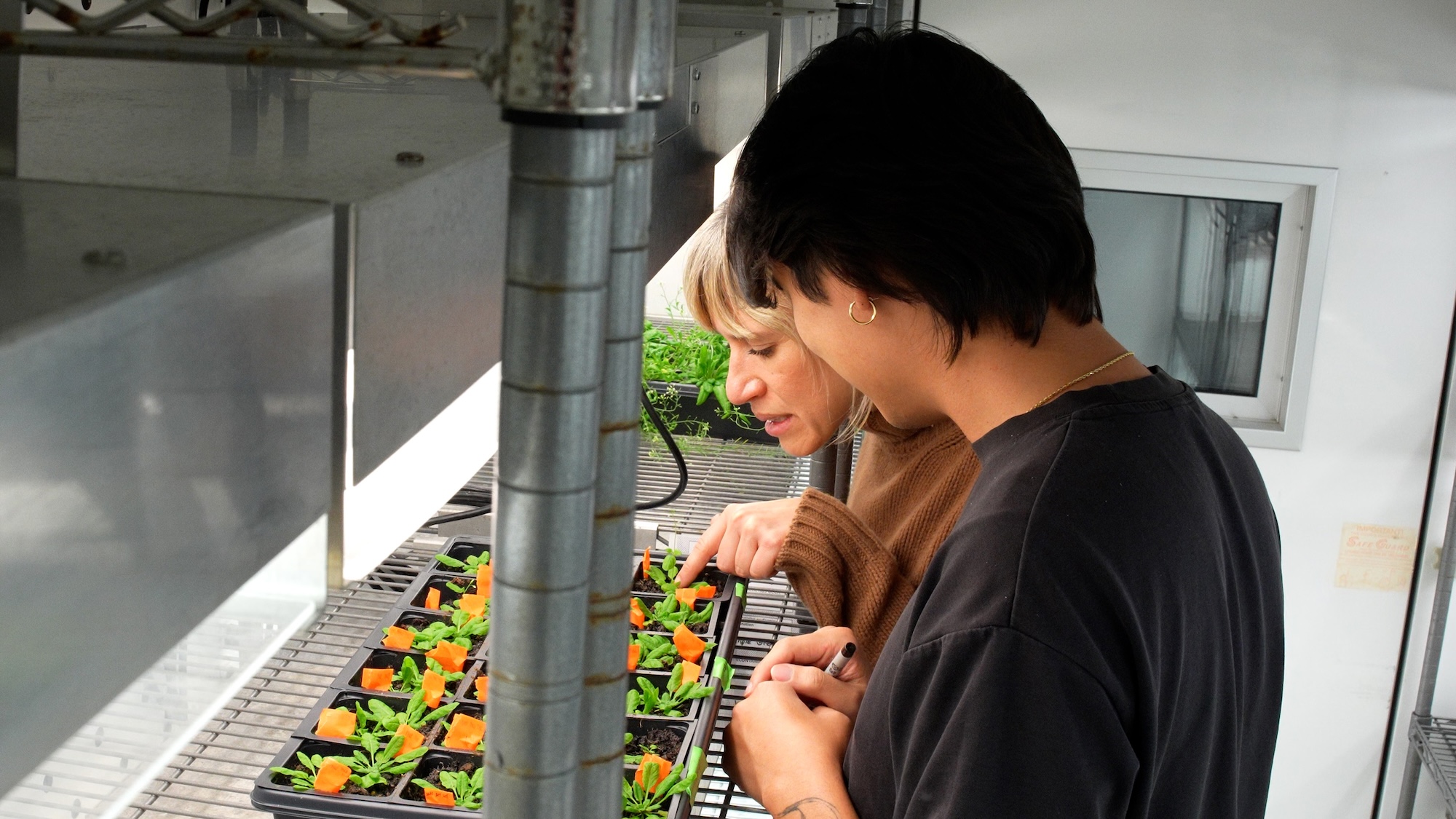
Another notable addition is Heather Meyer, a plant molecular and cell biologist. Her work on how plants respond to their environment through disordered proteins offers insights relevant to human health and potential medicinal developments. Eun-deok Kim, also a plant molecular and cell biologist, studies how environmental factors influence stem cell behavior and the development of age-related diseases.
Additionally, Chih Hung Lo and Jialiu Zeng are working together in a joint lab to create innovative biomaterials aimed at addressing neurological conditions. Lo investigates molecular mechanisms related to Alzheimer’s and other diseases, while Zeng focuses on the relationship between metabolic disorders and nervous system functions.
Rounding out the cohort is Yulya Truskinovsky, an associate professor of economics whose research examines labor, aging, and health issues, specifically the economics of caregiving.
Collaboration is Key
Ross emphasized the necessity of diverse expertise for advancing knowledge in this field. She likened fundamental research to searching for a lost child in the woods: “You would never send out one person; you would always send out the team.” Each researcher’s unique contributions are anticipated to lead to unexpected discoveries that could benefit broader scientific inquiries.
Wilmoth echoed this sentiment, stating that Syracuse is well-positioned to approach these challenges from multiple angles. “Having faculty who have complementary interests and skill sets enables the sort of creativity that is only possible when you have a critical mass of faculty,” she noted.
Through these collaborative efforts, Syracuse University aims to play a significant role in understanding and addressing neurodegenerative diseases, ultimately benefiting individuals and families affected by these conditions.