A team of international researchers has made significant strides in understanding the chemical complexity of the interstellar medium (ISM) by detecting prebiotic molecules in space. This groundbreaking discovery suggests that the fundamental building blocks of life may exist beyond Earth, possibly contributing to life’s origins on our planet. The findings were reported in a recent study involving the analysis of the Galactic Center cloud known as G+0.693.
Contrary to the long-held perception that the ISM is a vast emptiness, it is, in fact, a rich environment teeming with atoms, dust particles, and molecules. These components are crucial for understanding the potential for life beyond Earth. The study utilized a large-area single-dish telescope, equipped with advanced sensitivity and multi-band instruments, allowing scientists to explore whether essential biomolecules like amino acids, sugars, and nucleobases can form in space.
Detecting Prebiotic Molecules
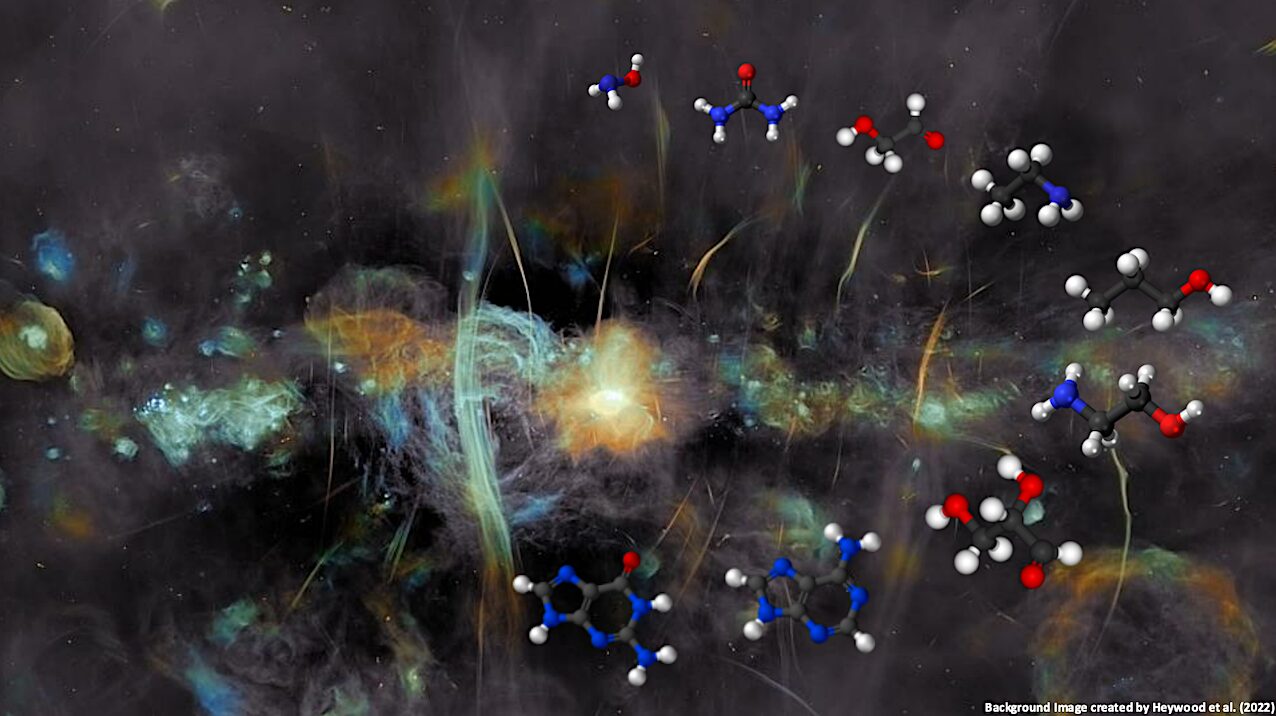
The research identified several prebiotic molecules in the G+0.693 cloud, including precursors to ribonucleotides, amino acids, sugars, proto-proteins, and proto-lipids. This revelation aligns with the theory that such molecules could have been delivered to Earth via comets and meteorites, potentially kickstarting biological processes.
The study’s lead author, Izaskun Jimenez-Serra, affiliated with the Center of Astrobiology in Spain, highlighted the importance of these findings, stating, “The presence of these molecules in the ISM opens new avenues for understanding how life might emerge not just on Earth, but elsewhere in the universe.”
The research team consisted of experts from various prestigious institutions, including the European Southern Observatory and RIKEN in Japan, among others. The study was submitted to the European Southern Observatory (ESO) as part of the Expanding Horizons initiative, which aims to enhance our understanding of the cosmos.
Implications for Astrobiology
The implications of these findings extend beyond the academic realm, stirring interest in astrobiology and the search for extraterrestrial life. Understanding the formation and distribution of prebiotic molecules in the ISM could provide insights into how life may arise under different cosmic conditions.
In addition to the specific molecules detected, the research emphasizes the need for future observational campaigns to explore the chemical processes occurring in the ISM. The study not only enhances our knowledge of the chemical inventory of our Galaxy but also opens the door to investigating similar phenomena in external galaxies.
The results of this research were first made public on December 16, 2025, and were subsequently indexed in the arXiv database for further dissemination within the scientific community. This work underscores the vital role that advanced telescopic technology plays in uncovering the mysteries of the universe and our place within it.
As researchers continue to delve into the complexities of the ISM, the prospect of discovering life-sustaining molecules in space becomes ever more tangible, inviting both scientific inquiry and public fascination. The quest to understand the origins of life continues, fueled by the promise of new discoveries among the stars.