For the first time, researchers at Lund University have uncovered how cells prevent damage from free radicals—reactive oxygen molecules that can harm cellular structures. The findings, published in Nature Communications on December 22, 2025, provide new insights into how cells maintain a balance between beneficial and harmful oxygen molecules.
Cells rely on free radicals, such as hydrogen peroxide, to perform essential functions. While small amounts of hydrogen peroxide are crucial for signaling, excessive levels can lead to cellular damage and death. Dr. Karin Lindkvist, the study’s lead researcher and a professor at Lund University, explained that cells produce free radicals naturally when oxygen is inhaled. Previously, scientists believed that hydrogen peroxide could freely traverse the cell membrane through channels that also allow water to pass.
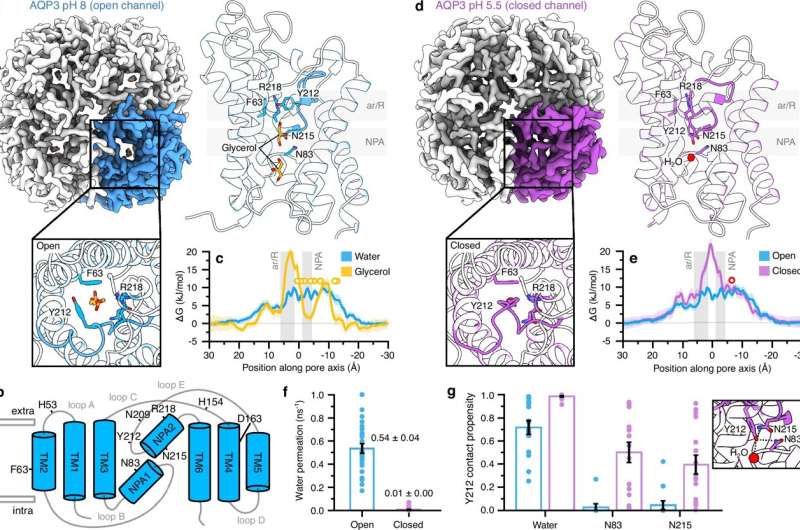
Recent advancements in cryo-electron microscopy have enabled researchers to observe the behavior of these channels. The study revealed that when external hydrogen peroxide levels rise too high, these molecules can latch onto the outer part of the channel. This interaction effectively “locks” the channel, preventing harmful substances from entering the cell.
“We were surprised by what we saw,” said Dr. Lindkvist. “It was like witnessing, in the moment, the cell closing the channel on something that could otherwise cause it harm.” This mechanism serves as an automatic protective measure against dangerous concentrations of hydrogen peroxide, safeguarding cellular integrity.
Implications for Disease Understanding
The discovery holds significant implications for understanding how cells manage stress and regulate free radicals, which may be particularly relevant for conditions such as diabetes and cancer. For example, cancer cells often produce high levels of free radicals during rapid growth. Despite this, they do not succumb to damage, suggesting that they have evolved methods to expel excess radicals.
Dr. Lindkvist pointed out, “One possibility is that they use the same type of channel in the cell membrane to expel the surplus and avoid being suffocated by their own free radicals.” Future research aims to explore whether blocking these channels could selectively kill cancer cells, providing a potential new avenue for cancer treatment.
The findings from this study mark a significant advancement in cellular biology, offering a deeper understanding of the protective mechanisms cells employ against oxidative stress. Researchers hope this knowledge will pave the way for novel therapeutic strategies addressing diseases characterized by disrupted cellular stress responses.
More information about the study can be found in the article by Peng Huang et al., titled “Structural insights into AQP3 channel closure upon pH and redox changes reveal an autoregulatory molecular mechanism,” published in Nature Communications. The DOI for the article is 10.1038/s41467-025-67144-2.