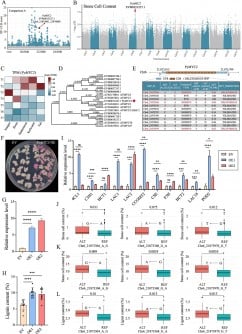
A recent study has unveiled significant genetic insights into pear domestication, highlighting the impact of genetic variations on breeding practices. Conducted by a collaborative team from Shandong Agricultural University, Nanjing Agricultural University, and the Zhongshan Biological Breeding Laboratory, the research was published in the journal Horticulture Research in May 2025. The team analyzed over 9 million single nucleotide polymorphisms (SNPs) from 232 pear accessions, aiming to explore the genetic diversity and mutation patterns that have shaped the evolution of pears.
The study identified a total of 9,909,773 SNPs, of which 139,335 were classified as deleterious mutations. These mutations were predominantly located in coding regions of the genome, with a notably higher concentration found in Pyrus communis, commonly known as the European pear. This research sheds light on how domestication has influenced genetic variations, revealing specific regions where deleterious mutations were either reduced or increased across different species.
Understanding the Genetic Mechanisms
The findings indicate that domestication has led to a selective sweep in certain pear species. In Pyrus pyrifolia and Pyrus bretschneideri, domestication appears to have decreased the frequency of deleterious mutations. Conversely, in Pyrus communis, there was an increase in such mutations, potentially due to genetic drift during the domestication process.
A key highlight of the research is the identification of the PyMYC2 gene, which plays a crucial role in the formation of stone cells in pears. The study demonstrated that overexpressing PyMYC2 in pear callus cultures resulted in increased levels of lignin and stone cells. This discovery positions the gene as a vital target for breeding programs aimed at enhancing pear texture and overall fruit quality.
According to Professor Jun Wu from Nanjing Agricultural University, “This research provides valuable genomic insights into pear domestication, particularly in understanding how deleterious mutations shape agronomic traits. The identification of PyMYC2 as a regulator of stone cell content is a breakthrough that could significantly inform future breeding strategies.”
Implications for Future Breeding Programs
The implications of these findings extend to breeding programs, as they highlight the potential for developing new pear varieties with optimized traits, such as improved texture and enhanced disease resistance. The research suggests that modern molecular breeding techniques, including genome-wide selection, can be employed to minimize the accumulation of harmful mutations in cultivated varieties.
As the global demand for high-quality pears continues to grow, understanding the genetic basis of these traits becomes crucial. The insights gained from this research not only enhance the understanding of pear genetics but also pave the way for creating resilient fruit varieties that can adapt to changing environmental conditions.
Funding for this important work was provided by several organizations, including the National Science Foundation of China and the National Key Research and Development Program of China. The research represents a significant step forward in the field of horticultural genetics, offering a framework for future studies aimed at improving pear cultivation and breeding practices.
The full study can be accessed through the following DOI: 10.1093/hr/uhaf140.