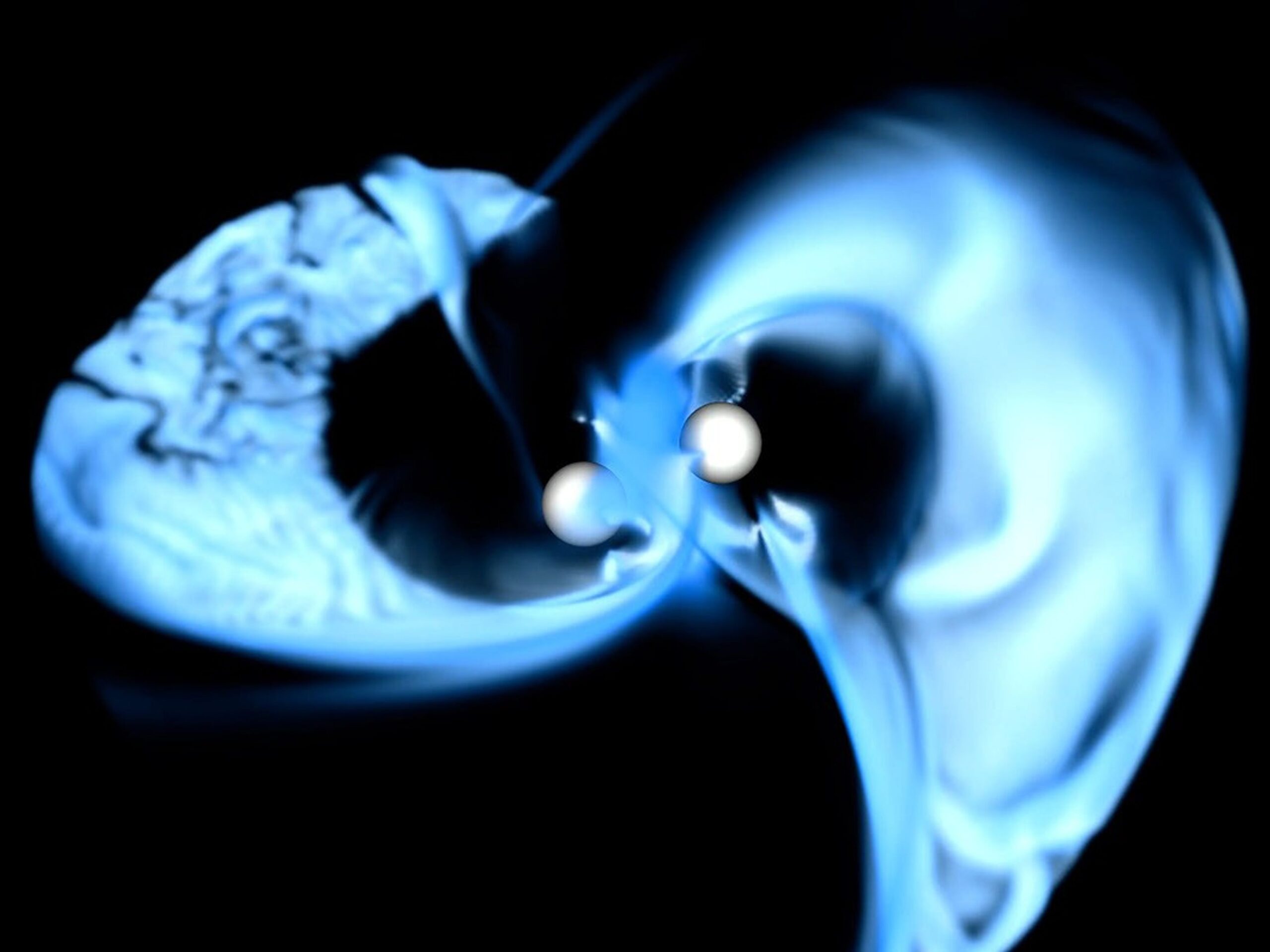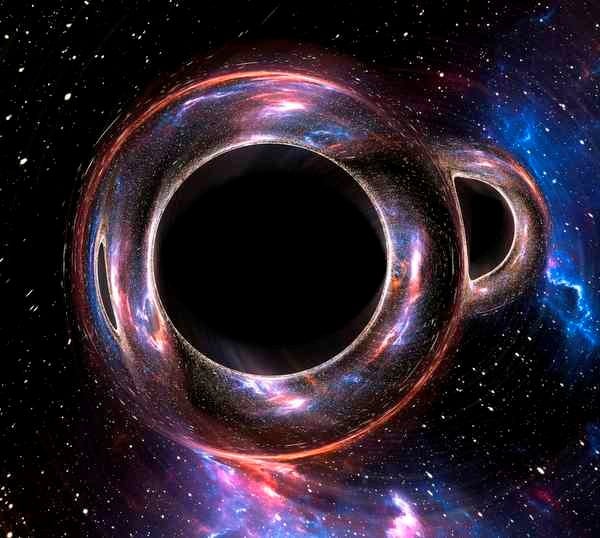
On January 14, 2025, researchers detected a remarkably clear gravitational wave signal, designated GW250114, marking a significant advancement in our understanding of the universe. The detection, made at the Laser Interferometer Gravitational Wave Observatory (LIGO) facilities in the United States, captured the unmistakable signature of two black holes merging in deep space. This event not only demonstrates the capabilities of modern astrophysics but also provides new avenues to test the principles laid out in Albert Einstein’s theory of general relativity.
The clarity of this signal stands out as extraordinary, offering scientists unprecedented opportunities to explore the fundamental laws of physics. As two black holes collide, they create a newly formed black hole that resonates like a struck bell, emitting gravitational waves at distinct frequencies. These waves gradually weaken, and the oscillations can be characterized by two key parameters: the rate of oscillation and the decay rate.
When multiple tones from a gravitational wave event are observed, researchers can derive independent measurements of the properties of the resulting black hole. In the case of GW250114, the team successfully measured two tones and constrained a third, all of which aligned perfectly with Einstein’s predictions. This outcome reinforces the validity of general relativity, showing that the theory continues to hold firm against rigorous experimental scrutiny.
Exploring the Boundaries of Physics
Despite this affirmation, physicists like Keefe Mitman express a sense of cautious optimism regarding the future of gravitational wave research. They believe that while general relativity remains unchallenged, there may be fundamental aspects of the universe that it does not fully explain. For instance, the theory does not account for dark matter or dark energy, nor does it effectively describe the behavior of gravity at quantum scales. The inherent limitations of general relativity become evident when attempts are made to integrate it with quantum mechanics, leading to mathematical inconsistencies.
The recent detection serves dual purposes: it reaffirms Einstein’s theory while also hinting at the existence of gaps in our current understanding of the universe. As technology advances and detectors become increasingly sensitive, scientists are optimistic that they will uncover the boundaries where general relativity may falter.
Once those boundaries are revealed, the implications could be profound, offering insights into the universe’s most intricate workings. For now, GW250114 stands as both a confirmation of established scientific principles and a beacon of hope for future discoveries in the realm of astrophysics.