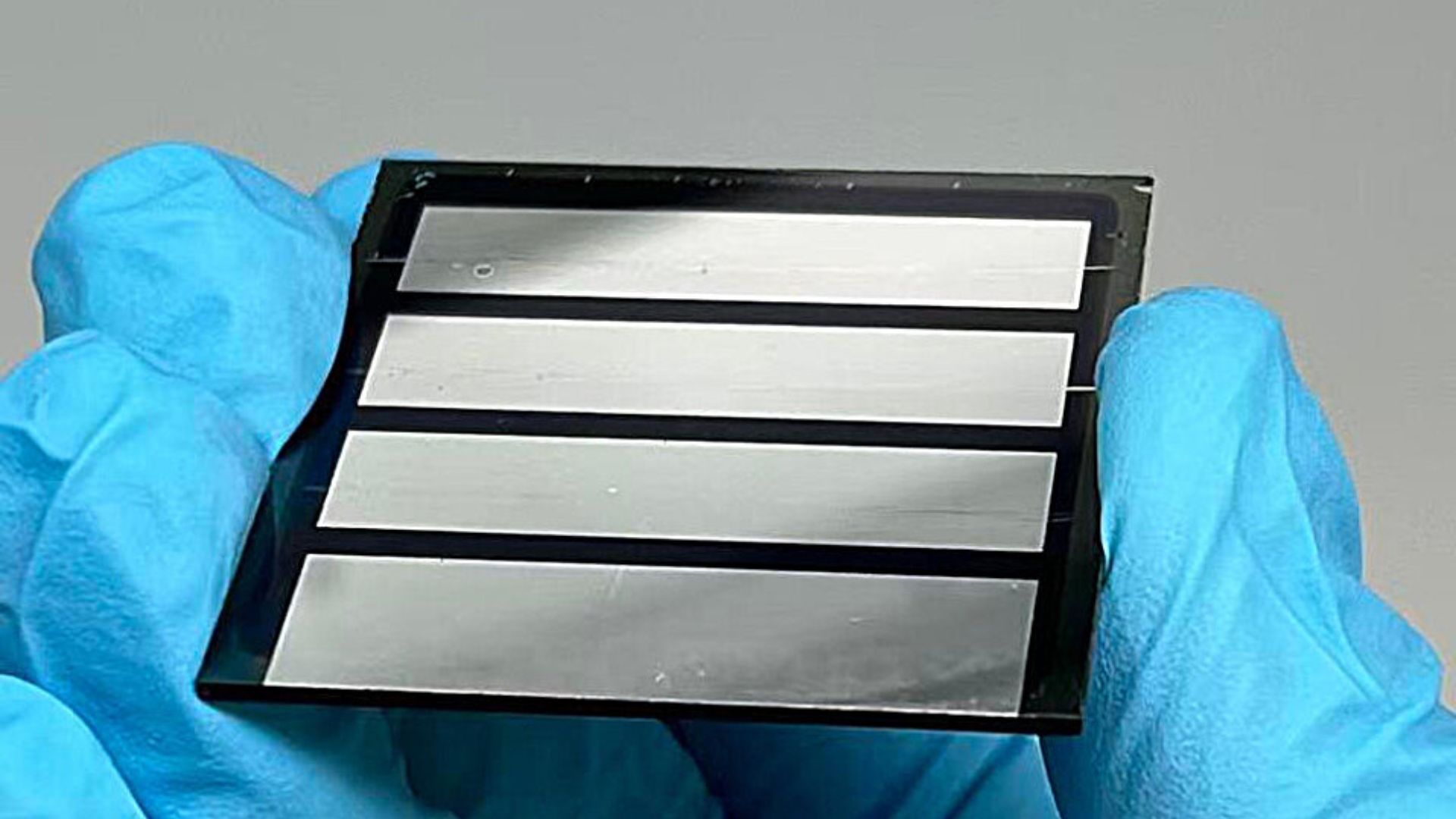
Researchers at the University of Manchester have made significant strides in solar technology with the development of new perovskite solar cells that maintain over 95 percent of their performance after extensive use. Led by Professor Thomas Anthopoulos, this breakthrough addresses long-standing issues of stability that have hindered the widespread adoption of this promising technology.
The newly designed perovskite solar cells achieved a power conversion efficiency of 25.4 percent during testing, showcasing both their power and durability. This achievement comes from the innovative use of a specialized molecular glue that smoothes the perovskite surface and eliminates microscopic defects that previously led to energy loss and material degradation.
Stability Challenges Overcome
Historically, silicon has dominated the solar market due to its reliability, but it comes with drawbacks such as heaviness, rigidity, and high manufacturing costs. In contrast, perovskite offers a lighter and potentially cheaper alternative. However, earlier versions of perovskite solar cells faced rapid degradation, often failing within days under heat and light exposure.
“Current state-of-the-art perovskite materials are known to be unstable under heat or light, causing the cells to degrade faster,” stated Professor Anthopoulos. Microscopic flaws in previous designs created significant electrical issues, making it challenging to harness their full potential.
The research team enhanced the perovskite structure using small-molecule amidinium ligands, which function as a protective seal across the surface. This chemical innovation allows the material to organize into stable, low-dimensional layers, creating a robust barrier against the environmental challenges that previously caused failure.
Resilience Under Extreme Conditions
During comprehensive testing, these stabilized perovskite solar cells retained over 95 percent of their efficiency after 1,100 hours of continuous operation, even at temperatures reaching 85°C (185°F). This performance is particularly noteworthy, as earlier iterations of perovskite material would typically succumb to failure under such conditions.
“Perovskite solar cells are seen as a cheaper, lightweight, and flexible alternative to traditional silicon panels, but they have faced challenges with long-term stability,” Professor Anthopoulos added. With the advancements made in this study, the controlled growth of high-quality, stable perovskite layers could eliminate one of the last significant barriers to commercial viability.
The implications of this research extend beyond traditional solar panels. The enhanced flexibility of perovskite technology opens new possibilities for applications on various surfaces, including curved windows, portable camping equipment, and even wearable fabrics.
The race to commercialize perovskite solar technology has gained momentum recently. For example, researchers in China introduced a three-dimensional electrical imaging method in December 2025, allowing for detailed observation of charge-carrier migration in perovskite films. This high-resolution mapping can assist in identifying and addressing hidden defects, further boosting the performance of these solar cells.
This groundbreaking study was published in the journal Science on January 8, 2025, marking a pivotal moment in the ongoing quest for efficient and sustainable energy solutions.