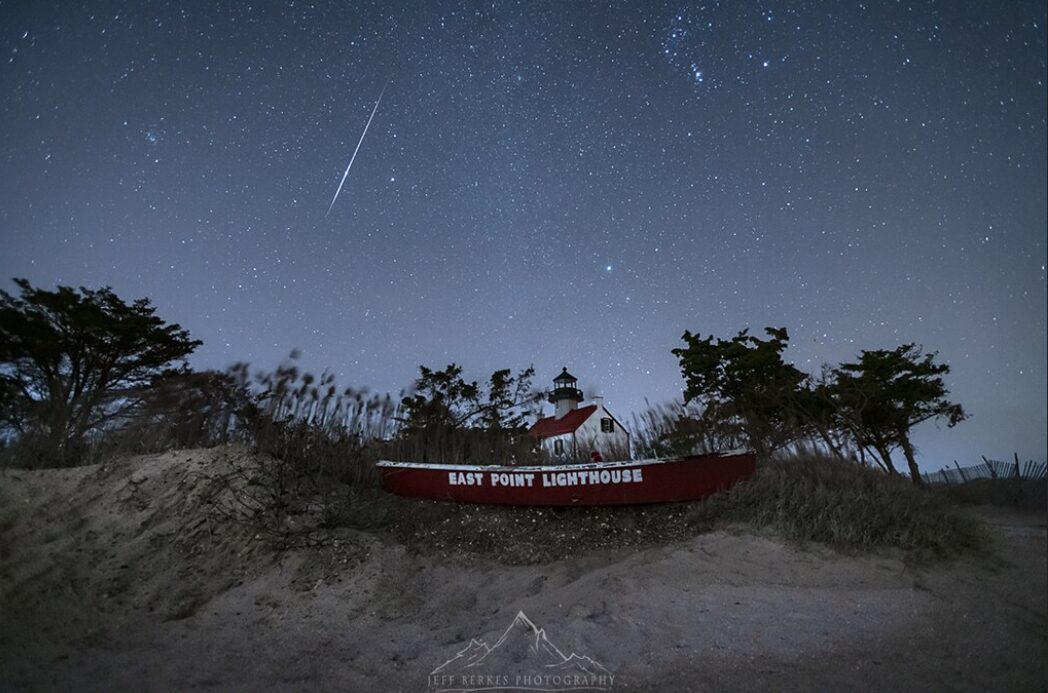
The early hours of November 17, 2025, promise an exciting celestial event as stargazers prepare for the annual Leonid meteor shower, alongside the potential for a second auroral display. Typically, the Leonids, known for their fast and bright meteors, are best observed in the pre-dawn hours. This year, conditions may be particularly favorable due to a waning crescent moon, which will rise just two hours before sunrise, allowing for darker skies.
The Leonid meteor shower is linked to the periodic comet 55P/Tempel-Tuttle, which has a 33-year orbit. Although 2025 is not a peak year, the meteor shower still offers a remarkable opportunity for enthusiasts to witness a beautiful display in the night sky. Historically, the Leonids have produced stunning meteor storms, with notable events occurring in 1999 and 2000, when observers reported over 1,000 meteors per hour.
Not only will the Leonid meteors be visible, but there is also the chance of experiencing another aurora, thanks to a massive sunspot region, AR 4274. This sunspot recently produced an X-class solar flare, which could impact the Earth’s magnetic field, leading to increased auroral activity. The previous storm on November 11 had auroras visible as far south as Florida and Hawaii, making it worthwhile to check the skies this weekend.
Historical Significance of the Leonids
The Leonids have a rich history in astronomy, sparking scientific interest since the 19th century. They helped establish the connection between meteors and the remnants of comets, rather than being merely atmospheric phenomena. The 1966 Leonid storm holds the record for one of the most impressive displays, with estimates of up to 160,000 meteors per hour observed in the southwestern United States.
The first recorded sighting of the Leonids dates back to 902 AD, with references in Arab annals noting “The Year of Stars.” The spectacular display in 1833 astonished early risers along the U.S. Eastern Seaboard, as the night sky appeared filled with shooting stars. This event inspired cultural reflections, including the poetry of Walt Whitman, who alluded to meteor showers in his work, although many attribute his famous poem about meteors to the Great Meteor Procession of 1860.
How to Prepare for the Show
For those eager to witness the Leonids, viewing is simple and requires minimal equipment—just a comfortable spot away from city lights and some patience. Observers should look toward the northeast around 2 AM local time for the best chances of spotting meteors. Additionally, tuning a radio to the FM band may allow listeners to catch the faint sounds of meteors entering the atmosphere.
As the Leonids light up the sky, they also pave the way for next month’s Geminid meteor shower, another highlight in the annual astronomical calendar. With the potential for both meteors and auroras this weekend, stargazers are encouraged to keep an eye on the sky and experience the wonder of these celestial events. Will the lion roar again as we approach the next peak in 2033? Only time will tell, but this weekend’s display is not to be missed.